882 views
·
Last viewed: 2 days ago
Uploaded: 08 Jul 2018 (8 years ago) · Shared: 06 Feb 2019
Duration: 1:26
Uploaded: 08 Jul 2018 (8 years ago) · Shared: 06 Feb 2019
Duration: 1:26
Youtube Description
Foundational proof from history to close the mouths of the deceptive Trinitarian. Most Apologists, including University Professors should be ashamedof hiding the truth. They will tremble on Judgment Day.
Explore More
approvedofGod Ignatius Trinity Philo GODSearch Google Search Explore Topics
 Who are approvedofGod?
I am here to teach all people, but especially the "body of Christ" (the Church), that the bible is sufficient for what we believe. Throughout the centuries, men have brought many doctrines into the church that have caused confusion and separation. My desire and goal is to clarify some of these errors and bring all Christians back to the basics of the Bible.
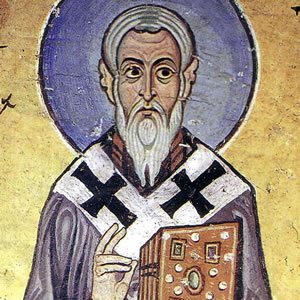 Who was Ignatius?
Ignatius of Antioch (35-107 AD) was an early Christian writer and bishop of Antioch. En route to Rome, where he met his martyrdom, Ignatius wrote a series of letters. This correspondence now forms a central part of the later collection known as the Apostolic Fathers, of which he is considered one of the three chief ones together with Pope Clement I and Polycarp.
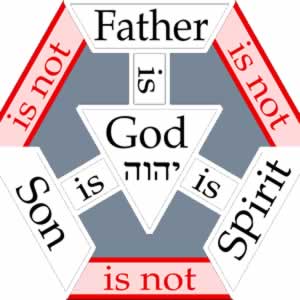 What is Trinity?
The Christian doctrine of the Trinity (Latin: trinus "threefold") holds that God is one God, but three coeternal consubstantial persons or hypostases. These being the Father, the Son (Jesus Christ), and the Holy Spirit - as "one God in three Divine Persons". The three Persons are distinct, yet are one "substance, essence or nature" (homoousios).
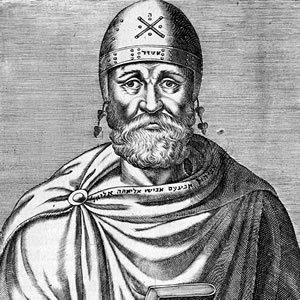 Who was Philo?
Philo of Alexandria (20 BC-50 AD) was a Hellenistic Jewish philosopher who lived in Alexandria, in the Roman province of Egypt. Philo used philosophical allegory to harmonize Jewish scripture, mainly the Torah, with Greek philosophy. His method followed the practices of both Jewish exegesis and Stoic philosophy. His allegorical exegesis was important for some Christian Church Fathers, but he had very little reception history within the Rabbinic Judaism. He adopted allegorical instead of literal interpretations of the Hebrew Bible. Some scholars hold that his concept of the Logos as God's creative principle influenced early Christology.
Who is GOD?In monotheism and henotheism, God is conceived as the Supreme Being and principal object of faith. The concept of God as described by theologians commonly includes the attributes of omniscience (infinite knowledge), omnipotence (unlimited power), omnipresence (present everywhere), omnibenevolence (perfect goodness), divine simplicity, and eternal and necessary existence. In theism, God is the creator and sustainer of the universe In deism, God is the creator, but not the sustainer, of the universe Monotheism is the belief in the existence of one God or in the oneness of God In pantheism, God is the universe itself In atheism, God is purported not to exist, while deemed unknown or unknowable within the context of agnosticism.