Uploaded: 15 Jul 2018 (8 years ago) · Shared: 17 Jul 2018
Duration: 2:31
Video Description
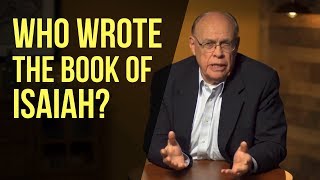
Uncover the fascinating early history of sacred texts with renowned New Testament scholar Craig Blomberg as he examines the historical testimony of Church Father Irenaeus. Writing from France around 202 AD, Irenaeus affirmed 21 of the 27 books that now comprise the New Testament, offering a powerful glimpse into how early Christian scripture was recognized and preserved. For believers, historians, and seekers of spiritual guidance, understanding the transmission of divine text provides essential context for studying the ancient roots of the Bible and its historical relationship with broader Abrahamic faith traditions.
Dr. Craig Blomberg highlights the profound continuity and reliability of these holy writings. Whether exploring Church tradition, comparing biblical manuscripts, or seeking deeper insights into global religious history across Jewish, Christian, and Islamic contexts, this insightful discussion serves as
Explore More
Craig Blomberg Church Father Irenaeus ChurchSearch Google Search Explore Topics
 Who is Craig Blomberg?
Craig Blomberg (born 1955) is an American New Testament scholar. Blomberg is a Distinguished Professor of the New Testament at Denver Seminary in Colorado where he has been since 1986. His areas of academic expertise are the New Testament. Blomberg has written and edited multiple books.
 What is Church Father?
The Church Fathers, Early Church Fathers, Christian Fathers, or Fathers of the Church are ancient and influential Christian theologians and writers. There is no definitive list. The era of these scholars who set the theological and scholarly foundations of Christianity largely ended by AD 700. In the past, the Church Fathers were regarded as authoritative, and more restrictive definitions were used which sought to limit the list to authors treated as such.
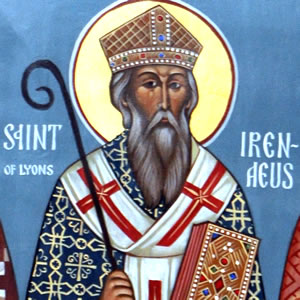 Who was Irenaeus?
Irenaeus (130-202 AD) was a Greek bishop. He is noted for his role in guiding and expanding Christian communities in what is now the south of France and, more widely, for the development of Christian theology by combating heresy and defining orthodoxy. Originating from Smyrna, now Izmir in Turkey, he had heard the preaching of Polycarp, who in turn was said to have heard John the Evangelist.
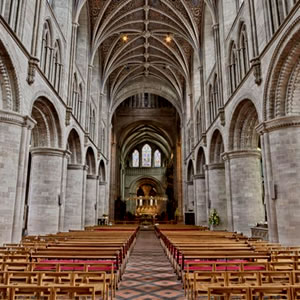 What is the Church?
A church is a building used for Christian worship services and Christian activities. The earliest identified Christian church is a house church founded between 233 AD and 256 AD. The word church also describes a body or assembly of Christian believers, while "the Church" refers to the worldwide Christian religious community.