TORAH
Common to all these meanings, Torah consists of the origin of Jewish peoplehood: their call into being by God, their trials and tribulations, and their covenant with their God, which involves following a way of life embodied in a set of moral and religious obligations and civil laws. In rabbinic literature the word Torah denotes both the five books "Torah that is written" and the Oral Torah "Torah that is spoken". The Oral Torah consists of interpretations and amplifications which according to rabbinic tradition have been handed down from generation to generation and are now embodied in the Talmud and Midrash. According to rabbinic tradition, all of the teachings found in the Torah, both written and oral, were given by God through the prophet Moses, some at Mount Sinai and others at the Tabernacle, and all the teachings were written down by Moses, which resulted in the Torah that exists today. The majority of Biblical scholars believe the written books were a product of the Babylonian captivity (c. 600 BCE), based on earlier written and oral traditions, which could only have arisen from separate communities within ancient Israel, and that it was completed by the period of Achaemenid rule (c. 400 BCE).
Youtube Videos on Torah (41)
 Why do Christians ignore the
 Is Muhammad prophesied in the
 How did Abraham observe the
 God revealed scripture:
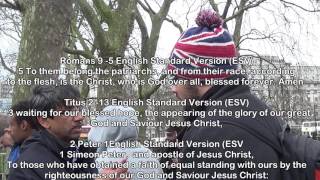 God revealed scripture:
 Is the
 The
 Authorship of the Gospels, Apostle Paul's Letters and
 The

 Ben-Gurion saw Judaism as the historical misfortune of the Jewish people. Zionism transforms Orthodox Jews into Israeli Zionists -
 In Judaism, Jerusalem is a holy city. In Zionism, Jerusalem is the capital of Israel -
 Zionists seek to remove Judaism from Jewish people. So the religious Jews become non-religious -
 Allah is HaShem of the Jewish
 Homosexuals, Lesbians and Transgenders in Jewish

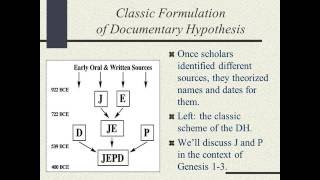 Moses'
 Did Moses write
 New Testament writers plagarized Jesus' Prophecies from Jewish
 Introduction to
 If Moses did not write the
 Moses was not a Jew who spoke modern Hebrew. Show me 'Judaism' in the
 King David had multiple affairs. Why does
 In Islam, Old Testament is NOT the
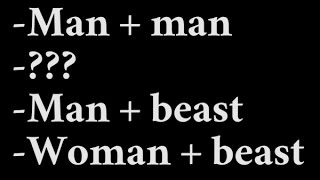 In Leviticus 18:22, female homosexuality is allowed in
 Apostle Paul, a Pharisee, had a Love-Hate relationship with Jewish
 In 1 Corinthians 7:19, Apostle Paul opposes Circumcision and Jewish
 In 200 AD, Noahide Laws came from the Jewish Talmud; not the
 In
 Gospels of Mark, Matthew, Luke, John disagreed over
 All previous Scriptures (
 Apostle Paul interpreted
 Why did God reveal
 Muhammad, a prophet for Muslims, but
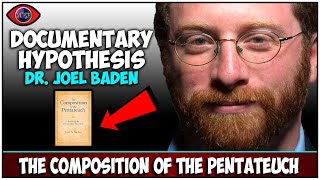 Who wrote the Bible? Contradictions in the
 Jewish Talmud,
 Quran affirms the Bible and
 Was Abraham a
 Moses did NOT write the
FAQ on Torah (27)
1.Who is Allah?
Allah is the official Arabic word used to signify God. The title is entirely unique because it has no plural or gendered forms, unlike standard words like gods or goddesses. It simply translates to 'The One and Only True God'. Linguistic origins show variants like 'Elah' or 'Eloh' in the Hebrew Torah, as well as in the original Aramaic language spoken by Jesus.
2.Do Muslims believe in The Bible?
Muslims believe that God originally revealed the Gospel to Jesus as a source of guidance, light, and instruction.
3.Name the scriptures available today?
Scripture revealed before the coming of Muhammad cannot be found today in their full and original form. However, these scriptures do contain some fragments of the original teachings, although they are mixed up with later additions and interpretations. Some of these scriptures are: the Torah of the Jews, the Gospels of the Christians, the Vedas of the Hindus, and the Zend Avesta of the Zoroastrians.
On the other hand, the latest word of God that came to Muhammad is still intact and completely preserved in the Muslim scripture, which is the Quran.
4.Did Jesus eat pork or swine meat?
No, because Jesus lived according to the Torah and Jewish law, he did not eat pork or other unclean animals, as noted in the source material.
5.How was Jesus Jewish?
Jesus fully observed the laws of the Torah, maintained kosher dietary regulations, and never asked his followers to abandon Judaism, as they continued to meet at the Temple and practice circumcision rather than establishing a separate religion or attending a church.
6.How did the Jews view Apostle Paul?
Faithful Jews viewed Paul's salvation theory as blatant blasphemy because his theological teachings explicitly ridiculed all previous revelations from God, including the sacred Torah, while teaching a doctrine that went against the absolute oneness of God.
7.According to Apostle Paul, why did God give Jews the Torah?
Paul viewed the Torah as a temporary guide, claiming it was given to the Jews until they could be saved through faith in Jesus Christ.
8.What was the core message of Apostle Paul's teachings?
The core of Paul's theology rested entirely on the absolute necessity of the crucifixion and resurrection of Jesus Christ, arguing in his letters that if righteousness could be achieved through the Mosaic Torah, then Christ died for absolutely nothing. He insisted to his followers that if Christ was not raised from the dead, then all Christian preaching and faith were completely vain and empty.
9.How did Apostle Paul break Gods Law?
Paul is described as rejecting the binding authority of the Torah, specifically mandatory male circumcision as an everlasting covenant and laws regarding dietary purity. Thereby breaking away from divine commands given to the Hebrew people.
10.Why did Apostle Paul choose to preach to the Gentiles?
Historically, Paul's mission shifted toward non-Jewish Gentiles because the majority of mainstream Jewish communities rejected his messianic doctrines regarding Jesus. In orthodox Christian history, this decision is also framed as a direct divine calling following his conversion, leading him to systematically establish multi-ethnic churches across the Roman Empire.
Paul was a Pharisee and would have been familiar with the knowledge, teachings, methodologies and mistakes of his Pharasaic brothers. Thus, he would have been the best person to preach to them his interpretation of soteriology. Yet he chose not to; leaving this task to James, Peter and the rest, dubbing them as the 'super apostles'.
The real reason why Paul preached to the gentiles is because they were ignorant. They did not know the Torah. They did not possess intimate knowledge of Judaism, its scripture or its doctrine.
Therefore Paul was not presenting his new religion to his own brethren because they would be able to debunk him. Due to this, logically speaking, he preached to those who would find his new faith appealing.
The gentiles would not argue about Christ's deity, or about the new doctrine of salvation, but the Jews would and vehemently so. Thus the path of least resistance is among the gentiles who would eventually see him as an authoritative figure, as opposed to the Jews who would see him as a heretic and shame him.
Yet with the gentiles, he is able to avoid these problems and ascend to power and authority very quickly.
11.How was Apostle Paul viewed by the Jews?
Paul was widely viewed by mainstream Jewish communities as a radical apostate and religious heretic because he preached that observance of the Mosaic Torah was no longer required for salvation. This fierce theological conflict frequently resulted in severe public opposition, legal charges before Roman authorities, and physical riots during his travel throughout ancient Mediterranean cities.
12.When was the Torah written?
Mainstream biblical scholarship tracks the composition of the Torah (the first five books of the Bible) through a gradual process starting from traditional Mosaic oral codes to written records compiled during the mid-to-late 1st millennium BCE. While early fragments exist in ancient archaeological discoveries like the Dead Sea Scrolls, the authoritative text was systematically finalized and preserved by Jewish scribes over centuries of scriptural copy transmissions.
13.What did Jesus tell the person who asked for eternal salvation?
In the Synoptic Gospels (such as Matthew 19:16-17, Mark 10:17-18, and Luke 18:18-19), when a rich young ruler explicitly asks Jesus what good deed he must do to inherit eternal life, Jesus directly answers: 'If you want to enter life, keep the commandments.' He then proceeds to list foundational moral laws from the Mosaic Torah, such as prohibitions against murder, adultery, and theft. Academic historians emphasize that this shows the historical Jesus operated firmly within a 1st-century Jewish framework, instructing his followers to achieve salvation by keeping the covenantal laws of God.
14.Does the Quran tell Jews and Christians to refer to their Scriptures (Torah and Bible)?
Yes, the Quran references previous scriptures in passages like Surah Al-Ma'idah (5:47), which tells the followers of the Gospel to judge by what God has revealed in it. From an academic perspective, this reflects the historical context of 7th-century Medina, where Jews and Christians were recognized as 'People of the Book' who possessed divine laws. While Islamic theology holds that modern biblical texts have suffered from textual corruption (tahrif), the Quran historically appeals to the core monotheistic truths remaining in those scriptures to validate Muhammad's message.
15.What did Moses command his people to do?
In the text of the Hebrew Bible (the Torah), Moses explicitly commanded the Israelites to strictly observe the covenantal laws, moral statutes, and civil judgments given by God at Mount Sinai, summarized in Deuteronomy 6:4-5. Historical-critical scholars emphasize that Moses' mission was to establish a highly structured, law-observant community that rejected ancient polytheism and maintained a unique identity through dietary codes (Kosher), Sabbath observance, and sacrificial rituals. Both Jewish and Islamic traditions view Moses as a lawgiver whose primary instruction was obedience to divine law.
16.Did Jesus abolish the Old Testament Law?
In the Synoptic Gospels, Jesus explicitly states in Matthew 5:17 that he did not come to abolish the Law or the Prophets, but to fulfill them. Mainstream Christian theology interprets this 'fulfillment' as Jesus perfectly satisfying the legal and sacrificial requirements of the Mosaic covenant, thereby inaugurating a New Covenant where specific ritual laws are no longer binding on believers. Secular historians and Islamic scholars emphasize that during his life, Jesus operated firmly within first-century Judaism, actively practicing and teaching obedience to the commandments of the Torah.
17.Did Jesus ever preach Christianity?
No. Neither Jesus nor his twelve disciples had any intention of founding a new, separate religion, as they operated entirely within the confines of traditional Judaism. Mainstream historians and biblical scholars affirm that the historical Jesus viewed his messianic mission as a internal renewal of Israel's covenant, continuing to follow the Mosaic Torah and temple rituals rather than building a separate world religion.
18.How did James, leader of the Jerusalem Church, view Apostle Paul?
Paul's new doctrine met with disapproval from the Jewish-Christians of the Jerusalem Church led by James, who regarded the substitution of Jesus' atoning death for the observance of the Torah as a lapse into paganism.
Paul was duly summoned to Jerusalem by the leaders James, Peter and John to explain his doctrine in 50 AD.
19.Why do Jews let the hair grow on the sides of there head?
In the text of the Torah (Leviticus 19:27), God explicitly forbids cutting or rounding off the corners of the hair on the sides of the head and marring the edges of the beard.
20.Who was Prophet Moses across world religions?
Moses (Musa) is one of the most pivotal prophets, lawgivers, and religious leaders in history.
In Judaism, he is the supreme prophet who led the Israelites out of Egyptian slavery and received the Torah on Mount Sinai.
In Christianity, he is a major Old Testament prophet and foreshadower of Christ.
In Islam, he is revered as Musa, an Ulul 'Azm (resolute) messenger and the most frequently mentioned prophet in the Quran.
21.What divine revelations were given to Prophet Moses?
On Mount Sinai (Horeb), God spoke directly to Moses, earning him the Islamic title Kalimullah ('the one who spoke with God'). There, Moses received the Ten Commandments and the Torah (known in Islam as the Tawrat), establishing foundational moral laws for the nation of Israel.
22.How is Phinehas viewed across different religious traditions?
Judaism: Revered as a legendary High Priest, hero of righteous indignation, and central figure of an entire weekly Torah portion (Pinchas). Rabbinic tradition frequently associates his zealous spirit with the Prophet Elijah.
Christianity: Honored as a faithful leader whose decisive actions demonstrated the power of intercession and faith under the Old Covenant.
Islam: Recognized through classical historical and scriptural commentaries as a noble figure from the priestly line of Harun (Aaron) who helped preserve monotheistic guidance among the Children of Israel.
23.What are the Six Articles of Faith in Islam?
While the Five Pillars govern outward actions, the Six Articles of Faith (Arkan al-Iman) dictate the core internal theological beliefs required of every Muslim:
1. Belief in Allah as the one and only supreme God.
2. Belief in His angels (such as Gabriel and Michael).
3. Belief in His holy books (including the Torah, Psalms, Gospel and the Quran).
4. Belief in His prophets and messengers (from Adam and Noah to Abraham, Moses, Jesus and Muhammad).
5. Belief in the Day of Judgment and the afterlife (Paradise and Hell).
6. Belief in divine decree or destiny (Qadar), meaning God possesses absolute ultimate knowledge of all events.
24.What is the difference between the Torah and the Talmud?
The Torah is the primary, foundational text of Judaism, consisting of the first five books of the Hebrew Bible (the Written Law) given to Moses on Mount Sinai. The Talmud is the comprehensive compilation of ancient rabbinic debates, commentaries, and discussions (the Oral Law) that interpret and explain how to apply the Torah's laws to everyday life.
25.What does it mean for food to be "Kosher"?
Food that is Kosher conforms to Jewish dietary regulations (Kashrut) outlined in the Torah. Core requirements include prohibiting the consumption of certain animals (like pigs and shellfish), requiring specific humane slaughtering methods, and strictly forbidding the mixing of meat and dairy products in the same meal.
26.Are there 10 Commandments or 613 Commandments in Judaism?
While the Ten Commandments given at Mount Sinai are highly famous foundations of law, traditional Judaism actually counts 613 Commandments (mitzvot) in the Torah. These commandments govern every aspect of life, covering ethical behavior, prayer, agricultural rules, civil laws and ritual purity.
27.What is the difference between New Age and traditional religions?
The primary difference lies in the source of spiritual authority and the concept of God:
* Traditional Religions: Typically rely on external authority, such as sacred texts (the Bible, Quran, Torah), historic dogmas, and a distinct, external Creator God.
* New Age Spirituality: Rejects external dogma and emphasizes personal, subjective experience. 'God' is not viewed as a separate being judging humanity, but as an immanent cosmic energy or higher consciousness found within oneself.
Scripture Themes on Torah (10)
| 1. Quran confirms truth of Torah and Gospel | Quran 3:3 |
| 2. Torah revealed to Moses as light and guidance | Quran 6:91 |
| 3. Torah completes favor for the righteous | Quran 6:154 |
| 4. Torah granted as light and criterion | Quran 21:48 |
| 5. Torah granted to Moses and Aaron as a criterion | Quran 21:48 |
| 6. Clear scripture bestowed upon Moses and Aaron | Quran 37:117 |
| 7. God teaches Jesus Scripture, wisdom, Torah, and Gospel | Quran 3:48 |
| 8. Jesus confirms Torah and modifies law | Quran 3:50 |
| 9. Jesus sent with Gospel confirming Torah | Quran 5:46 |
| 10. Muhammad Described in the Torah and Gospel | Quran 7:157 |