SWINE PORK
It is a domesticated large, even-toed ungulate. It is variously considered a subspecies of the wild boar or a distinct species. The domestic pig's head-plus-body-length ranges from 0.9 to 1.8 m (35 to 71 in), and the adult can weigh between 50 and 350 kg (110 and 770 lb).
Youtube Videos on Pork, Swine (13)
 Why did God forbid the eating of
 In Mark 7:15, Jesus upheld the Jewish dietary food laws, and forbid consuming swine (pig) - Beyond Today
 In Leviticus 11:7, the Bible forbids Christians from eating
 Unclean Foods: Pigs (Swine) are known to carry over 200 diseases and 11 parasites and worms - David Brett
 In the Bible, Pig, Hog and Swine are Unclean and not a source of food. For your health, stop eating it - Joel Osteen
 In Christianity, Homosexual Law is important, but Dietary Law (Swine) is not? - Rood Awakening
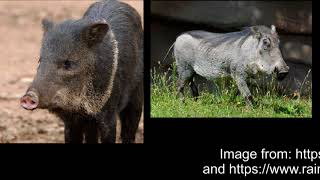 In Leviticus 11:7, God forbids Pig and Swine - Aaron Youtube
 Jesus never ate Pig. He despised the Swine and Pig. Follow Jesus and accept Islam - Adnan Rashid vs Asian
 Christians. Stop Eating
 China forces Uyghur Muslims forced to Eat
 True Story of the 1976 Swine Flu Vaccination - 60 Minutes
 Why Is Swine
 Why Muslims Do Not Drink Alcohol or Eat
FAQ on Pork, Swine (7)
1.Can Muslims eat swine and pork?
No, the consumption of pork, bacon, and ham is strictly prohibited by divine law, matching historical restrictions found in the Old Testament followed by Jews and certain Christian groups.
2.Did Jesus eat pork or swine meat?
No, because Jesus lived according to the Torah and Jewish law, he did not eat pork or other unclean animals, as noted in the source material.
3.Did Jesus eat a kosher diet?
Yes, as a first-century Jew living in Judea and Galilee, Jesus observed the biblical dietary laws (Kashrut) outlined in Leviticus 11 and Deuteronomy 14. Mainstream historical scholars and theologians affirm that his earthly ministry operated entirely within a traditional Jewish framework, meaning he and his immediate twelve disciples completely abstained from foods designated as unclean, such as pork or shellfish.
4.Can Christians eat swine and pork?
While modern Christian practice permits eating pork, the text notes that God explicitly prohibited the consumption of pig and swine meat in the Old Testament laws. The source argues that the New Testament passage often used to defend eating pork was originally a specific debate regarding whether unwashed hands made clean food unclean, rather than a lifting of the pork ban.
5.Many Christians believe that Jesus abolished the Old Testament dietary laws
Many Christians believe that Jesus abolished the Old Testament dietary laws. The dietary interpretation of Jesus' words (i.e. swine pig consumption) does not exist in the Textus Receptus Bible, the authoritative Greek New Testament text that was accepted by the Christian Church until about 100 years ago.
This parenthetic interpretation of Jesus words was obviously a comment that some Bible scribe wrote in the margin of the text. Later scribes accidentally or deliberately incorporated the marginal comment into the text itself, so the statement appears only in corrupted texts.
But the statement does not appear in the Textus Receptus, so the KJV says nothing about Jesus 'declaring all foods clean.'
God had clearly prohibited pig, swine and pork in the Old Testament. This verse was over whether or not 'unwashed hands' caused clean food to become unclean.
'Thus he declared all foods clean' is completely missing from the Textus Receptus, the authoritative Greek New Testament line used for centuries. It claims this widespread dietary interpretation was likely a later scribal note added to the margins of the text, which was subsequently mistaken for Jesus' actual words in corrupted versions.
6.What does "Halal" and "Haram" mean?
These are two fundamental legal terms in Islam used to categorize human actions, consumption, and dietary choices:
* Halal: Meaning permissible or lawful. In a dietary context, it refers to food, specifically meat that is processed, slaughtered, and prepared according to prescribed Islamic ritual laws (Zabiha).
* Haram: Meaning forbidden or unlawful. This includes actions like gambling, lying, and stealing, as well as the consumption of pork, birds of prey, carnivorous animals, blood, and all forms of alcohol or intoxicants.
7.What is the Seventh-day Adventist dietary law?
Seventh-day Adventists are globally recognized for their emphasis on health, viewing the human body as a holy temple. Their health message encourages:
• Clean and Unclean Meats: Strictly adhering to biblical dietary laws (Leviticus 11) meaning they completely abstain from pork, shellfish and scavengers.
• Vegetarianism: The church strongly advocates for a well-balanced plant-based diet. A high percentage of members are vegetarian or vegan.
• Abstinence: Total avoidance of alcohol, tobacco, recreational drugs, and often mind-altering substances like caffeine.
News on Pork, Swine (3)
Scripture Themes on Pork, Swine (1)
| 1. Jesus heals the Gerasene demoniac | Mark 5:1-20 |