NAZARETH
Nazareth is known as "the Arab capital of Israel". In 2016 its population was 75,922. The inhabitants are predominantly Arab citizens of Israel, of whom 69% are Muslim and 30.9% Christian. In the New Testament, the town is described as the childhood home of Jesus, and as such is a center of Christian pilgrimage, with many shrines commemorating biblical events.
Youtube Videos on Nazareth (4)
 Jesus was born in
 Jesus' infancy is difficult to reconcile in the Gospels (his birthplace, Bethlehem, Jerusalem,
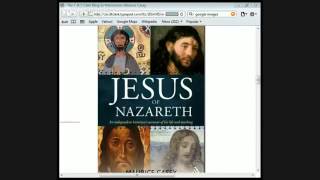 Maurice Casey: Jesus of
 In Luke 24:19, Jesus of
FAQ on Nazareth (3)
1.Jesus claimed he was a man or son of man
In the New Testament gospels, Jesus frequently refers to himself as the 'Son of Man,' a term with deep messianic significance derived from the Old Testament Book of Daniel. While he explicitly describes his human nature and vulnerabilities as a man, Christian theology maintains that his dual identity encompasses both full humanity and full divinity.
60 Then the high priest stood up before them and asked Jesus, 'Are you not going to answer? What is this testimony that these men are bringing against you?'
61 But Jesus remained silent and gave no answer. Again the high priest asked him, 'Are you the Messiah, the Son of the Blessed One?'
62. 'I am,' said Jesus. 'And you will see the Son of Man sitting at the right hand of the Mighty One and coming on the clouds of heaven.'
Mark 14:60-62
39 They answered and said unto him, Abraham is our father. Jesus saith unto them, If ye were Abraham's children, ye would do the works of Abraham.
40 But now ye seek to kill me, a man that hath told you the truth, which I have heard of God: this did not Abraham.
John 8:39
22 Ye men of Israel, hear these words; Jesus of Nazareth, a man approved of God among you by miracles and wonders and signs, which God did by him in the midst of you, as ye yourselves also know
Acts 2.22
31 because he has set a day when he is going to judge the world with justice[o] through a man whom he has appointed. He has given proof of this to everyone by raising him from the dead.
Act 17.31
For there is one God and one mediator between God and mankind, the man Christ Jesus.
1 Timothy 2:5
2.Did Jesus actually exist?
Virtually all serious modern historians and biblical scholars agree that Jesus of Nazareth was a real historical figure who lived and died in first-century Judea. This consensus is supported not only by Christian writings but by independent non-Christian sources from Roman and Jewish antiquities, including mentions by the historians Tacitus, Suetonius, and Josephus, as well as early Rabbinic traditions.
- Tacitus (Annals I5.44.3) wrote early Christians were blamed by Nero fir the fire in Rome in 64 AD
- Suetonius (Claudius 25.4) wrote debates about how Jesus led to Emperor Claudius expelling Jews from Rome in 49 AD
- Pliny (Letters I0.96) wrote to Emperor Trajan around 111 AD for advice on the people who worship 'Christ as a God' in the Asia Minor region
- Rabbinic Traditions (bSanhedrin 43.a) state Jesus of Nazareth was executed before he practised sorcery
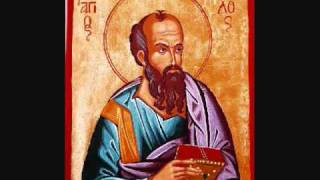
3.How important was Jesus' crucifixion to Apostle Paul?
In his surviving epistles, the Apostle Paul demonstrates almost no interest in the day-to-day earthly life, chronological career, or specific moral parables of Jesus of Nazareth. Instead, his extensive theology is completely fixated on the cosmic, atoning meaning of the crucifixion and subsequent resurrection of the figure he addresses as 'the Lord'. Secular historians analyze this focus to illustrate how early Christian theology transformed from an inward-looking Jewish prophetic movement into a universal savior faith.
News on Nazareth (2)
| 1. Archaeologist claims Nazareth house may be childhood home of Jesus | Huffington |
| 2. Archaeologist Says House In Nazareth Could Have Been Jesus' Childhood Home | Huffington |
Scripture Themes on Nazareth (1)
| 1. Jesus is rejected at His hometown synagogue in Nazareth | Luke 4:14-36 |