HERESY
In particular the accepted beliefs of a church or religious organization. A heretic is a proponent of such claims or beliefs. Heresy is distinct from both apostasy, which is the explicit renunciation of one's religion, principles or cause, and blasphemy, which is an impious utterance or action concerning God or sacred things. The term is usually used to refer to violations of important religious teachings, in particular in reference to Christianity, Judaism, and Islam.
FAQ on Heresy (3)
1.Did Bible tells us that the Father became flesh
No, mainstream Christian theology explicitly rejects the idea that God the Father became flesh, a concept historically condemned as the heresy of Patripassianism or Sabellianism. The New Testament specifies that it was exclusively the Logos, the pre-existent Word or Son of God who took on human flesh in the person of Jesus Christ, as stated in John 1:14 ('And the Word was made flesh, and dwelt among us').
2.What life did Apostle Paul lead before his miraculous conversion to Christianity?
Before his conversion, Paul was known as Saul and operated as a strict Pharisee and enforcer hostile toward early followers of Jesus. Academic historians note that he worked under the authority of the high priestly administration in Jerusalem to systematically suppress the growing messianic movement, believing he was protecting traditional Judaism from a dangerous heresy
3.In 325 AD, did Emperor Constantine burn gospels, writings and religious text?
The books of Arius and his followers, after the first Council of Nicaea (325 C.E.), were burned for heresy by the Roman emperors Constantine, Honorius, and Theodosius I, who published a decree commanding that, 'the doctrine of the Trinity should be embraced by those who would be called catholics; that all others should bear the infamous name of heretics'.
Youtube Videos on Heresy (2)
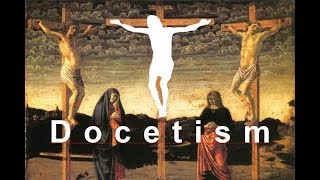 Docetism, an early Christian heresy held Jesus was an illusion, not a real human - Fishers Evidence
12:10 912 views
|
 Heresy in the Early Church - Keith Mathison
59:21 297 views
|