FLOOD
Parallels are often drawn between the flood waters of these myths and the primeval cosmic ocean which appear in certain creation myths, as the flood waters are described as a measure for the cleansing of humanity, for example in preparation for rebirth. Most flood myths also contain a culture hero, who "represents the human craving for life". The oldest known narrative of a divinely initiated flood originates from the Sumerian culture in Mesopotamia, among others expressed in the Akkadian Atra-Hasis epic, which dates to the 18th century BCE. Comparable flood narratives appear in many other cultures, including the biblical Genesis flood narrative, manvantara-sandhya in Hinduism, Deucalion and Pyrrha in Greek mythology, also the Cheyenne, Blackfeet and Puebloan traditions.
FAQ on Flood (28)
1.Does God make a distinction between clean and unclean animals?
In biblical literature, the operational distinction between clean and unclean animals is established long before the formal revelation of the Mosaic dietary laws at Mount Sinai. Within the Genesis account of Noah's Flood, God directly commands Noah to gather seven pairs of every clean animal and only one pair of every unclean animal onto the Ark. This narrative indicates that early biblical figures possessed an innate understanding of which specific creatures were approved for divine sacrificial offerings and human survival.
2.Does God define clean and unclean animals, i.e. those we can eat?
In biblical literature, the operational distinction between clean and unclean animals is established long before the formal revelation of the Mosaic dietary laws at Mount Sinai. Within the Genesis account of Noah's Flood, God directly commands Noah to gather seven pairs of every clean animal and only one pair of every unclean animal onto the Ark. This narrative indicates that early biblical figures possessed an innate understanding of which specific creatures were approved for divine sacrificial offerings and human survival.
3.Who was Aram in biblical genealogy?
According to the Book of Genesis, Aram was the son of Shem and the grandson of Prophet Noah (Nuh). His line forms part of the post-flood repopulation of the Near East.
4.Who was Prophet Arphaxad in Islamic tradition?
Arphaxad (Arfakhshad) was a post-flood patriarch, the son of Shem, and the grandson of Prophet Nuh (Noah). He served as a crucial genealogical and spiritual link carrying early monotheistic traditions down the lineage toward Prophet Ibrahim (Abraham).
5.When was Arphaxad born, and how long did he live?
According to historical and scriptural traditions, Arphaxad was born two years after the Great Flood (around 2446 BC) in Mesopotamia. He lived to be 438 years old and died around 2008 BC.
6.Why is Arphaxad significant in prophetic genealogy?
Arphaxad was the first child born in the post-flood era. He represents a key ancestral bridge connecting Noah's immediate survivors to the lineage of major patriarchs and prophets, leading directly down to Ibrahim, Ismail, Ishaq, and ultimately Prophet Muhammad.
7.Who was Prophet Eber in Islamic and biblical history?
Eber was a great post-flood patriarch, prophet, and the direct great-grandson of Shem. He served as a crucial ancestral bridge connecting Noah to Ibrahim (Abraham) and preserved the original monotheistic faith when humanity began turning back to idolatry.
8.What were Eber's lifespan and key details?
Born around 2288 BC in Mesopotamia, Eber lived during a period when post-flood human lifespans were drastically shortening. He lived to the age of 464, making him one of the longest-living post-flood patriarchs, and passed away around 1824 BC.
9.Who was Prophet Enoch in Islamic and biblical history?
Enoch (Idris) was a righteous patriarch and the seventh prophet in the direct line from Adam. Known for his exceptional devotion, wisdom, and scholarship, he preached monotheism during a pre-flood era of growing wickedness.
10.Who was Prophet Japheth in Islamic and biblical history?
Japheth (Yafith) was a major post-flood patriarch, family leader, and one of the three sons of Noah (Nuh) who survived the Great Flood inside the Ark.
11.How is Prophet Japheth connected to Prophet Noah?
Japheth (Yafith) was a major post-flood patriarch, family leader, and one of the three sons of Noah (Nuh) who survived the Great Flood inside the Ark.
12.Where did Japheth and his descendants settle after the Flood?
After the floodwaters receded around 2448 BC, Japheth migrated north and west into the vast regions encompassing Europe, Asia Minor, Eurasia, and parts of Central Asia. His descendants became the founding ancestors of the Indo-European, Caucasian, and maritime nations.
13.What was Japheth's role in preserving early monotheism?
While not traditionally classified as a law-giving prophet with a new scripture, Japheth played a crucial role in carrying Noah's early monotheistic teachings, moral laws, and historical records into newly formed post-flood civilizations.
14.How long did Prophet Japheth live?
Born around 2500 BC in Mesopotamia, Japheth lived during an era of extended post-flood human lifespans. He lived for hundreds of years and died around 2000 BC.
15.Who was Prophet Methuselah in religious and historical tradition?
Methuselah (Matushelah) was an antediluvian patriarch, prophet, and prominent leader in the generations before the Great Flood. He was the son of Enoch (Idris), the father of Lamech, and the grandfather of Noah (Nuh).
16.How was Methuselah related to Prophet Enoch?
Methuselah (Matushelah) was an antediluvian patriarch, prophet, and prominent leader in the generations before the Great Flood. He was the son of Enoch (Idris), the father of Lamech, and the grandfather of Noah (Nuh).
17.What was Methuselah's spiritual role before the Great Flood?
Inheriting the prophetic legacy of his father Enoch, Methuselah served as a spiritual leader and preacher of monotheism. He spent centuries warning an increasingly corrupt human society to repent and return to righteousness, helping preserve sacred knowledge and divine records until his grandson Noah was called to build the Ark.
18.When did Methuselah die in relation to the Great Flood?
Scriptural chronologies indicate that Methuselah passed away in the very same year that the Great Flood struck the Earth (around 2348 BC). His death marked the final divine deadline, after which God sent the deluge upon the world.
19.Who was Midian in religious and historical tradition?
Midian (Madyan) was a post-flood patriarch and the fourth son of Abraham through his second wife, Keturah. He became the founding patriarch of the Midianites, a influential nomadic and mercantile civilization in the ancient Middle East.
20.How was Midian connected to Prophet Abraham?
Midian (Madyan) was a post-flood patriarch and the fourth son of Abraham through his second wife, Keturah. He became the founding patriarch of the Midianites, a influential nomadic and mercantile civilization in the ancient Middle East.
21.Where did Noahs Ark come to rest after the Great Flood?
After months at sea, the floodwaters receded and the Ark came to rest upon a mountain peak. The Hebrew Bible identifies this location as the Mountains of Ararat (in modern-day eastern Turkey), while the Quran specifies Mount Judi (located in the same region near the Turkish-Iraqi border).
22.How long did Prophet Seth live, and what was his legacy?
According to biblical and traditional accounts, Seth lived for 912 years. He established early religious order, preserved divine knowledge, and became the direct ancestor of major pre-flood figures, including Enoch (Idris), Methuselah, and Noah (Nuh).
23.How is Prophet Seth viewed across different religious traditions?
Judaism & Christianity: Detailed in the Book of Genesis as a key patriarch whose lineage ('the sons of God') preserved righteousness prior to the Great Flood.
Islam: Honored as the prophet Sheeth, a pivotal receiver of early revelation who governed humanity with justice after the passing of Adam.
Gnosticism: Revered in ancient Sethian Gnostic traditions as a divine illuminator and heavenly progenitor of the spiritual realm.
24.Who was Prophet Shem in religious and historical tradition?
Shem (known as Sam in Islamic tradition) was a major post-flood patriarch, prophet, and one of the three sons of Noah (Nuh) who survived the Great Flood aboard the Ark.
25.How was Shem connected to Prophet Noah?
Shem (known as Sam in Islamic tradition) was a major post-flood patriarch, prophet, and one of the three sons of Noah (Nuh) who survived the Great Flood aboard the Ark.
26.What role did Shem play after the Great Flood?
Following the recession of the floodwaters, Shem helped rebuild human civilization under his father Noah's guidance. He inherited the spiritual leadership and central territorial regions of the ancient Middle East, preserving the original monotheistic teachings (Hanif) amid post-flood migrations.
27.What are some interesting historical facts about Prophet Noah?
- Built an Ark and saved animals and others from the flood
- Noah lived for 950 years
- Methuselah knew Noah 600 years and died the year of the flood
- Talked with his father, Lemech for 595 years
- Noah's Ark was 300x50x30 cubits. It had three decks and was waterproofed using pitch (Genesis 6:14)
- The floods were caused by 40 days of rain (Genesis 7:12)
- Noah spent 371 days in the Ark
- The Ark landed on the mountains of Ararat, Turkey (Genesis 8:4)
- Noah, his wife, their three sons and their wives were saved from the floods (Genesis 6:18)
28.What are some interesting historical facts about Prophet Shem?
- Son of Noah
- Lived for 600 years
- Talked with Methuselah for 98 years
- Lived after the flood for 502 years
Youtube Videos on Flood (18)
 Was Noahs
 Noahs Ark rivals the
 Noah's
 Noahs Ark Great
 Before Noah: Alternative Mythical
 Comparing
 The Epic of Gilgamesh and the oldest
 Biblical differences in Creation Story and Noah's
 500 Worldwide
 Noah's
 The REAL
 Different Versions of Noah's
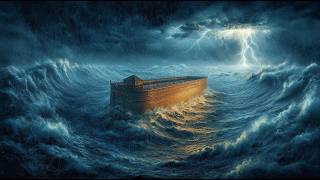 How Noah survived the Great

 Understanding What Caused Noah's
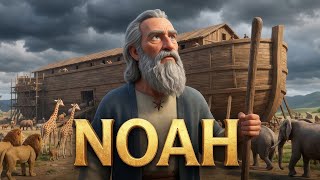 Noah - The Great
 The Nephilim - Fallen Giants & The
Scripture Themes on Flood (7)
| 1. God establishes a rainbow covenant with Noah | Genesis 9:1-17 |
| 2. Noah saved in the Ark while deniers drown | Quran 7:64 |
| 3. Flood waters recede and Noahs Ark settles on Mount Judi | Quran 11:44 |
| 4. Noah's 950-Year Lifespan of Preaching | Quran 29:14 |
| 5. Generations of 'Ad as successors after flood | Quran 7:69 |
| 6. Household Delivered from Great Distress | Quran 37:76 |
| 7. Household Delivered from Great Distress | Quran 37:76 |
News on Flood (1)
| 1. Has Noah Lost His Flood? The Ever-diminishing Biblical Deluge | Patheos |