CRUCIFIXION
The victim is left to hang for several days until eventual death from exhaustion and asphyxiation. The crucifixion of Jesus is a central narrative in Christianity, and the cross (sometimes depicting Jesus nailed onto it) is the main religious symbol for many Christian churches. The English term cross derives from the Latin word crux. The Latin term crux classically referred to a tree or any construction of wood used to hang criminals as a form of execution. The term later came to refer specifically to a cross.
Search Result on 'Crucifixion' (83 total)
Youtube Videos on Crucifixion (53)
 Jesus Barabbas or Jesus Christ. Who was the real Jesus at the
 In Psalm 22:16, how did the Church show the
 Jesus'
 Jesus'
 Jesus'
 In Zechariah 12:10, They will look on me, the one they have pierced, and they will mourn for him as one mourns for an only child - Is this about Jesus'
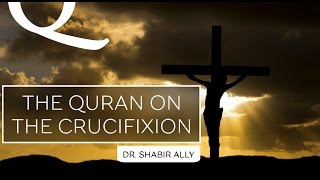 The Quran on the
 Searching for Jesus'
 The
 Mystery of Jesus'

 Reconsidering Jesus'
 The
 The
 The
 The
 The
 The
 The
 The
 The
 Risen! Debating the
 Jesus'
 Existence of Christians before Jesus'
 Historical records of Jesus' trial and
 At the
 At the
 After Jesus'
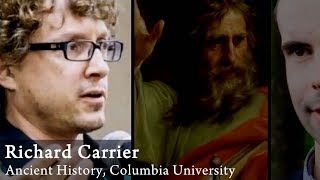 Apostle Paul claims he received revelation from Jesus, 20 years after his
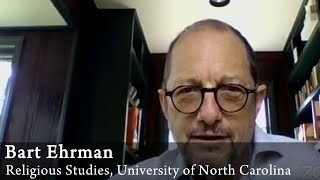 Gospels are 'stories' by Greek writers 40 years after Jesus'
 Most likely, after
 Conflicting Gospel accounts of Jesus'
 Jesus'
 In Matthew's Gospel, an 'onion ring' structure details Jesus'
 After Jesus'
 In Gospel of Thomas (Syria, 40-140 AD), Jesus' words matter, not the
 Jesus' 12 disciples are missing at crucial events:
 Jesus'
 In Matthew 26:39, Jesus prayed to God to save him from death (
 Belief in Jesus'
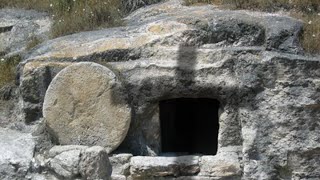 Christian Church claim Jesus'
 What is the Islamic viewpoint on Jesus'
 In Mark 15:35, on his
 No Secular Historical references exist for Jesus for 80 years after Jesus'
 Thallus, quoted by Africanus, then Eusebius (d. 340 AD) confirmed Earthquake at Jesus'
 Jesus'
 Jesus
 Exact location of Jesus
 History on Jesus'
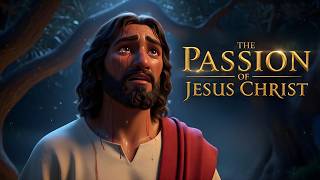 The Passion of Jesus - The Last Supper, Trial,
FAQ on Crucifixion (18)
1.What was the core message of Apostle Paul's teachings?
The core of Paul's theology rested entirely on the absolute necessity of the crucifixion and resurrection of Jesus Christ, arguing in his letters that if righteousness could be achieved through the Mosaic Torah, then Christ died for absolutely nothing. He insisted to his followers that if Christ was not raised from the dead, then all Christian preaching and faith were completely vain and empty.
2.Were Jesus' Apostles misguided?
According to Paul's theology, yes; despite the twelve disciples being hand-selected, personally trained, and directly guided by Jesus Christ in the flesh, Paul claimed that following his crucifixion, all twelve apostles were misguided and teaching an incorrect version of faith.
3.Who did Jesus preach to?
Jesus primarily focused his earthly ministry on the Jewish population of Judea and Galilee. After his crucifixion, his apostles systematically expanded the message globally to include non-Jewish Gentiles, fulfilling his final instructions.
4.Did Jesus actually want to die on the Cross?
The New Testament gospels depict Jesus as fully aware of his impending execution, yet experiencing intense human agony and praying to avoid it during his night in the Garden of Gethsemane. However, mainstream Christian theology emphasizes that he willingly surrendered to the crucifixion out of absolute obedience to the divine plan for humanity's redemption.
5.How important was Jesus' crucifixion to Apostle Paul?
In his surviving epistles, the Apostle Paul demonstrates almost no interest in the day-to-day earthly life, chronological career, or specific moral parables of Jesus of Nazareth. Instead, his extensive theology is completely fixated on the cosmic, atoning meaning of the crucifixion and subsequent resurrection of the figure he addresses as 'the Lord'. Secular historians analyze this focus to illustrate how early Christian theology transformed from an inward-looking Jewish prophetic movement into a universal savior faith.
6.Who replaced Jesus after his crucifixion?
Following the crucifixion, leadership of the primary community of believers in Jerusalem fell to Jesus' biological brother, James the Just. Mainstream historical and biblical scholarship confirms that James directed the mother church as an observant Jew, maintaining that followers must continue upholding traditional Mosaic customs and temple practices.
7.How did Apostle Paul view Jesus' teachings?
According to the source text, Paul's theology effectively relegated Jesus' specific earthly, Jewish ethical teachings to a position of secondary importance, prioritizing instead a cosmic message centered entirely on the crucifixion and resurrection for salvation. Textual analysis demonstrates that Paul's letters rarely quote Jesus' parables or earthly sermons, focusing almost exclusively on his identity as a divine savior figure.
8.What was the main difference between Apostle Paul's religion and the message of Jesus?
The core difference lies in the theological meaning of Jesus' life, with Paul's creed fundamentally focusing on the crucifixion as a necessary cosmic sacrifice to save mankind from sin. While Jesus preached repentance and the ethical arrival of the Kingdom of God, Paul's Damascus vision shifted the entire framework to a savior faith centered on the mechanical necessity of Jesus' violent death and resurrection for salvation.
9.Who instigated the crucifixion of Jesus?
There is no doubt the Jewish religious leaders of Israel were responsible for Jesus' death. The Romans carried out the actuall crucifixion under the authority of Pontius Pilate.
10.What did James do after Jesus' crucifixion?
In Jerusalem, the disciple James, who acted as the primary leader of Jesus' immediate followers, strongly believed that their movement's future lay as a distinct religious group operating firmly within the confines of the traditional Judaism religion.
11.What did Jesus' 12 disciples do after his crucixion?
After Jesus' crucifixion, his disciples remained in Jerusalem to continue their active preaching and missionary work almost exclusively among their fellow Jewish population.
12.What did Apostle Paul do after he converted to Christianity, on the road to Damascus?
Following his conversion 1-3 years after the crucifixion, Paul vanished from the public eye before re-emerging 13 years later (47-60 CE) as a missionary to the Gentiles.
13.What was the miracle of Lazarus of Bethany in the Bible?
Lazarus fell ill and died. According to the text, Jesus arrived four days after Lazarus was buried in a tomb, ordered the stone to be rolled away, and commanded, 'Lazarus, come out!' The Raising of Lazarus is considered one of Jesus' most significant and dramatic miracles, directly setting off the events leading to the Crucifixion because it drew massive public attention.
14.What is the Islamic perspective on the crucifixion and ascension of Jesus?
While Christian tradition holds that Jesus was crucified and resurrected, Islamic tradition teaches that God saved Jesus from execution by raising him alive to heaven around 30 AD at age 33, placing his likeness on another man instead.
15.Is Mary mentioned in both the Bible and the Quran?
Yes, Mary plays a central role in both scriptures:
Bible: Featured prominently in the Gospels of Matthew, Luke, and John, highlighting her devotion, presence at Jesus's birth, early life, miracles, crucifixion, and early church gathering.
Quran: An entire chapter, Surah Maryam (Chapter 19) is named in her honor. She is praised as a noble, chaste, and chosen woman above all women of the worlds.
16.Do Christian Science followers celebrate holidays like Christmas and Easter?
Yes, Christian Scientists fully celebrate traditional Christian holidays like Christmas and Easter, but with a distinct spiritual focus. Rather than emphasizing the material aspects or secular traditions, they use these times to deeply contemplate the spiritual meaning of Christ Jesus’ birth, ministry, crucifixion, and resurrection. They do not hold special communion services with physical bread and wine, preferring silent, internal communion with God.
17.What is Gnosticism and what are its core beliefs?
Gnosticism is a modern term for a collection of ancient religious and philosophical mystical movements that flourished alongside early Christianity in the 1st and 2nd centuries CE. Unlike mainstream Christianity, which emphasizes faith and salvation through Jesus's crucifixion, Gnosticism teaches that salvation is achieved through Gnosis - a direct, intuitive, and experiential knowledge of the divine spark hidden within the human soul.
18.What are the Gnostic Gospels?
The Gnostic Gospels are a collection of early texts concerning the life and teachings of Jesus that were explicitly excluded from the canonical New Testament Bible. Unlike the traditional books of Matthew, Mark, Luke and John, these texts focus on secret dialogues and deep esoteric wisdom. The most famous examples include:
* The Gospel of Thomas: A collection of 114 sayings attributed to Jesus, completely lacking a narrative or crucifixion story.
* The Gospel of Mary: Highlights Mary Magdalene as a premier disciple who received secret revelations directly from Jesus.
* The Gospel of Judas: Radically reframes Judas Iscariot not as a traitor, but as Jesus's closest friend acting under divine orders.
Scripture Themes on Crucifixion (5)
| 1. Moses receives the ten commandments on Mount Sinai | Mark 15:22-40 |
| 2. Pharaoh vows amputation and crucifixion | Quran 7:124 |
| 3. Refutation of the crucifixion of Jesus | Quran 4:157 |
| 4. Pharaoh Vows Crucifixion and Mutilation of Magicians | Quran 7:124 |
| 5. Pharaoh Threatens Converted Magicians with Amputation and Crucifixion | Quran 20:71 |
News on Crucifixion (3)
Articles on Crucifixion (2)
Jesus Crucifixion: Comparing Mark, Matthew, Luke & John

22,028 views
|
Timeline of Jesus' Last Hours: Arrest, Trial, and Crucifixion (33 AD)

20,542 views
|