After he had finished speaking in the hearing of the people, he entered into Capernaum.
A certain centurion’s servant, who was dear to him, was sick and at the point of death.
When he heard about Jesus, he sent to him elders of the Jews, asking him to come and save his servant.
When they came to Jesus, they begged him earnestly, saying, “He is worthy for you to do this for him,
for he loves our nation, and he built our synagogue for us.”
Jesus went with them. When he was now not far from the house, the centurion sent friends to him, saying to him, “Lord, don’t trouble yourself, for I am not worthy for you to come under my roof.
Therefore I didn’t even think myself worthy to come to you; but say the word, and my servant will be healed.
For I also am a man placed under authority, having under myself soldiers. I tell this one, ‘Go!’ and he goes; and to another, ‘Come!’ and he comes; and to my servant, ‘Do this,’ and he does it.”
When Jesus heard these things, he marveled at him, and turned and said to the multitude who followed him,
“I tell you, I have not found such great faith, no, not in Israel.”
Those who were sent, returning to the house, found that the servant who had been sick was well.
LUKE 7:1-10
Jesus heals the Roman centurion's servant based on his great faith
Witness a marvelous demonstration of humility and absolute conviction as Jesus heals the servant of a Roman centurion due to his great faith.
 JESUS
1296 views · Last view: 2 days ago
Witness a marvelous demonstration of humility and absolute conviction as Jesus heals the servant of a Roman centurion due to his great faith.
JESUS
1296 views · Last view: 2 days ago
Explore More
Roman
JESUS
Search Google Search Explore Topics
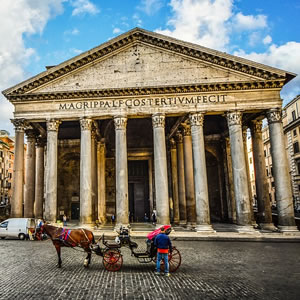 What is Roman?
In historiography, ancient Rome is Roman civilization. From the founding of the city of Rome in the 8th century BC to the collapse of the Western Roman Empire in the 5th century AD, encompassing the Roman Kingdom, Roman Republic and Roman Empire until the fall of the western empire. The civilization began as an Italic settlement in the Italian peninsula, dating from the 8th century BC, that grew into the city of Rome and which subsequently gave its name to the empire over which it ruled and to the widespread civilisation the empire developed. The Roman empire expanded to become one of the largest empires in the ancient world, though still ruled from the city, with an estimated 50 to 90 million inhabitants (roughly 20% of the world's population) and covering 5.0 million square kilometres at its height in AD 117.