Uploaded: 18 Jun 2025 (1 year ago) · Shared: 23 Jul 2025
Duration: 25:29
Video Description
Did early Arabs adopt Zoroastrian beliefs, rituals, and texts into Islam, or do these theological parallels reflect a shared Near Eastern heritage? This engaging video from HistoryUN investigates the intriguing historical connections between pre-Islamic Persian traditions, early history, and the evolution of Islamic faith. By examining key theological concepts, ritual practices, and ancient manuscripts, the discussion offers balanced insights for followers of Islam, Christianity, and Judaism seeking a deeper context for religious history.
Exploring how comparative religion shapes our understanding of early scriptures, this study highlights critical perspectives on how faith traditions interacted across the region. Viewers will gain a richer appreciation for Islamic guidance and historiography while discovering how ancient cultural exchanges influenced spiritual reminders. Perfect for history enthusiasts and students of religion, this analysis unpacks complex historical narratives with academic rigor, clarity, and respect for diverse faith communities.
Explore More
Zoroastrian HistoryUN Arabs IslamSearch Google Search Explore Topics
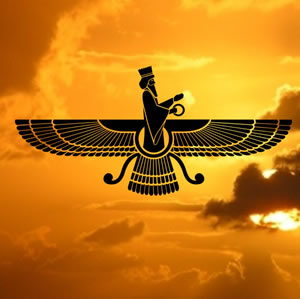 What is Zoroastrian?
Zoroastrianism is an Iranian religion and one of the world's oldest organized faiths, based on the teachings of the Iranian-speaking prophet Zoroaster. It has a dualistic cosmology of good and evil within the framework of a monotheistic ontology and an eschatology which predicts the ultimate conquest of evil by good. Zoroastrianism exalts an uncreated and benevolent deity of wisdom known as Ahura Mazda (Lord of Wisdom) as its supreme being. Historically, the unique features of Zoroastrianism, such as its monotheism, belief in free will and judgement after death, conception of heaven, hell, angels, and demons, among other concepts, may have influenced other religious and philosophical systems, including the Abrahamic religions.
 Who are HistoryUN?
Welcome to HISTORY UNLIMITED (formerly ILM FILM). The World's First official App for Islamic History Courses & Programs. HISTORYUN is a platform focused on Islamic history, offering courses, seminars, and resources for enthusiasts. It aims to provide an immersive and interactive learning experience about the history of Islam.
 Who are Arabs?
Arabs are an ethnic group mainly inhabiting the Arab world in West Asia and North Africa. A significant Arab diaspora is present in various parts of the world. Arabs from Morocco to Iraq share a common bond based on ethnicity, language, culture, history, identity, ancestry, nationalism, geography, unity, and politics which give the region a distinct identity and distinguish it from other parts of the Muslim world. They also have their own customs, literature, music, dance, media, food, clothing, society, sports, architecture, art and, mythology. Arabs have significantly influenced and contributed to human progress in many fields, including science, technology, philosophy, ethics, literature, politics, business, art, music, comedy, theatre, cinema, architecture, food, medicine, and religion. Before Islam, most Arabs followed polytheistic Semitic religion, while some tribes adopted Judaism or Christianity and a few individuals, known as the hanifs, followed a form of monotheism.
 What is Islam?
One of the major religions of the world, Islam literally translates to "submission," as a follower of Islam (Muslims) devotes their life to that of their God. The religion began with the teachings of Muhammad in the 7th century. The theology of Islam is based on the Qur'an, which was given to Muhammad by God. Some of the major fundamental principles of Islam include the Five Pillars, which hope to unite all Muslims into a community. Two different factions of Muslims exist - the majority are known as Sunni, with a small percentage known as Shi'a - both predominantly reside throughout the Middle East. Muhammad died in 632 AD and the religion of Islam formally started after his death. The Quran was formally compiled and finalised in 650 AD, prior to which it was 'memorised' and written across many parchments.