903 views
·
Last viewed: 2 hrs ago
Uploaded: 28 Feb 2017 (10 years ago) · Shared: 21 Nov 2017
Duration: 55:53
Uploaded: 28 Feb 2017 (10 years ago) · Shared: 21 Nov 2017
Duration: 55:53
Youtube Description
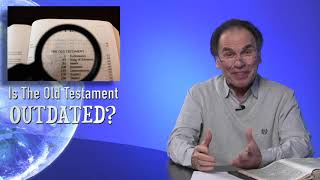
In a rare presentation, Richard Rubenstein, author and professor of Conflict Resolution at George Mason University, addresses a conference of One Godbelievers in Atlanta. Rubenstein, author of the book 'When Jesus became God' brings us exceptional insights into the great Christian conflicts that surrounded the 'Arian' controversy and particularly the council of Nicea in 325 AD. This is a must see for everyone with an interest in church history, the development of post-biblical Christian orthodoxy and/or conflict resolution.
Explore More
Richard Rubenstein Constantine Athanasius Nicaea AriusSearch Google Search Explore Topics
 Who is Richard Rubenstein?
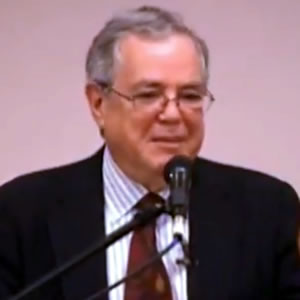
Richard Rubenstein (born 1938) is an author and University Professor of Conflict Resolution and Public Affairs at George Mason University. Rubenstein holds degrees from Harvard College, Oxford University (as a Rhodes Scholar), and Harvard Law School.
 Who was Constantine?
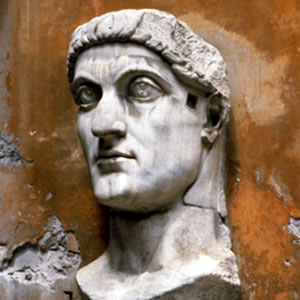
Constantine the Great (27 February 272 AD-22 May 337 AD) was a Roman Emperor who ruled between 306 and 337 AD. Born on the territory now known as Nis, located in Serbia, he was the son of Flavius Valerius Constantius, a Roman Army officer of Illyrian origins. His mother Helena was Greek. His father became Caesar, the deputy emperor in the west, in 293 AD. Constantine was sent east, where he rose through the ranks to become a military tribune under Emperors Diocletian and Galerius. Constantine was the first Roman emperor to convert to Christianity. Although he lived most of his life as a pagan, he joined the Christian faith on his deathbed, being baptised by Eusebius of Nicomedia. He played an influential role in the proclamation of the Edict of Milan in 313, which declared religious tolerance for Christianity in the Roman empire. He called the First Council of Nicaea in 325 AD that produced the statement of Christian belief known as the Nicene Creed.
 Who was Athanasius?
Athanasius of Alexandria (298-373 AD), also called Athanasius the Great, Athanasius the Confessor or Athanasius the Apostolic was the 20th bishop of Alexandria (as Athanasius I). His on-again-off-again episcopate spanned 45 years of which over 17 encompassed five exiles, when his episcopate was replaced on the order of four different Roman emperors. Athanasius was a Christian theologian, a Church Father, the chief defender of Trinitarianism against Arianism, and a noted Egyptian leader of the fourth century. Conflict with Arius and Arianism as well as successive Roman emperors shaped Athanasius' career. In 325 AD, at the age of 27, Athanasius began his leading role against the Arians as a deacon and assistant to Bishop Alexander of Alexandria during the First Council of Nicaea. Roman emperor Constantine the Great had convened the council in August 325 to address the Arian position that the Son of God, Jesus of Nazareth, is of a distinct substance from the Father.
 Where is Nicaea?
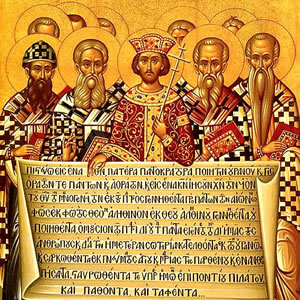
Nicaea or Nicea was an ancient city in northwestern Anatolia. It is primarily known as the site of the First and Second Councils of Nicaea (the first and seventh Ecumenical councils in the early history of the Christian Church), the Nicene Creed (which comes from the First Council), and as the capital city of the Empire of Nicaea following the Fourth Crusade in 1204, until the recapture of Constantinople by the Byzantines in 1261.
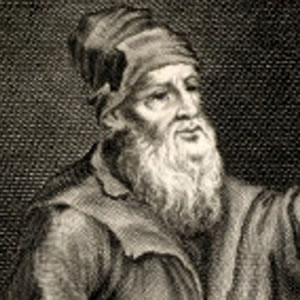 Who was Arius?
Arius 256-336 AD, was a Christian presbyter and ascetic of Berber origin, and priest in Baucalis in Alexandria, Egypt. His teachings about the nature of the Godhead in Christianity, which emphasized the Father's divinity over the Son, and his opposition to what would become the dominant Christology, Homoousian Christology, made him a primary topic of the First Council of Nicaea, which was convened by Emperor Constantine in 325 AD.