Uploaded: 18 Apr 2012 (14 years ago) · Shared: 01 Aug 2017
Duration: 51:30
Video Description
In this insightful video, Ray Hagins explores the historical and theological connections between Serapis Christus, Ptolemy, and the Council of Nicaea, where Emperor Constantine played a pivotal role in shaping the early Christian faith. Delving into the rich tapestry of religious history, Hagins examines the influences of ancient deities and the political dynamics that shaped the figure of Prophet Jesus Christ. This discussion offers valuable perspectives for followers of Judaism, Christianity, and Islam, providing a deeper understanding of the early history and the interplay between different faiths. Whether you are seeking spiritual reminders or a broader view of religious narratives, this video is a must-watch for anyone interested in the roots of monotheistic traditions.
Explore More
Council of Nicaea Constantine Ray Hagins Ptolemy Serapis Nicaea JESUS
JESUS
Search Google Search Explore Topics
 What was the Council of Nicaea?
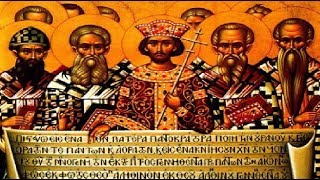
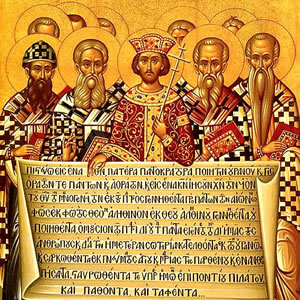
The First Council of Nicaea was a council of Christian bishops convened in the Bithynian city of Nicaea (now ?znik, Bursa province, Turkey) by the Roman Emperor Constantine I in 325 AD. Its main accomplishments were settlement of the Christological issue of the divine nature of God the Son and his relationship to God the Father, the construction of the first part of the Nicene Creed, establishing uniform observance of the date of Easter, and promulgation of early canon law.
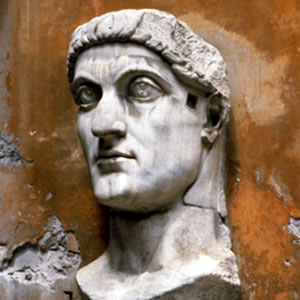 Who was Constantine?
Constantine the Great (27 February 272 AD-22 May 337 AD) was a Roman Emperor who ruled between 306 and 337 AD. Born on the territory now known as Nis, located in Serbia, he was the son of Flavius Valerius Constantius, a Roman Army officer of Illyrian origins. His mother Helena was Greek. His father became Caesar, the deputy emperor in the west, in 293 AD. Constantine was sent east, where he rose through the ranks to become a military tribune under Emperors Diocletian and Galerius. Constantine was the first Roman emperor to convert to Christianity. Although he lived most of his life as a pagan, he joined the Christian faith on his deathbed, being baptised by Eusebius of Nicomedia. He played an influential role in the proclamation of the Edict of Milan in 313, which declared religious tolerance for Christianity in the Roman empire. He called the First Council of Nicaea in 325 AD that produced the statement of Christian belief known as the Nicene Creed.
 Who is Ray Hagins?
Ray Hagins is the founder, chief elder and national spiritual leader of the Afrikan Village & Cultural Center with headquarters in St. Louis, MO.
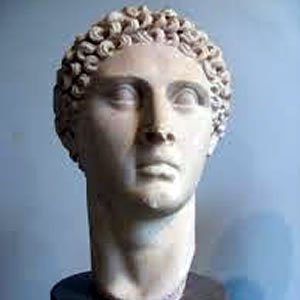 Who was Ptolemy?
Ptolemy I Soter (367 BC-282 BC) was a Macedonian Greek general under Alexander the Great. He was one of the three Diadochi who succeeded to his empire. Ptolemy became ruler of Egypt (323-282 BC) and founded a dynasty which ruled it for the next three centuries, turning Egypt into a Hellenistic kingdom and Alexandria into a center of Greek culture. He assimilated some aspects of Egyptian culture, however, assuming the traditional title pharaoh in 305/4 BC.
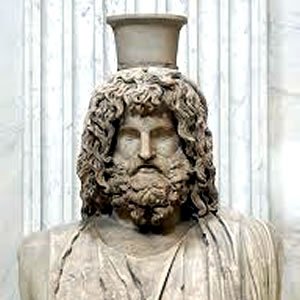 Who was Serapis?
Serapis is a Graeco-Egyptian deity. The cult of Serapis was introduced during the third century BC on the orders of Pharaoh Ptolemy I Soter of the Ptolemaic Kingdom as a means to unify the Greeks and Egyptians in his realm. A serapeum was any temple or religious precinct devoted to Serapis. The cultus of Serapis was spread as a matter of deliberate policy by the Ptolemaic kings, who also built the immense Serapeum of Alexandria. Serapis continued to increase in popularity during the Roman Empire, often replacing Osiris as the consort of Isis in temples outside Egypt. Serapis was depicted as Greek in appearance but with Egyptian trappings, and combined iconography from a great many cults, signifying both abundance and resurrection.
Where is Nicaea?Nicaea or Nicea was an ancient city in northwestern Anatolia. It is primarily known as the site of the First and Second Councils of Nicaea (the first and seventh Ecumenical councils in the early history of the Christian Church), the Nicene Creed (which comes from the First Council), and as the capital city of the Empire of Nicaea following the Fourth Crusade in 1204, until the recapture of Constantinople by the Byzantines in 1261.