SABBATH
According to Exodus, the Sabbath is a day of rest on the seventh day, commanded by God to be kept as a holy day of rest, as God rested from creation. It is observed differently among the Abrahamic religions and informs a similar occasion in several other practices. Although many viewpoints and definitions have arisen over the millennia, most originate in the same textual tradition of: "Remember the sabbath day, to keep it holy".
Youtube Videos on Sabbath (5)
 The Roman Catholic Church changed the
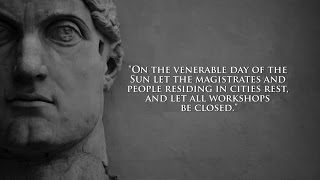 In 321 AD, Emperor Constantine, a confirmed pagan Sun Worshipper changed the
 In 1 Corinthians 16:2, did Apostle Paul change
 In 1 Corinthians 16:2, did Apostle Paul change
FAQ on Sabbath (5)
1.What did Moses command his people to do?
In the text of the Hebrew Bible (the Torah), Moses explicitly commanded the Israelites to strictly observe the covenantal laws, moral statutes, and civil judgments given by God at Mount Sinai, summarized in Deuteronomy 6:4-5. Historical-critical scholars emphasize that Moses' mission was to establish a highly structured, law-observant community that rejected ancient polytheism and maintained a unique identity through dietary codes (Kosher), Sabbath observance, and sacrificial rituals. Both Jewish and Islamic traditions view Moses as a lawgiver whose primary instruction was obedience to divine law.
2.What was the miracle of the sun standing still for Joshua?
During a crucial battle to secure victory before the Sabbath began, Joshua prayed to God to delay sunset. Across biblical accounts and Hadith traditions, God miraculously halted the movement of the sun in the sky, granting Joshua's army the extra daylight needed to complete their mission.
3.What is the significance of the Shabbat (Sabbath)?
Shabbat is the Jewish day of rest, observed from Friday evening at sundown until Saturday night. It commemorates God's day of rest after creation. Observant Jews refrain from creative or constructive work (such as driving, using electronics, or cooking) to focus entirely on family, community, prayer and rest.
4.Why do Adventists worship on Saturday instead of Sunday?
The practice of Saturday worship is the defining feature of the denomination. Adventists observe the Sabbath on the seventh day of the week (Saturday), tracking it from Friday sunset to Saturday sunset. They believe that the Saturday Sabbath is a perpetual, unchangeable commandment established by God at Creation and encoded in the Ten Commandments, arguing that the historical shift to Sunday worship was a human tradition rather than a biblical directive.
5.Is the Seventh-day Adventist Church considered a cult?
No, mainstream theologians and Christian organizations do not classify the Seventh-day Adventist Church as a cult. While some evangelical critics historically labeled them as such due to unique doctrines like the Saturday Sabbath and the status of Ellen G. White. Modern consensus recognizes them as a legitimate, orthodox Protestant denomination. They firmly affirm the divinity of Jesus Christ, salvation through His grace, and the supreme authority of the Bible.
Scripture Themes on Sabbath (1)
| 1. Jesus declares Himself Lord of the Sabbath | Luke 12:1-14 |