IRAN PERSIA
With over 81 million inhabitants, Iran is the world's 18th most populous country. It is the second largest country in the Middle East and the 17th largest in the world.
Youtube Videos on Persia, Iran (27)
 In Psalm 83, is Israel and USA going to war with Palestine, Iran, Iraq, Lebanon, Jordan, Egypt and Syria?
 The War Hungry Leech will never give up until Syria and Iran are destroyed - Leo Muhammad (NOI)
 Tour of Tehran, Iran | World Nomac
 Only Iran Supports Palestine. Arab Countries Support Israel | Lowkey | George Galloway
 Did America bomb Iran due to Israel-Mossad-Epstein links? | Heiko Khoo | Speakers Corner
 Persian Iran surpasses weak Arab Countries who failed to protect Palestine | Usuli Institute
 Humanity is grateful to Iran for confronting Israel | Lowkey | Danny Haiphong
 In the History of Persian Iran lay the foundations of Sunni Islam | Yasir Qadhi
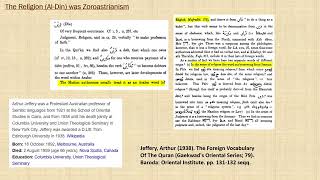 Influence of
 Iran-Israel War unleashes Greater Israel project | Lowkey
 Israel quotes 'Amalek' Bible verse as 165 School girls in Iran are killed | Young Turks
 American Christian Zionist soldiers to fight Iran to fulfil Biblical 'Jesus Return' prophecy | Young Turks
 The Israel-Iran (
 Origins of Israel-Iran War start with Abraham | Unraveling Scriptures
 Israel leads USA into WW3 Iran War | TRT World
 Israeli Plan to destroy Iran or America from a Drone Base in Georgia | Victor-Jugo Vaca | Redacted
 Shameful Zionist Arab Leaders and Muslim Countries attack Iran | George Galloway
 72,000 Palestinians killed, Israel attacks Iran to divert attention | TRT World
 How
 UAE and Saudi Arabia label Iran a dictatorship. WHAT A JOKE! | Usuli Institute
 Why is Shia Iran the only Country standing against the Petrodollar and Israel? | Omar Baloch
 Sunni vs Shia vs Zionism (Saudi Arabia, UAE, Turkey, Iran, Syria, Lebanon, Israel) | Omar Baloch
 Has Iran terminated Israel's Zionist project | Lowkey | Myriam Francois
 Rome-
 Israeli War, Zionism and Iran (2026) | Shmuley Boteach vs Sulaiman Ahmed
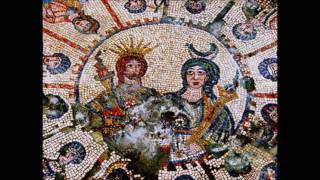
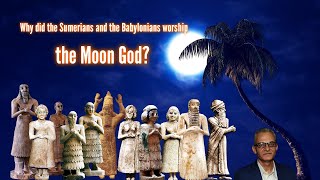 Akkadian (Iran/Iraq) Worship of Sin the Moon God | Atum
 Sacrifice To Baal Unleashed the Iran War | Candace Owens
News on Persia, Iran (14)
FAQ on Persia, Iran (7)
1.Where was Prophet Daniel born and buried?
Daniel was born around 623 BC in Jerusalem, captured as a teenager during Nebuchadnezzar's siege, and lived most of his life in exile. He died around 538 BC, and his tomb is traditionally believed to be located in Susa (modern-day Iran).
2.What is Zoroastrianism and who is its founder?
Zoroastrianism is one of the world's oldest continuously practiced monotheistic religions. It was founded in ancient Iran (Persia) by the prophet Zarathustra (known in Greek as Zoroaster) during the late second or early first millennium BCE.
3.What is the Bahai Faith?
The Bahai Faith is a independent, monotheistic global religion founded in 19th-century Persia (modern-day Iran). It is centered on the belief in one God who progressively reveals His will to humanity through successive divine messengers. It is recognized as one of the most geographically widespread religions in the world.
4.Is the Bahai Faith a sect of Islam?
No, it is a distinct, independent religion. While it emerged out of a Muslim context in Persia similar to how Christianity emerged out of Judaism, the Bahai Faith features its own unique laws, administration, and expansive volume of sacred scriptures revealed by Baha'u'llah.
5.Does Gnosticism still exist today?
Yes. The only continuously surviving, unbroken lineage of ancient Gnosticism is practiced by the Mandaeans, a small ethnoreligious group natively from Iraq and Iran who revere John the Baptist. Additionally, the modern era has seen a massive resurgence of Neo-Gnosticism. Driven by the mid-20th-century translation of the Nag Hammadi texts, active contemporary Gnostic churches, esoteric orders, and modern 'Spiritual but Not Religious' movements exist globally today.
6.What is Zoroastrianism and how did it start?
Zoroastrianism is one of the world's oldest continuously practiced monotheistic religions, originating in ancient Persia (modern-day Iran) roughly 3,500 years ago. It was founded by the prophet Zoroaster (Zarathustra), who rejected the existing polytheistic Iranian religions after receiving a series of divine visions. He taught that there is only one supreme, benevolent creator god, radically shaping the development of future Abrahamic religions like Judaism, Christianity, and Islam.
7.Did Zoroastrianism influence Christianity and Judaism?
Yes, Zoroastrianism heavily influenced the theological architecture of Judaism, Christianity, and Islam. Following the Babylonian Exile, when Cyrus the Great of Persia liberated the Jewish people, core Zoroastrian concepts integrated into second-temple Jewish thought. These foundational ideas include a linear view of time, a final judgment day, a cosmic savior figure, a strict binary heaven and hell, and a personified adversary of God (Satan). Furthermore, the biblical 'Magi' who visited the infant Jesus were explicitly Zoroastrian astrologer-priests.