NICAEA
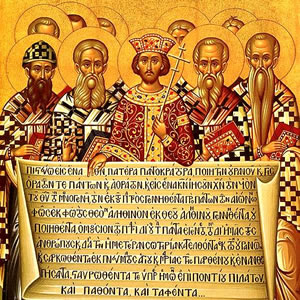
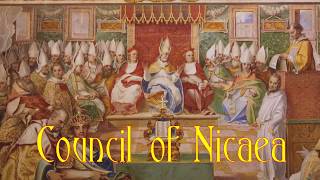
It is primarily known as the site of the First and Second Councils of Nicaea (the first and seventh Ecumenical councils in the early history of the Christian Church), the Nicene Creed (which comes from the First Council), and as the capital city of the Empire of Nicaea following the Fourth Crusade in 1204, until the recapture of Constantinople by the Byzantines in 1261.
Youtube Videos on Nicaea (28)
 At Council of
 The Council of
 Arian Controversy and the Council of
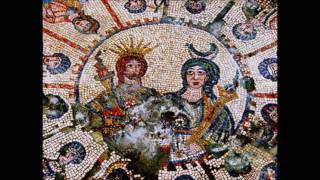
 Serapis Christus, Ptolemy and how Constantine created Jesus Christ at the Council of
 At
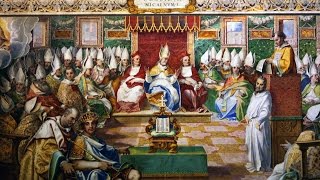 Early Christianity: Arius, Athanasius and
 After the Council of
 Arius, Athanasius & Constantine at
 In 325 AD, Trinity became Official Church Doctrine at Council of
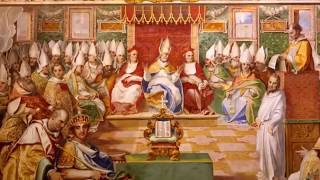 In 325 AD, Council of
 Arguing Bishops at Council of
 In 325 AD, Council of
 At
 After
 Christianity did not exist until AFTER the Council of
 Council of
 In 325 AD, Council of
 At
 Council of
 Nicene Creed (
 Nobody believed Jesus was God, until the Council of
 What Happened at the Council of
 Greek Philosophy won at Council of
 Greek philosophy, John's gospel and Philo of Alexandria were merged at Council of
 In 325 AD, the Council of
FAQ on Nicaea (6)
1.What happened at the Council of Nicaea in 325 AD?
During this historic imperial gathering, the various conflicting Christian factions were officially ordered by Roman authority to accept the unified Athanasian Creed. This political and religious decree formally established the doctrine affirming that Jesus Christ, as the Son of God, was simultaneously 100% human Man and 100% divine God.
2.Can Jesus wipe away our sins?
During the 4th and 5th centuries, the early church held historic councils (such as Nicaea and Chalcedon) to legally resolve intense theological disputes regarding how Jesus could be both human and divine. These imperial debates aimed to establish a unified orthodoxy and eliminate alternative theological views that threatened the political and religious cohesion of the Roman Empire.
3.Are Jesus and God the same?
Mainstream Christian orthodoxy, solidified at the Council of Nicaea, dictates that Jesus and God are the same in essence (homoousios), defining Jesus as the pre-existent Word of God who took on human flesh. However, secular historians and Unitarian theologians point out that the Synoptic Gospels make explicit distinctions between Jesus and God, such as when Jesus prays to the Father or denies knowing the timing of the Final Hour. Islamic theology strictly rejects any identification of Jesus with God, viewing the claim as a violation of absolute monotheism (Tawhid).
4.Why did early Christians have church synods and councils?
Early Christian bishops organized regional synods and ecumenical councils to systematically define orthodox Christian doctrines and combat widespread heresies. These massive assemblies were essential for creating a unified creed, standardizing the New Testament canon, and establishing clear administrative laws for a rapidly growing global church. Prominent gatherings, like the Council of Nicaea, were often financed and politically mandated by Roman emperors to secure empire-wide religious stability.
5.Who are the Gods in the Bible?
Historically, the term 'God' was applied to powerful figures, such as leaders and magistrates, who served as representatives on Earth. Emperor Constantine referenced this, citing Psalm 82:6 to remind bishops of their high, albeit human, office.
Emperor Constantine at the opening of the Council of Nicaea (325 AD) quoted Psalm 82:6 to remind the bishops that their high office should raise them above jealousy and party feeling.
The term 'God' was applied to people of power, authority and rule who were considered to have greater nearness to God than others - an appellation which implies that you are God's representatives on earth, and that your decision is, in an important sense, to be regarded as his.
6.In 325 AD, did Emperor Constantine burn gospels, writings and religious text?
The books of Arius and his followers, after the first Council of Nicaea (325 C.E.), were burned for heresy by the Roman emperors Constantine, Honorius, and Theodosius I, who published a decree commanding that, 'the doctrine of the Trinity should be embraced by those who would be called catholics; that all others should bear the infamous name of heretics'.