KABAH BLACK STONE
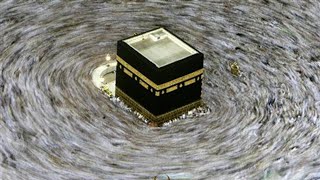
It is revered by Muslims as an Islamic relic which, according to Muslim tradition, dates back to the time of Adam and Eve. The stone was venerated at the Kaaba in pre-Islamic pagan times. According to Islamic tradition, it was set intact into the Kaaba's wall by the prophet Muhammad in 605 CE, five years before his first revelation. Since then it has been broken into fragments and is now cemented into a silver frame in the side of the Kaaba. Muslim pilgrims circle the Kaaba as a part of the tawaf ritual during the hajj and many try to stop and kiss the Black Stone, emulating the kiss that Islamic tradition records that it received from Muhammad. Muslims do not worship the Black Stone.
Youtube Videos on Kabah, Black Stone (28)
 My turning point was when I discovered the
 Why do Muslims commit Idolatory and pray to the
 We kiss the Black Stone. Not worship it! - Abdul Hamid vs Lizzy
 Do Muslims pray to the
 In Exodus 2:15, Moses went to
 Romans, Greeks, Egyptians rampant with Idolatory. Muslims kiss a Black Stone! - Shabir Yusuf vs Arun
 The Black Stone and Safa-Marwa 'most likely' originate from pre-Islam, pagan Arab rituals - Abu Layth
 What is the Hajj pilgrimage (
 Hajj: Poor People more deserving of Love than the
 Historians write of many
 Saudi Arabia: Where Tall Buildings overwhelm Mecca's
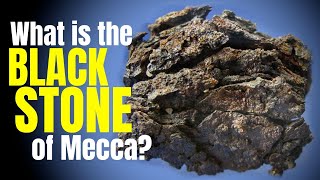 The Black Stone of Mecca, Saudi Arabia
 Stories of Prophets: Abraham builds
 Astrotheology -
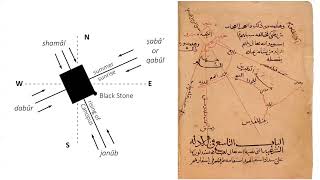
 Hidden Secrets of the Black Stone | Islamic Circles
 Origins of
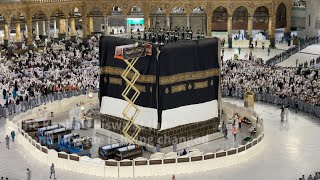
 Introduction to the
 Pre-Islam Arabia was Polytheist with Allah 'The High God' and Hubal The Chief, Moon God of
 Hajj at
 Why did the
 The Quraysh Arab Tribe placed The
 Early Developments in Quran Compilation, Islam &
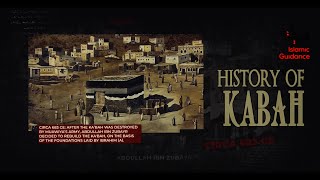 History of The
 Hidden History of The
 What is the
 Muhammad was first person to claim Abrahamic origin of
FAQ on Kabah, Black Stone (4)
1.Who built the Kabah in Saudi Arabia?
Prophet Abraham built the Kaaba for people to worship God. While pagan Arabs admitted this fact and even kept the stone where he used to stand to build the Kaaba (Abraham's station), they brought idols to the Kaaba and worshiped them to get closer to Abraham's Lord, Allah, God of gods. Prophet Muhammad came with the monotheistic message of Islam. Arabs defended these idols and refused to give up the religion of their fathers and grandfathers.
2.What is Prophet Abraham's connection to the Kabah in Mecca, Saudi Arabia?
Along with his eldest son, Ishmael, Prophet Abraham rebuilt the foundations of the Kaaba in Mecca, establishing it as the world's first house dedicated purely to the worship of God. Key rituals of the Islamic Hajj pilgrimage such as walking between the hills of Safa and Marwa and the symbolic stoning of the devil directly commemorate the actions of Abraham and his family.
3.What role did Prophet Ishmael play in building the Kabah?
As an adult, Ishmael joined his father Abraham to construct the Kabah, the first house of monotheistic worship in Mecca. Together, they raised its physical foundations and prayed for God to make their descendants a righteous nation dedicated to monotheism.
4.How long did Prophet Ishmael live, and where is he buried?
Ishmael was born around 1727 BC and lived to be 137 years old. He passed away around 1590 BC and is traditionally buried near the Kabah (within the Hijr Ismail area) in Mecca, Saudi Arabia.