HAJJ
It is a mandatory religious duty for Muslims that must be carried out at least once in their lifetime by all adult Muslims who are physically and financially capable of undertaking the journey, and can support their family during their absence. In Islamic terminology, Hajj is a pilgrimage made to Kaaba, the "House of God", in the sacred city of Mecca in Saudi Arabia. The rites of Hajj are performed over 5 or 6 days. It is a demonstration of the solidarity of the Muslim people, and their submission to God (Allah).
Youtube Videos on Hajj (12)
 Abraham, Hagar and
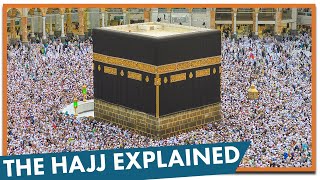 What is the

 Petra, Jordan was home to pre-Islamic Arab Gods: Lat, Uzza, Hubal; influencing the
 Early Islam was influenced by Sabians on Worship, Ramadan and
 How Quraysh Arabs influenced Muhammad to accept
 Will Israel control the
 The Hidden Costs of
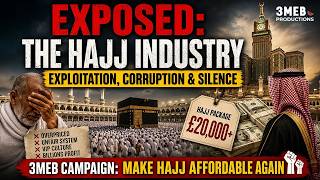 Saudi Arabia's
News on Hajj (10)
FAQ on Hajj (3)
1.What is Prophet Abraham's connection to the Kabah in Mecca, Saudi Arabia?
Along with his eldest son, Ishmael, Prophet Abraham rebuilt the foundations of the Kaaba in Mecca, establishing it as the world's first house dedicated purely to the worship of God. Key rituals of the Islamic Hajj pilgrimage such as walking between the hills of Safa and Marwa and the symbolic stoning of the devil directly commemorate the actions of Abraham and his family.
2.What are the Five Pillars of Islam?
The Five Pillars of Islam (Arkan al-Islam) form the mandatory core framework of a Muslim's spiritual and daily life:
1. Shahada (Faith): Reciting the declaration that there is no god but Allah and Muhammad is His messenger.
2. Salah (Prayer): Performing ritual prayers five times a day facing the Kaaba in Mecca.
3. Zakat (Charity): Giving a fixed percentage (typically 2.5%) of one's accumulated wealth to support the poor.
4. Sawm (Fasting): Abstaining from food, drink, and marital relations from dawn to sunset during the holy month of Ramadan.
5. Hajj (Pilgrimage): Undertaking the sacred pilgrimage to Mecca at least once in a lifetime, if physically and financially able.
3.What are the two main holidays in Islam?
Islam features two major global festivals celebrated annually by all Muslims:
* Eid al-Fitr (Festival of Breaking the Fast): Celebrated immediately following the end of the holy month of Ramadan, marked by congregational prayers, charity, gift-giving, and festive meals.
* Eid al-Adha (Festival of Sacrifice): Celebrated during the annual Hajj pilgrimage month, commemorating the Prophet Abraham's willingness to sacrifice his son in obedience to God. It is marked by the ritual sacrifice of livestock, with the meat distributed equally among family, friends and the poor.
Articles on Hajj (1)
Hajj: From Pre-Islam Ritual to Monotheism in 22 Steps

381 views
|