CHINA
It is the world's most populous country, with a population of around 1.4 billion in 2019. Covering approximately 9.6 million square kilometres, it is the world's third or fourth-largest country by area. Governed solely by the Chinese Communist Party (CCP), the state exercises jurisdiction over 22 provinces, five autonomous regions, four direct-controlled municipalities (Beijing, Tianjin, Shanghai, and Chongqing), and the special administrative regions of Hong Kong and Macau. China is a unitary one-party socialist republic, and is one of the few existing nominally socialist states. Political dissidents and human rights groups have denounced and criticized the Chinese government for human rights abuses, including suppression of religious and ethnic minorities, censorship, mass surveillance, and their response to protests, notably in 1989.
News on China (69)
Youtube Videos on China (26)
 1M Uyghur Muslims in 180 Prison camps in
 How



 America Follows
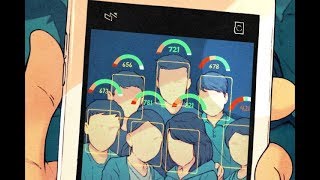
 Exporting Dystopia:
 Inside
 400M Surveillance Cameras:

 Is the NHS Track & Trace app evolving into
 At War with
 By 2030, 75% of world enslaved under Artificial Intelligence-based surveillance systems from
 How COVID effects the global financial systems of US Dollar Banks and
 COVID will turn the World into
 The
 How Communist
 Book Burning is Back! Christians, Buddhists & Muslims at risk in Communist
 ESG Social Credit Scores 'imported from
 Serbia distributes
 Digital ID and CBDC - Developed in
 USA, UK, Russia,
 Authoritarian
 Where are the Muslims of Xinjiang,
 United States of Technocracy (UST) &
FAQ on China (11)
1.Is atheism growing or dying out globally?
Global statistics indicate that atheism is expanding rapidly. According to historical data from the WIN-Gallup international polls, non-Muslim and secular countries show substantial rates of disbelief, with countries like China (91%), Japan (87%), Sweden (78%), and the UK (73%) showcasing dominant or massive secular populations. A consensus among online demographic discussions on Quora confirms that despite arguments about differing birth rates, atheism continues to grow largely because many individuals raised in religious households shift toward secularism during adolescence or adulthood.
2.Where is the Bon religion practiced today?
The global hub of the Bon religion is Menri Monastery in Dolanji, India, which was re-established in exile following the Chinese invasion of Tibet in 1959. However, it is actively practiced by an estimated 400,000 Bonpo followers globally, primarily across the Tibetan Plateau, parts of western China, Nepal, and adjacent Himalayan regions. It has also gained a notable following in Western nations through prominent diasporic lamas.
3.What are the three main branches of Buddhism?
Buddhism has evolved into several distinct traditions, primarily categorized into three major branches:
* Theravada ('School of the Elders'): The oldest surviving branch, prevalent in Sri Lanka, Thailand, Cambodia, and Myanmar; it emphasizes monastic life and the preservation of the early Pali Canon.
* Mahayana ('Great Vehicle'): Popular in China, Japan, Korea, and Vietnam; it emphasizes the ideal of the Bodhisattva, an enlightened being who vows to save all sentient creatures.
* Vajrayana ('Diamond Vehicle'): Prominent in Tibet, Bhutan, and Mongolia; it utilizes esoteric practices, mantras, and tantric meditation to accelerate the path to enlightenment.
4.Where is Chinese folk religion practiced today?
Chinese folk religion is actively practiced by hundreds of millions of people across Mainland China, Taiwan, Hong Kong, and Macau. Due to centuries of global migration, it also has a massive presence across Southeast Asia (particularly Singapore, Malaysia, and Thailand) and within Chinatown communities globally, where ancestral temples and traditional festivals like Lunar New Year remain central to cultural life.
5.How did Confucianism influence Chinese government and society?
Confucianism served as the official state ideology of imperial China for over two millennia, beginning heavily in the Han Dynasty. It completely shaped the historic Imperial Examination System, meaning civil servants, politicians, and government officials were selected and promoted based entirely on their mastery of Confucian texts rather than aristocratic birth. This created a highly structured meritocracy focused on ethics and civic duty.
6.Where is Confucianism practiced today?
While formal imperial structures ended in the early 20th century, Confucian values remain the cultural and psychological backbone of East Asian societies. Its principles fundamentally dictate family dynamics, business ethics, and social etiquette across China, Taiwan, South Korea, Japan, Vietnam, and Singapore. In modern corporate cultures across these regions, emphasis on hierarchy, group harmony, and lifelong education stems directly from Confucius.
7.What is Falun Gong?
Falun Gong is a spiritual discipline and new religious movement that originated in China in the early 1990s. The practice combines gentle qigong exercises and meditation with a moral philosophy focused on self-cultivation. It operates without a formal hierarchy, clergy, or physical places of worship, focusing instead on individual daily practice and moral improvement.
8.Who founded Falun Gong?
Falun Gong was founded by Li Hongzhi, who introduced the practice to the public in Changchun, China, in 1992. Li published the movement's foundational texts, structured its core exercises, and lectured extensively across China before moving to the United States in the late 1990s. Followers revere him as the spiritual master of the practice.
9.Why is Falun Gong banned in China?
The Chinese government officially banned Falun Gong in July 1999 after the movement experienced rapid growth, attracting tens of millions of practitioners. Following a massive, silent demonstration by followers outside the leadership compound in Beijing, the Chinese Communist Party (CCP) declared it an illegal, heretical organization. The government viewed the movement's massive scale and independent organizational capability as a potential threat to state control, leading to a long-running crackdown that has been widely documented and condemned by international human rights organizations.
10.Where is Falun Gong practiced today?
Following the 1999 ban in mainland China, the movement's center of gravity shifted globally. Today, Falun Gong is actively practiced in over 100 countries worldwide. It has a highly visible presence in Taiwan, the United States, Canada, Australia, and various European nations, where practitioners frequently host public information booths, perform exercises in public squares, and manage independent media outlets.
11.What is the difference between Taoism and Confucianism?
While both originated in ancient China and deeply influenced Asian culture, they approach life from opposite angles:
* Confucianism: Focuses on strict social hierarchy, duty, rigid family obligations, formal education and societal rituals to maintain order.
* Taoism: Rejects rigid social structures and intellectualism, prioritizing personal freedom, spontaneity, simplicity, and a return to the chaotic, beautiful state of raw nature.