Uploaded: 17 Dec 2018 (8 years ago) · Shared: 21 Aug 2019
Duration: 2:39
Video Description
Explore the intricate early history of Christian theology with scholar Kegan Chandler as he unpacks the controversial Greek term homoousios ("same substance"). At the pivotal Council of Nicea in 325 AD, Emperor Constantine promoted this ambiguous phrase to forge unity, yet its flexible meaning ignited decades of theological debate among influential figures like Athanasius, Eusebius, and Marcellus of Ancyra.
In this engaging discussion, Chandler draws on modern historical research to examine how early Church leaders navigated theological ambiguity to counter rival doctrines, while interpreting the phrase through their own distinct worldviews. Discover the fascinating Egyptian roots behind Constantine's religious thinking and gain fresh insights into the evolution of Christian faith, dogma, and Church history. Ideal for students of theology and historical religious studies, this video provides a compelling dive into the complex political and spiritual dynamics that shaped classical Christian thought.
Explore More
Kegan Chandler Athanasius Homoousios Eusebius SinSearch Google Search Explore Topics
 Who is Kegan Chandler?
Kegan Chandler is a Christian author and researcher of Early Christianity, pagan religion, and Gnosticism. He is an adjunct professor at Atlanta Bible College. Chandler holds a Master of Theology from Campbellsville University's School of Theology, where he studied Church History and Theology, and is a graduate of SCAD University, where he studied Graeco-Roman drama, medieval literature, and dramatic writing. He is the author of the forthcoming book 'Constantine and the Divine Mind' (Wipf and Stock, TBD), and 'The God of Jesus in Light of Christian Dogma' (Restoration Fellowship, 2016). He is also an award-winning screenwriter, and currently writes for his blog on Church history. Chandler also sits on the board of directors of the Unitarian Christian Alliance (formed 2019), and New Life Ministries of America, Inc., a small non-profit which has been producing Christian literature and financing overseas missions since 1994.
 Who was Athanasius?
Athanasius of Alexandria (298-373 AD), also called Athanasius the Great, Athanasius the Confessor or Athanasius the Apostolic was the 20th bishop of Alexandria (as Athanasius I). His on-again-off-again episcopate spanned 45 years of which over 17 encompassed five exiles, when his episcopate was replaced on the order of four different Roman emperors. Athanasius was a Christian theologian, a Church Father, the chief defender of Trinitarianism against Arianism, and a noted Egyptian leader of the fourth century. Conflict with Arius and Arianism as well as successive Roman emperors shaped Athanasius' career. In 325 AD, at the age of 27, Athanasius began his leading role against the Arians as a deacon and assistant to Bishop Alexander of Alexandria during the First Council of Nicaea. Roman emperor Constantine the Great had convened the council in August 325 to address the Arian position that the Son of God, Jesus of Nazareth, is of a distinct substance from the Father.
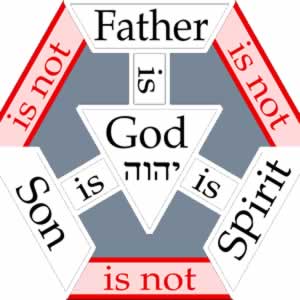 What is Homoousios?
Homoousios or Homoousion ('same in being, same in essence') is a Christian theological term. Homoousios is most notably used in the Nicene Creed in 325 AD, for describing Jesus (God the Son) as "same in being" or "same in essence" with God the Father. The same term was later also applied to the Holy Spirit in order to designate him as being "same in essence" with the Father and the Son. Those notions became cornerstones of theology in Nicene Christianity, and also represent one of the most important theological concepts within the Trinitarian doctrinal understanding of God.
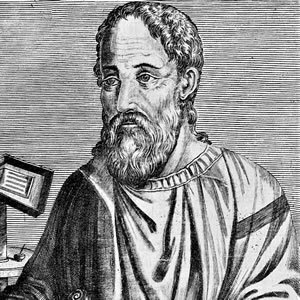 Who was Eusebius?
Eusebius of Caesarea (260-340 AD) was a historian of Christianity, exegete, and Christian polemicist. He became the bishop of Caesarea Maritima about 314 AD. Together with Pamphilus, he was a scholar of the Biblical canon and is regarded as an extremely learned Christian of his time. During the Council of Antiochia (325) he was excommunicated for subscribing to the heresy of Arius (Arianism), and thus withdrawn during the First Council of Nicaea where he accepted that the Homoousion referred to the Logos. Never recognized as a saint, he became counselor of Constantine the Great, and with the bishop of Nicomedia he continued to polemicize against Saint Athanasius of Alexandria, Church Fathers, since he was condemned in the First Council of Tyre in 335.
What is Sin?In Abrahamic contexts, sin is the act of violating God's will. Sin can also be viewed as anything that violates the ideal relationship between an individual and God; or as any diversion from the ideal order for human living. To sin has been defined as "to miss the mark". Sins fall in a spectrum from minor errors to deadly misdeeds. Catholicism regards the least corrupt sins as venial sins which are part of human living and carry immediate consequences on earth, and, if unrepented for, more painful purgation, assuming the person is destined to heaven, as it is written in the formation letter "Purgatory", "most of the early Fathers of the Church speak of a cleansing fire, though we cannot tell whether this means actual or spiritual fire." Conversely, sins of great evil are mortal sins which bring the consequence of hell if they are not addressed either through an act of perfect contrition or going to confession about them.