SIN
Sin can also be viewed as anything that violates the ideal relationship between an individual and God; or as any diversion from the ideal order for human living. To sin has been defined as "to miss the mark".
Sins fall in a spectrum from minor errors to deadly misdeeds. Catholicism regards the least corrupt sins as venial sins which are part of human living and carry immediate consequences on earth, and, if unrepented for, more painful purgation, assuming the person is destined to heaven, as it is written in the formation letter "Purgatory", "most of the early Fathers of the Church speak of a cleansing fire, though we cannot tell whether this means actual or spiritual fire."
Conversely, sins of great evil are mortal sins which bring the consequence of hell if they are not addressed either through an act of perfect contrition or going to confession about them.
Youtube Videos on Sin (23)
 Creation of Adam ,The First
 In Hebrews 9:22, is Blood necessary for Atonement of
 For popularity, Christianity required less work, more faith. Everyone and every
 Original
 God's Forgiveness is a manifestation of His Mercy. God wants me to
 In Mark 2:10, Jesus claims authority to forgive
 Heavenly
 Heavenly
 Heavenly
 You'll be screaming in Hellfire, you
 Quoting the Bible with Beer on your breath? Follow Jesus and rid
 World is overpopulated, so you abortion living babies? Selfishness is root of all
 In Paradise, 72 virgins await you. Pleasure is a
 God creates Man imperfect, commands obedience. Why punish
 Did Jesus forgive
 Apostle Paul lied. Jesus did not repair the 'Original
 In Romans 1:27, the Bible forbids homosexual lust and shameful acts. Say No to Temptation. Say No to
 King David had multiple affairs. Why does Torah allow great Prophets to commit
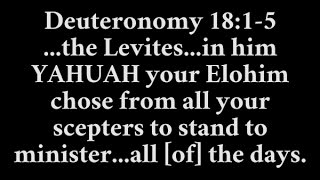 In Hebrews 9:22, Apostle Paul wrote only 'shedding blood' atoned for
 Only God forgives
 Did Man inherit Original
 Jesus overcame Death to Free us from
 Akkadian (Iran/Iraq) Worship of
FAQ on Sin (14)
1.Did a prophet ever commit a sin?
Islam teaches all prophets were of high moral character and did not succumb to the sins their people committed. Although prophets were humans and capable of human errors of judgment, but such errors does not diminish their superiority or the respect Muslims are obliged to have for them.
2.How did Apostle Paul differ with the Jewish Rabbis?
The Jewish Rabbis preached a person was saved so long as their intention was to remain within the covenant, and one truly repented and seek forgiveness for their sins.
Paul preached that every person was 'damned' until they was offered salvation. Mans problem was that he was 'in the flesh' in bondage to the Law, sold under Sin, enslaved by the fundamental spirits of the universe (ie. dead).
Paul preached the only cure was liberation from slavery and death by union with Christ, who had conquered death and sin.
3.Jesus was God as he had the power to forgive sin. Was he God?
Historical-critical scholars note that in 1st-century Jewish thought, a prophet or messianic figure could act as a uniquely authorized agent of the divine king, possessing the delegated authority to declare God's forgiveness on Earth without being God Himself.
Islamic theology maintains that the absolute power to forgive sins belongs exclusively to the Creator; therefore, any historical accounts of a prophet pronouncing forgiveness are understood as an announcement of God's mercy rather than a claim to personal divinity.
4.What was the main difference between Apostle Paul's religion and the message of Jesus?
The core difference lies in the theological meaning of Jesus' life, with Paul's creed fundamentally focusing on the crucifixion as a necessary cosmic sacrifice to save mankind from sin. While Jesus preached repentance and the ethical arrival of the Kingdom of God, Paul's Damascus vision shifted the entire framework to a savior faith centered on the mechanical necessity of Jesus' violent death and resurrection for salvation.
5.What is the central theological lesson from the story of Job?
The story of Job addresses the problem of suffering and divine justice. It demonstrates that hardship is not always a punishment for sin, but can be a test of faith, teaching believers to remain steadfast and trust God's ultimate wisdom regardless of worldly circumstances.
6.What is the Immaculate Conception versus the Virgin Birth?
Virgin Birth: The shared Christian and Islamic doctrine that Mary conceived Jesus miraculously without a human father.
Immaculate Conception: A specific Roman Catholic dogma stating that Mary herself was preserved from the stain of original sin from the moment of her own conception.
7.What is the famous story of Phinehas at Peor?
In the Book of Numbers (Chapter 25), when the Israelites began worshiping Baal of Peor and engaging in widespread immorality, a severe plague struck the camp. Phinehas intervened decisively to stop the sin and appease divine wrath, immediately halting the plague that had already killed 24,000 people.
8.Do Christian Science followers believe in heaven and hell?
Christian Scientists do not believe that heaven and hell are literal physical places where souls go after death. Instead, they define heaven and hell as present states of consciousness. Heaven is interpreted as a state of harmony, spiritual understanding, and closeness to God. Hell is viewed as a state of mortal mind dominated by fear, sin, ignorance, and the false belief that life is purely material.
9.What does it mean to be disfellowshipped?
Disfellowshipping is the formal expulsion of a member from the Jehovah Witness congregation. This occurs if a baptized Witness commits what the religion considers a 'gross sin' and is deemed unrepentant by a judicial committee of elders. Once a person is disfellowshipped, the congregation practices shunning, meaning family members and friends within the religion cut off all normal social interaction and spiritual communication with that person.
10.What do Mormons believe about the afterlife?
Mormonism/LDS theology features a uniquely optimistic view of the afterlife, teaching that almost all of humanity will inherit a kingdom of heavenly glory. They reject the traditional concept of a binary Heaven and Hell, believing instead in three degrees of glory based on a person's choices and acceptance of Christ:
1. The Celestial Kingdom: The highest realm, where those who accept Christ and keep his covenants live eternally with God and their families.
2. The Terrestrial Kingdom: For honorable people who did not fully accept the gospel of Christ.
3. The Telestial Kingdom: For those who chose a life of sin and rejected the gospel.
11.What is the New Thought view on sin, evil, and hell?
New Thought completely rejects the concepts of original sin, a literal devil, and eternal damnation in hell. In this philosophy, 'sin' is simply an old archer's term meaning 'to miss the mark', interpreted as a mistake or ignorance of one's true divine nature. Evil and suffering are not created by a dark cosmic force, but are the natural, shadow results of human beings misusing their creative thoughts and feeling separated from God.
12.What are the core beliefs of Shinto?
Shinto lacks a strict theological dogma, it focuses heavily on ritual practice and daily attitudes. Its foundational principles include:
* Animism: The belief that all things in nature, both living and inanimate possess a spiritual essence.
* Purity over Sin: Shinto does not teach the concept of 'original sin'. Instead, it focuses on avoiding kegare (spiritual impurity or pollution) which is caused by contact with death, disease and bad deeds.
* Harmony with Nature: Human beings are viewed as fundamentally good and are encouraged to live in alignment and balance with the natural world and the kami.
13.Why is the Unification Church famous for "Mass Weddings"?
The Unification Church is globally famous for its massive group marriage ceremonies, officially called the Holy Marriage Blessing Ceremony. In these events, thousands of couples often from different countries and entirely unacquainted before being matched are married simultaneously. In Unification theology, these ceremonies are not mere weddings but a vital, sacred ritual meant to cleanse the couples and their future children from original sin.
14.Do Wiccans believe in or worship the Devil?
No, Wiccans, Wicca adherents absolutely do not believe in or worship Satan (the Devil). The concept of the Devil is a strictly Abrahamic theological figure (found in Christianity, Islam, and Judaism) representing absolute evil. Because Wicca is a completely non-Abrahamic faith, it does not feature a binary system of pure heaven and absolute hell, nor does it recognize a personified lord of sin.
Scripture Themes on Sin (11)
| 1. Moses confronts the golden calf sin in the desert | Exodus 32 |
| 2. Jonah preaches repentance to Nineveh | Jonah 3-4 |
| 3. Joshua uncovers Achan's hidden sin at Ai | Joshua 7 |
| 4. Moses confronts the golden calf and Israel's rebellion in the desert | Mark 6:32-44 |
| 5. Joseph prefers prison over immorality | Quran 12:33 |
| 6. Brothers admit sin and elevate Joseph | Quran 12:91 |
| 7. Inhabitants of wooded glade steeped in sin | Quran 15:78 |
| 8. Moses confronts calf-worshipers with penance | Quran 2:54 |
| 9. Mary returns with infant Jesus to her people | Quran 19:27 |
| 10. Abel warns brother, Cain of sin and punishment | Quran 5:29 |
| 11. Systemic Sin and Destruction of Pharaoh and Overturned Cities | Quran 69:9 |
News on Sin (3)
Articles on Sin (2)
Prophets vs Sin: 19 Old Testament Prophets Analyzed

19,058 views
|
Jesus vs Apostle Paul: 1 Blood Sacrifice vs 21 OT Sin Atonements

11,029 views
|