IRAQ
It is bordered by Turkey to the north, Iran to the east, Kuwait to the southeast, Saudi Arabia to the south, Jordan to the southwest and Syria to the west. The capital, and largest city, is Baghdad. Iraq is home to diverse ethnic groups including Arabs, Kurds, Assyrians, Turkmen, Shabakis, Yazidis, Armenians, Mandeans, Circassians and Kawliya. Around 95% of the country's 37 million citizens are Muslims, with Christianity, Yarsan, Yezidism and Mandeanism also present. The official languages of Iraq are Arabic and Kurdish.
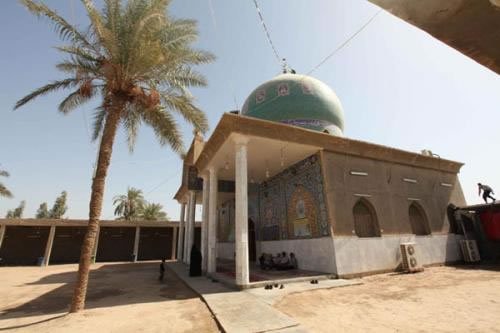
Photos on Iraq (35)




Youtube Videos on Iraq (28)
 George Bush and Tony Blair prayed to Jesus, before the
 The Christian Bible was used to justify Evil, the War in
 Christian Zionism was a powerful force in the US Invasion of
 ISIS Blowback: Created by the US Invasion of
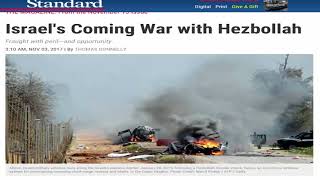 In Psalm 83, is Israel and USA going to war with Palestine, Iran,
 Nowhere to Hide:
 Invading
 Invading
 Saddam's
 US Invasion of
 US policy on destabilizing
 The Lies: War on Terror,
 Saddam Hussein's
 Mosul,
 Highway 80:
 Young British Muslims joining ISIS in
 'Management of Savagery' required 911, Wars in Afghanistan,
 Battle For Mosul,
 Edward Bernays PR methods used to push for American-led invasion of
 US resident dies after deportation to
 Killed in
 Are the Streets of
 Street Tour of Mosul,
 Akkadian (Iran/
 Walking in Mosul,
News on Iraq (17)
Photo Album on Iraq (13)
FAQ on Iraq (9)
1.How is Terah, Abrahams father connected to Iraq?
Ur of the Chaldeans (Ur Kasdim) was Terah's original homeland where he raised his family, including his sons Abram (Abraham), Nahor, and Haran. Most scholars identify this as the ancient Sumerian city-state of Ur in modern-day southern Iraq (though some scholars place it in northern Mesopotamia near modern-day southeastern Turkey).
2.How is Cain connected to Iraq?
In Genesis 4:17, Cain is exiled after killing Abel, settles in the land of Nod, and builds the world's first city, naming it Enoch after his son. Archaeologically, Uruk (Iraq) is widely recognized as one of the world's earliest major urban centers.
3.How is Cain linked to Iraq linguistically?
Some theories propose a connection between Enoch (also rendered Erech in Genesis 10:10) and Uruk. In Hebrew, Erech is directly identified by modern historians as the ancient city of Uruk (in Iraq)
4.Can Sumerian Kings connect Cain with Iraq?
The Sumerian King List credits the founding of Uruk's first royal dynasty to a figure named Mesh-ki-ang-gasher, who 'walked into the sea and disappeared'. Some biblical revisionist theorists draw parallels between this story and Cain's banishment into wanderings.
The second king of Uruk was Enmerkar. The prefix En- in Sumerian denotes 'Lord' or 'Ruler'. Some scholars analyze the names Enmerkar and Enoch as potential linguistic derivations of the same historical memory or tradition.
5.Do social advances connect Cain to Iraq?
Genesis 4 outlines Cain's lineage as pioneers of city-building, agriculture, pastoralism, music, and metallurgy (specifically Tubal-Cain, a worker of bronze and iron).The Uruk Period (4000-3100 BCE) shows archaeologically, that the Uruk expansion coincides with massive leaps in early metallurgy, administrative technology (cuneiform), monumental architecture, and urban planning across the Near East.
6.When did Prophet Ezekiel live, and where is he buried?
Ezekiel was born around 622 BC in Jerusalem, taken into exile in Babylon in 597 BC, and died around 570 BC at approximately 52 years old. His traditional tomb is located in Al-Kifl, Iraq, a historic site revered by Jews, Christians, and Muslims alike.
7.Who was Prophet Jonah in religious and historical tradition?
Jonah (known as Yunus in Islam) was a 8th-century BC prophet sent by God to preach repentance to the residents of Nineveh (near modern-day Mosul, Iraq), a vast city struggling with moral corruption.
8.What are some interesting historical facts about Prophet Abraham?
- The king put Abraham into a fire which remained burning for a long period, but Abraham was not burnt. He came out of the fire alive
- God ordered Abraham to sacrifice his son, Isaac or Ishmael. At the time of sacrifice, a lamb appeared and was sacrificed instead
- Abraham was son of Terah
- Lived to 175 years of age
- He knew Shem, son of Noah 150 years
- Noah died 2 years before Abraham was born
- Heber outlived Abraham by 4 years
- Travelled from Ur in Iraq to Haran in Turkey, and onto the promised land of Canaan (Palestine)
- Travelled to Egypt
9.Does Gnosticism still exist today?
Yes. The only continuously surviving, unbroken lineage of ancient Gnosticism is practiced by the Mandaeans, a small ethnoreligious group natively from Iraq and Iran who revere John the Baptist. Additionally, the modern era has seen a massive resurgence of Neo-Gnosticism. Driven by the mid-20th-century translation of the Nag Hammadi texts, active contemporary Gnostic churches, esoteric orders, and modern 'Spiritual but Not Religious' movements exist globally today.