Zoom into photo with mouse scroll wheel, drag to pan
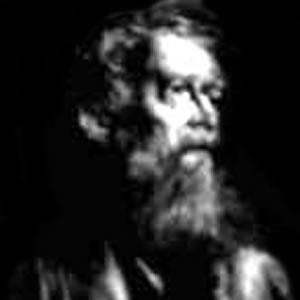 Prophet Ezekiel
Babylon (Hillah Province, Iraq): Ezekiel lived out his prophetic ministry here, staging public street theater and delivering oracles of warning and restoration to the exiled community.
Quran 21:85
Location: 32.536 - 44.421
View on Map
What is the significance of Prophet Ezekiel in Judaism, Christianity, and Islam?
Judaism
Ezekiel is highly revered as a major Hebrew prophet whose book is part of the Nevi'im (Prophets) canon. He ministered during the Babylonian exile, offering messages of both judgment for Jerusalem's transgressions and hope for the eventual restoration of the Jewish people to the Land of Israel.
Christianity
Ezekiel is recognized as a major prophet who foretold the destruction of Jerusalem and the spiritual renewal of Israel. His visions particularly the valley of dry bones and the detailed descriptions of the new temple are often interpreted by Christians as prefiguring the resurrection and the New Covenant.
Islam
Ezekiel is acknowledged as a noble prophet of Allah. Islamic tradition also links him to the historical and miraculous accounts of the resurrection of thousands of men, as referenced in the Quran.
Explore More
TOPIC Mesopotamia Babylon Iraq
EZEKIEL
Search Google Search Explore Topics
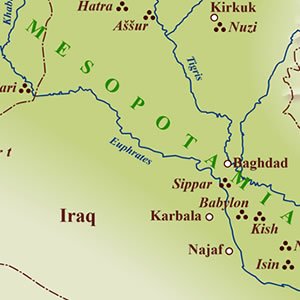 Where was Mesopotamia?
Mesopotamia is a historical region of West Asia situated within the Tigris-Euphrates river system, in the northern part of the Fertile Crescent. It corresponds roughly to the territory of modern Iraq
and forms the eastern geographic boundary of the modern Middle East. Just beyond it lies southwestern Iran, where the region transitions into the Persian plateau, marking the shift from the Arab world to Iran. In the broader sense, the historical region of Mesopotamia also includes parts of present-day Iran (southwest), Turkey (southeast), Syria (northeast), and Kuwait.
<br><br>
Mesopotamia is the site of the earliest developments of the Neolithic Revolution from around 10,000 BC. It has been identified as having "inspired some of the most important developments in human history, including the invention of the wheel, the planting of the first cereal crops, the development of cursive script, mathematics, astronomy, and agriculture". It is recognised as the cradle of some of the world's earliest civilizations.
 Where is Babylon?
Babylon was an ancient city located on the lower Euphrates river in southern Mesopotamia, within modern-day Hillah, Iraq. This is about 85 kilometres (53 miles) south of modern-day Baghdad. Babylon
functioned as the main cultural and political centre of the Akkadian-speaking region of Babylonia. Its rulers established two important empires in antiquity, the 19th-16th century BC Old Babylonian Empire, and the 7th-6th century BC Neo-Babylonian Empire. Babylon was also used as a regional capital of other empires, such as the Achaemenid Empire. Babylon was one of the most important urban centres of the ancient Near East, until its decline during the Hellenistic period.
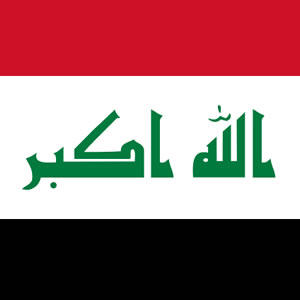 What is Iraq?
Iraq, officially known as the Republic of Iraq is a country in Western Asia. It is bordered by Turkey to the north, Iran to the east, Kuwait to the southeast, Saudi Arabia to the south, Jordan to the
southwest and Syria to the west. The capital, and largest city, is Baghdad. Iraq is home to diverse ethnic groups including Arabs, Kurds, Assyrians, Turkmen, Shabakis, Yazidis, Armenians, Mandeans, Circassians and Kawliya. Around 95% of the country's 37 million citizens are Muslims, with Christianity, Yarsan, Yezidism and Mandeanism also present. The official languages of Iraq are Arabic and Kurdish.

 48:15
 11:13