CHRISTIANITY
It's a monotheistic faith, meaning Christians believe in one God who exists in three co-equal persons: God the Father, God the Son (Jesus Christ), and the Holy Spirit. Christianity is based on the Bible, with the Old Testament and New Testament serving as sacred texts.
Search Result on 'Christianity' (323 total)
Youtube Videos on Christianity (198)
 Orthodox
 Similarities between Islam and
 Was Apostle Paul founder of
 Is
 What's common between Islam &
 From Jesus to Muhammad: A History of Early
 Adam Mann leaves
 How does
 From
 How
 Zoroastrianism influenced Judaism,
 Biblical
 Islam and
 Jesus was Jewish. When did
 Did Apostle Paul invent
 Differences between Judaism and
 Jesus in Islam and
 Salvation in

 In
 Why
 How
 Similarities Between
 Evolution of Jesus in Early
 Hidden
 Salvation in Islam and
 Salvation in Islam and
 In 200 years,
 Gay Marriage in
 Is
 New Testament: Growth of
 Catholic vs Protestant versions of
 The Hidden Truth On
 The Lost Early History of Unitarian
 Roots of Jesus'
 Roots of Jesus'
 Flavian Roman Conspiracy: Origins of
 Origins of
 The African Rise of
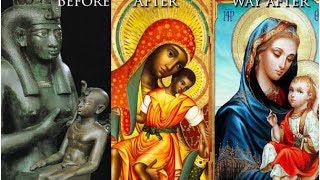 African Origin of
 Dead Sea Scrolls: Judaism on the Eve of
 Judaism and Early
 Mithras: Pagan Origins of
 The fraudulent power and position of

 Constantine's Pagan Influence on
 Truth about
 For popularity,
 Are Islam and
 Early
 Early
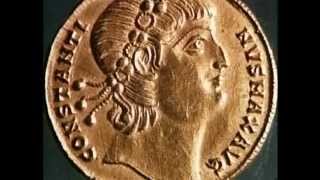 The Rise of
 The Rise of
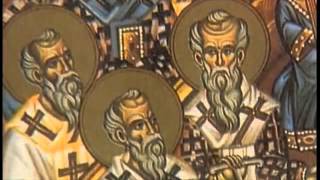 History of Orthodox
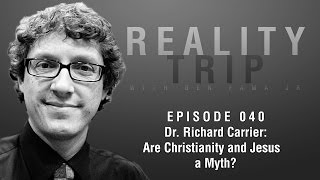 Is
 In Deuteronomy 18:18, the prophet to come was Joshua (Judaism), Jesus (
 Internet and spread of Knowledge will break
 Is Homosexuality Compatible with
 Islam is more balanced than Judeo-


 Did Apostle Paul Invent
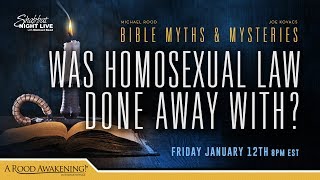 In
 Was
 Paganism,
 In Genesis 3:8, God walks with Adam and Eve. So, the
 Conversations with Islam, Judaism and
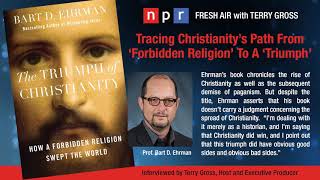
 Triumph of
 The Triumph of
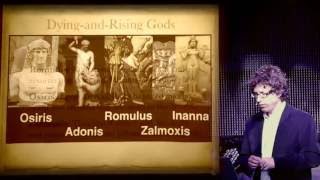
 In 70 AD, Rome destroyed Jerusalem and Jewish Temple.
 Did
 Triumph of
 Theological Similarities between
 Academics acknowledge Pagan Influences on
 How
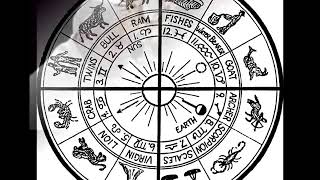 Importance of the Sun God, 12 Zodiac in Solar Mythology and
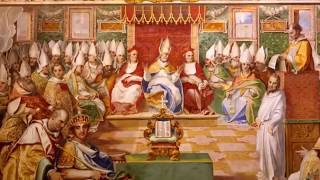 In 325 AD, Council of Nicaea created Jesus and
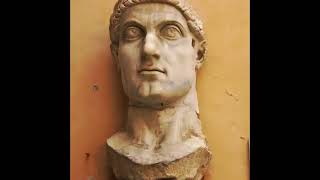 Constantine converted to
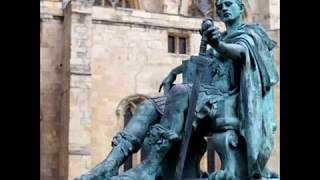 Arguing Bishops at Council of Nicaea voted Pagan rituals into
 New Testament Bible compiled to agree with Catholic
 Early
 You could invent
 Emperor Constantine made
 '
 In 225 AD, Tertullian defined Trinity: 3 Gods in 1 Person, or Orthodox
 Jesus, a Jew who observed Judaism did not plan to start
 Keeping Old Testament in the Bible benefits
 In the Early Church, their were many different versions of
 New Testament Bible contains books with conflicting teachings on Orthodox
 Jesus, a Jewish prophet who worshiped the Jewish God. Paul created and spread
 Apostle Paul established Churches, and converted Gentiles, Polytheists and Pagans to
 No physical evidence for
 F.C Baur (d. 1860 AD) argued Apostle Paul preached a 'different
 Papias (163 AD), Proto-Orthodox Church Father believed in Orthodox
 21 Ecumenical Church Councils defined Catholic
 Theodosius (380 AD) declared
 Did Constantine (d. 337 AD) convert to
 From 306 AD, Constantine used
 In 389 AD, Rome ordered Library of Alexandria be destroyed, so a new religion,
 In

 In Isaiah 53, the Jewish understanding of 'Suffering Servant' and 'Virgin Birth' differs from
 Greek philosophy influenced Early
 Paul Invented
 Pauline
 Salvation in
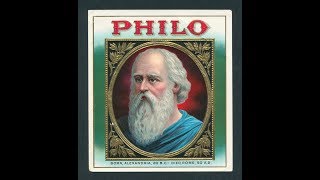 Philo of Alexandria mixed Greek philosophy with Jewish-
 Pliny the Elder (23-79 AD) never wrote of Jesus,
 In Deuteronomy 13:2, Jews have the criteria to reject Jesus and
 In Numbers 31:18, Child Marriage was encouraged. Today,
 The modern Black priest continues preaching 'soft love'
 If Moses did not write the Torah, Judaism and

 How does Judaism view
 Basics of

 Emperor Constantine merged Pagan and Christian values to define
 What is Astrotheology, and its relation to
 Jesus' Jewish man identity is central to Orthodox
 Concept of a 'Unified' God in Islam &
 In
 In
 In 70 AD, Rome destroyed the Jerusalem Church, establishing 'Pagan' Trinitarian
 In
 After Judaism,
 Is
 Pagan Origins of
 Why Is Swine Pork Forbidden in Judaism,
 Rome's Gods: From Imperial Cult to
 Stonewall Riots 1969: Goddess Ishtar replaces
 Fasting in Buddhism,
 How Modern
 Judaism,
 Did Muhammad borrow from
 Will A.I ChatGPT overtake Islam, Judaism and
 The 'slow death' of
 The Old Testament drove me AWAY from
 Relationship between Islam,
 The Real Story behind the Virgin Birth in
 Have Israeli Zionists hijacked
 Who is closer to Judaism:
 Extreme Violence in Early
 Hellfire does not exist in
 Caesar Messiah EXPOSED: Did Rome Create
 Did Apostle Paul Invent
 Edom (
 Biblical Jacob & Esau (
 DEBATE:
 Early
 Is
 Book of Isaiah does NOT prove Trinity in
 Did
 How Satan, Demons, Hell & Evil were found in
 Early
 Criticisms of Early Islam and
 NWO Satanism to replace Judaism,
 Evolution of Heaven & Hell in Judaism and Early
 UNDER ATTACK - 2000 years of
 In
 Can
 Was James the Leader of
 Understanding Hell in
 Early
 Early
 Astrotheology Connection to Religions, Judaism,
 Pauline
 Ray Hagins Asks What is
 Origins of
 Noahide Laws are Against Jesus &
 From Preacher to PhD Teacher. How Jesus' Garden Tomb Led Me to Question
FAQ on Christianity (77)
1.Christianity and Hinduism revere their religious figures as gods or incarnations of God
According to Islam, all these righteous persons were mortal, human prophets of God, like Muhammad, having the same needs that every human being has. They all eventually died, as everyone must.
There are several reasons why they have come to be revered by their followers as 'gods'. One is that their words were misunderstood by the later generations, who mistook their figurative expressions in a literal sense. Another is that the details of their lives were not preserved accurately, and therefore a great many myths have grown up around them, and their works and deeds have been much exaggerated.
2.Do Muslims believe in a God?
Yes, Muslims believe in Allah as the all-powerful, eternal Creator who is separate from creation, has no partners, no gender, and is the absolute sole entity worthy of human worship.
He is transcendent and not a part of his creation. He is all-powerful, absolutely Just and He is First, Last, and Everlasting; He was when nothing was, and will be when nothing else remains. Also, There is no other entity in the entire universe worthy of worship besides Him.
This belief in God is how one becomes a Muslim and is similar to the first commandment of Christianity and Judaism: You shall have no other gods before Me.
Allah the Eternal,Absolute;
He does not beget,not nor is He begotten,
And there is none like Him. [Quran 1:1-4]
3.What is Christianity?
The platform defines Christianity as a religion that was originally and historically preached by Jesus himself, but argues that the mainstream version practiced across the world today has evolved into a system based almost entirely on the subsequent theological teachings, letters, and doctrines developed by the Apostle Paul.
4.Why did Apostle Paul preach a new religion?
When Rome adopted Christianity with the conversion of the Roman Emperor (4th Century) and his official campaign to repress anyone who refused to conform; to kill those Christians who refused to follow Romes 'Trinitarian Christianity'.
Paul knew that the victors wrote history and in order to win 'he had to be all things to all men' (I Corinthians 9:24-27).
Those who dig their heels in 'beat the air' and refused to compromise any detail of the true faith ended their days as martyrs.
5.When was Christianity born?
After 70 CE, Christianity became a new movement. Western Christian
writings after 70 CE are a product of that transformation. Christianity became a Mithras-type saviour cult whose hero was not a myth but a real man.
Anyone who questioned Jesus' divinity were viewed as ignorant and inferior, including early Jewish-Christians, Jews, Jesus' closest friends and even family.
6.How did Saul become Apostle Paul?
A young man named Saul of Tarsus was bent on murdering all the Christians he could. He was a Jew, a Pharisee (well-versed in the Law of Moses), a man of knowledge, letters and spirit.
Following a dramatic experience, where according to Saul, Jesus Christ appeared to him on the road to Damascus.
Saul converted to Christianity and now became the beloved apostle, saint, evangelist, theologian, and pastor we call Apostle Paul.
7.Who seperated Christianity from Judaism?
It was Apostle Paul's dramatic conversion and subsequent teachings that directly resulted in the permanent theological separation of Christianity from Judaism. Within mere months of Jesus' departure, the original human-centric and law-abiding message was fundamentally altered into an independent religious system.
8.What happened after Apostle Paul converted to Christianity?
Following his conversion, Paul did not immediately meet with the original Apostles in Jerusalem; instead, he went to Arabia and returned to Damascus, waiting three years before visiting Peter and James for only fifteen days, avoiding the others.
9.How was Apostle Paul viewed in his time?
Paul's controversial doctrine of justification through faith alone made him an implacable enemy of the Jewish population who vehemently refused to accept his arguments. Concurrently, many early Christians viewed him as an outsider and a dangerous theological threat, as his teachings ultimately caused the absolute severance of Christianity from its original Judaism roots.
10.What dramatic experience made Apostle Paul convert to Christianity?
Paul experienced a sudden vision of a blinding light and a voice on the road to Damascus, but the multiple accounts recorded in the Book of Acts contain clear, direct contradictions regarding whether his companions also fell to the ground, and whether they actually heard the voice or saw the light.
11.Where is Pauline Christianity today?
Pauline Christianity constitutes the majority of modern Christianity, though some scholars question if the early, law-observant Jewish-Christian church was more accurate than Paul's later, Trinitarian-focused theology.
12.How was Christianity made appealing to pagan idol worshippers?
Pope Gregory I (540-604 CE), a famous Christian leader encouraged accomodating pagan customs and beliefs. So if pagans worshipped a Tree or Spirit abiding in it, rather than shun the pagan worship, he urged priests to somehow link the worship to Jesus Christ, and allow them to continue their Tree or pagan idol worship.
13.How did Christianity start?
The road from Jesus to the Christian religion that finally emerged in the fourth century, with its myth of Jesus as the son of God solidly in place, is a very long and twisty path.
Christianity was not born of an immaculate conception. It was the product of myriad moments of intellectual labor and negotiated social agreements by the people investing in the experiment.
This discovery has been difficult for many Christians to accept. That is because the traditional picture of Christian beginnings starts with a Jesus who knows in advance what is required of him and his disciples in order to establish the Christian religion.
14.Did Jesus claim to be equal to God?
This is the central point of departure between mainstream Christianity and Islam. Mainstream Christian theology states that Jesus affirmed his equality with God through declarations of essential unity (such as 'I and the Father are one' in John 10:30) and by accepting divine worship. Conversely, secular scholars and Islamic theologians highlight passages showing functional subordination, such as John 14:28 ('the Father is greater than I'), arguing that the historical Jesus viewed himself as an exalted messenger entirely dependent on God's authority.
15.Was Jesus a man?
Both the New Testament and the Quran confirm Jesus' complete humanity through his experience of physical, human emotions and limitations. While traditional Christianity views him as fully divine and human, Islamic theology and secular history affirm him as a human prophet.
16.If God is so powerful, can he become a man?
This question highlights a core philosophical divide between Christian and Islamic theology. In mainstream Christianity, God's omnipotence means He has the power to manifest Himself in the material world, and the Incarnation: God taking on human flesh in the person of Jesus is viewed as the ultimate expression of His love and willingness to humble Himself for human salvation. In Islamic theology, this concept is rejected as an absolute logical contradiction; Islam teaches that God's nature is completely perfect, unchangeable (immutable), and transcendent, meaning the infinite, eternal Creator cannot simultaneously possess the weak, limited, and mortal attributes of a human being.
17.Was Jesus equal to the Father and the Holy Spirit?
Mainstream orthodox Christianity asserts that Jesus is entirely co-equal and co-eternal with the Father and the Holy Spirit as the second Person of the unified Trinity. However, secular textual critics and Islamic theologians highlight multiple passages in the gospels, such as John 14:28 ('the Father is greater than I') and Mark 13:32, to argue that the historical Jesus openly acknowledged a subordinate role relative to the Almighty Creator. They view these texts as evidence that a formal doctrine of absolute equality within a triune Godhead was a later theological development rather than an original apostolic teaching.
18.There is only one Bible with one Christian doctrine?
No, textual criticism shows the Bible consists of thousands of varying manuscripts rather than a single, uniform text. These textual differences, such as in Jude 1:5, have historically contributed to diverse theological interpretations within Christianity.
Bible versions translate verses with different explanations. For example, in JUDE 1:5, who saves and then destroys the people of Egypt?
17 Bible versions state the 'Lord' did
7 Bibles state 'Jesus'
1 Bible claims 'God' did
These differences give rise to different Christian theological views.
19.When did Catholic Christianity become official religion of Rome?
In 380 CE, under the Edict of Thessalonica issued by Emperor Theodosius I, Nicene (Catholic) Christianity officially became the state religion of the Roman Empire, leading to the institutional regulation of religious practices and the formalisation of a calendar of feast days like Christmas and Easter.
20.What is the significance of Jesus' resurrection?
The resurrection of Jesus is of crucial importance to Christian doctrine. The Christian religion was founded many years after the death of Jesus based on the beliefs in his resurrection. Put simply, if there was no resurrection story, their would be no Christianity.
The reported resurrection of Jesus serves as the absolute foundational cornerstone of orthodox Christian theology and identity. Historical scholars note that institutional Christianity was organized years after Jesus' death primarily upon the early community's collective belief that he had triumphed over death. Academic consensus agrees that without the preservation and widespread propagation of this resurrection narrative, Christianity as an independent world religion would not exist.
21.What happened to Christians who questioned their creed?
Once Catholicism became the official state religion of the Roman Empire in the 4th century, it became highly dangerous to question or deviate from imperial doctrinal definitions. Imperial authorities enforced a strict monopoly on thought by carrying out systematic book burnings, completely destroying the philosophical refutations written by early critics like Celsus and Porphyry. As a result, modern academic knowledge of these ancient counter-arguments is limited to surviving snippets quoted inside the church's own refutation books.
- Porphyry (3rd century philosopher) wrote a 15-volume refutation of Christianity, the gospels and resurrection
- Celsus (2nd century philosopher) rejected the impossible concept of the resurrection
Once Christianity was established as the state religion, it became dangerous, as a subject of Rome, to question the doctrinal version of events.
22.What life did Apostle Paul lead before his miraculous conversion to Christianity?
Before his conversion, Paul was known as Saul and operated as a strict Pharisee and enforcer hostile toward early followers of Jesus. Academic historians note that he worked under the authority of the high priestly administration in Jerusalem to systematically suppress the growing messianic movement, believing he was protecting traditional Judaism from a dangerous heresy
23.Who was the founder of Christianity?
The platform asserts that Jesus was not the actual founder of Christianity as an independent world religion, noting that the vast majority of the New Testament text does not directly focus on the historical Jesus but is defined by Paul. Academic critical scholars agree that while Jesus initiated the original localized movement within Judaism, it was Paul's theological letters and universal missionary blueprint that systematically institutionalized the faith globally.
24.What did Apostle Paul do after his miraculous conversion to Christianity?
Following his Damascus vision, Paul records in his letters that he did not seek instruction from others, but immediately withdrew into the Arabian desert for a period of reflection. The platform notes that this independence significantly elevated Paul's personal status, allowing him to claim he received his theological mandate directly from a divine revelation rather than from Jesus' twelve original earthly disciples.
25.What happened after Rome chose Christianity as the state religion?
When the Roman authorities officially adopted Christianity in the 4th century CE, they institutionalised the Roman Catholic version of the faith, favoring the universal theological framework of Paul over the localized, law-observant traditions of the original disciples. Mainstream historians emphasize that this political alliance standardized a singular imperial orthodoxy across the Mediterranean world, systematically suppressing alternative theological perspectives.
26.Did Jesus ever preach Christianity?
No. Neither Jesus nor his twelve disciples had any intention of founding a new, separate religion, as they operated entirely within the confines of traditional Judaism. Mainstream historians and biblical scholars affirm that the historical Jesus viewed his messianic mission as a internal renewal of Israel's covenant, continuing to follow the Mosaic Torah and temple rituals rather than building a separate world religion.
27.What is the credibility of the Jesus' resurrection?
The resurrection is the most controversial creed issue facing Christianity today. There are numerous explanations for the resurrection, all of which are contested. There is no concensus if Jesus' tomb was found empty or not; whether disciples saw anything or not; even if anything happened or not.
28.How did early Catholics learn about Christianity?
Early Catholics were taught Christianity by the priests, nuns and at Catholic schools - and not through Bible study. The priests role was to pass on Christian beliefs and practise to his congregation. The priest acted as an intermediary between God and the people; as mankind was regarded as inherently sinful.
Catholics were discouraged from individual Bible study and pushed towards conforming with traditional Church teachings.
29.What did Apostle Paul do after he converted to Christianity, on the road to Damascus?
Following his conversion 1-3 years after the crucifixion, Paul vanished from the public eye before re-emerging 13 years later (47-60 CE) as a missionary to the Gentiles.
30.In the past, how were the Christians viewed?
Paul's Christianity had a universal ambition; it aspired to bring salvation to the world.
Christianity had to reject the Hebrew representation of scripture, written in the obscure, provincial tongue only the Jews spoke, and to announce the miraculous new revelation of Septuagint, the eternal bible reincarnated in a language that everyone understood.
31.How is Apostle Paul connected to the Damascus Gate in Jerusalem?
Though recognized as an apostle in Christianity rather than a prophet, Paul famously traveled from Jerusalem north toward Damascus to persecute early Christians before his conversion on the road to Damascus. The Damascus Gate gets its modern English name precisely because it marks the starting point of the ancient highway leading out of Jerusalem toward Damascus.
32.Who was Prophet Abraham, and why is he called the 'Father of Monotheism'?
Abraham was a foundational prophet revered across Judaism, Christianity, and Islam collectively known as the Abrahamic faiths. Born in the ancient Mesopotamian city of Ur, he rejected the idol worship of his society and declared faith in the One True God. His steadfast obedience made him the spiritual patriarch of monotheism and the direct ancestor of numerous prophets through his sons, Isaac and Ishmael.
33.Is Prophet Adam mentioned in the Quran and the Bible?
Yes, Adam is a central figure in Judaism, Christianity, and Islam. In the Quran, he is mentioned by name 25 times and is highlighted as God's Khalifah (vicegerent or steward) on Earth. In the Bible, his creation, life in Eden, and initial command from God are detailed in the Book of Genesis.
34.What is the role of Prophet Jesus in the end of days?
Both Christian and Islamic eschatology anticipate the Second Coming of Jesus. Christianity awaits his return to judge the living and the dead and establish the Kingdom of God, while Islam teaches he will return to usher in a period of universal peace, justice, and truth.
35.How is Jethro revered across different faith traditions?
Islam: Revering him as the prophet Shoaib, Islamic tradition highlights his eloquence (Khateeb al-Anbiya) and records that his defiant people were destroyed by a sudden earthquake and scorching heat wave after rejecting his call to honesty and monotheism.
Judaism & Christianity: Honored as a righteous priest of Midian whose wisdom and counsel helped organize early Israelite leadership.
Druze Faith: Rebuilt as a central spiritual figure, founder, and chief prophet in Druze tradition, where his tomb at Nabi Shuayb in Horns of Hattin is an annual pilgrimage site.
36.Who was Prophet Job across major world religions?
Job (Ayyub) is universally recognized across Judaism, Christianity, and Islam as a righteous, wealthy patriarch and prophet renowned for his unwavering faith, righteousness, and legendary patience (Sabr) during extreme suffering.
37.How is Prophet Job revered in different religious traditions?
Judaism & Christianity: His story is recorded in the Book of Job in the Old Testament/Hebrew Bible, celebrating his integrity and wrestling with deep questions about divine justice.
Islam: Revered as the prophet Ayyub in the Quran (Surah Al-Anbiya and Surah Sad), praised by God as an excellent, patient servant who constantly turned back to the Creator.
38.Who was Prophet John in religious and historical tradition?
John (known as John the Baptist in Christianity and Yahya in Islam) was a deeply pious prophet, ascetic preacher, and contemporary cousin of Jesus. Operating in the wilderness of Judea, he spent his life preaching repentance, virtue, and devotion to God.
39.What was John's primary spiritual role and connection to Jesus?
John served as a spiritual herald and precursor to Jesus. In Christianity, he baptized people in the Jordan River including Jesus symbolizing spiritual purification and preparing the public for the Messiah's ministry. In Islam, he is revered as a noble prophet who confirmed the truth of Jesus's message.
40.How is Prophet John revered across different faith traditions?
Christianity: Revered as the forerunner of Christ, the last major prophet of the Old Covenant era, and a major saint across liturgical traditions.
Islam: Revered as the prophet Yahya, praised in the Quran for his purity, gentle wisdom, humility, and steadfast faith from childhood.
Mandaeism: Honored as their primary and ultimate prophet, whose teachings on baptism form the core of their religious practice.
41.How is Prophet Jonah viewed across different faith traditions?
Judaism: His story is read annually on Yom Kippur during the Mincha (afternoon) service to emphasize the power of sincere repentance and divine forgiveness.
Christianity: Jesus references the 'Sign of Jonah' in the New Testament Gospels, comparing Jonah's three days in the whale's belly to His own three days in the tomb before resurrection.
Islam: Revered as Yunus (and Dhu'n-Nun, 'Companion of the Fish') in the Quran, where an entire chapter (Surah Yunus) is named after him, celebrating his heartfelt prayer of repentance.
42.How is the story of Joseph viewed in different holy texts?
Judaism & Christianity: His life is detailed across the final chapters of Genesis in the Hebrew Bible / Old Testament, highlighting God's providence in turning human evil into divine good.
Islam: An entire chapter of the Quran (Surah Yusuf) is dedicated to his life, designated by God as the 'Best of Stories' (Ahsan al-Qasas) to highlight faith, chastity, and patience.
43.How is Judah viewed across different monotheistic faiths?
Judaism: Revered as a central founding patriarch whose tribe held the royal and messianic lineage.
Christianity: Honored as a direct ancestor of Jesus Christ, who is referred to in the New Testament as the 'Lion of the Tribe of Judah'.
Islam: Recognized as one of the twelve sons of Jacob (Asbat) mentioned in the Quran, whose life demonstrates themes of repentance, family responsibility, and divine reconciliation.
44.How is Levi viewed across different faith traditions?
Judaism: Honored as the ancestral father of the Levites and the Kohanim (the priestly class), establishing a legacy of religious service and devotion.
Christianity: Recognized as a key Old Testament patriarch whose lineage prepared the priestly backdrop for the New Testament ministry, including John the Baptist.
Islam: Respected as one of the twelve sons of Jacob (Asbat) recognized in the Quran, whose family ultimately established a noble line of guidance and faith.
45.How is Prophet Lot viewed across different faith traditions?
Judaism & Christianity: His story is recorded in the Book of Genesis, highlighting his hospitality toward the angels, his survival from Sodom's overthrow, and his status as a righteous man vexed by the surrounding lawlessness (2 Peter 2:7).
Islam: Honored as a noble, steadfast prophet (Lut) who remained devoted to God despite extreme isolation and resistance from his community, praised in the Quran across multiple chapters.
46.Who was Mary, the mother of Jesus, across world religions?
Mary (Maryam) is globally revered as one of the most holy, righteous, and prominent women in history. In Christianity, she is honored as the Virgin Mary, Theotokos (Bearer of God), and the mother of Jesus.
In Islam, she is revered as Maryam, the mother of Prophet Isa, and the only woman mentioned by name in the Quran.
47.How is Mary commemorated and remembered globally?
Christianity: Celebrated through major feast days (The Solemnity of Mary, the Assumption/Dormition), Marian devotions, and pilgrimage sites like Lourdes and Fatima.
Islam: Reverted as a paragon of piety, faith (Siddiqa), and ultimate devotion to God, serving as a role model for all believers.
48.How is Prophet Methuselah viewed across different faith traditions?
Judaism & Christianity: Revered in the Book of Genesis as a righteous patriarch whose immense lifespan represented God's patience with humanity before sending judgment.
Islam: Honored in traditional Islamic histories and scholarly commentaries (such as those by Ibn Kathir) as a noble, monotheistic patriarch and link in the ancestral chain of prophets between Adam and Noah.
49.How is Midian viewed across different faith traditions?
Judaism & Christianity: Detailed in Genesis and Exodus as a vital branch of Abraham's family tree, serving as both a place of shelter for Moses and later a kingdom that clashed with the Israelites during the Judges era.
Islam: Referenced in the Quran as Madyan, a prominent historical region associated with the mission of Prophet Shoaib and the early life of Musa (Moses).
50.Who was Prophet Moses across world religions?
Moses (Musa) is one of the most pivotal prophets, lawgivers, and religious leaders in history.
In Judaism, he is the supreme prophet who led the Israelites out of Egyptian slavery and received the Torah on Mount Sinai.
In Christianity, he is a major Old Testament prophet and foreshadower of Christ.
In Islam, he is revered as Musa, an Ulul 'Azm (resolute) messenger and the most frequently mentioned prophet in the Quran.
51.Who was Prophet Noah across major world religions?
Noah (Nuh) is a major prophet and patriarch in Judaism, Christianity, and Islam. Recognized as the 'Second Father of Humanity', he was sent during an era of deep spiritual corruption to call people back to monotheism and righteousness.
52.How is Prophet Noah honored in different faith traditions?
Judaism & Christianity: Detailed in the Book of Genesis, he is revered as a righteous man who 'walked with God' and established the Seven Laws of Noah (Noahide Laws) for all humanity.
Islam: Reverted as Nuh, one of the five Ulul Azm (Arch-Prophets of Firm Resolve), with an entire chapter of the Quran (Surah Nuh) dedicated to his mission and steadfast faith.
53.How is Phinehas viewed across different religious traditions?
Judaism: Revered as a legendary High Priest, hero of righteous indignation, and central figure of an entire weekly Torah portion (Pinchas). Rabbinic tradition frequently associates his zealous spirit with the Prophet Elijah.
Christianity: Honored as a faithful leader whose decisive actions demonstrated the power of intercession and faith under the Old Covenant.
Islam: Recognized through classical historical and scriptural commentaries as a noble figure from the priestly line of Harun (Aaron) who helped preserve monotheistic guidance among the Children of Israel.
54.How is Prophet Samuel revered across different faith traditions?
Judaism: Honored as one of the greatest biblical prophets, often grouped alongside Moses and Aaron for his spiritual integrity and leadership (1 & 2 Samuel).
Christianity: Celebrated as a crucial Old Testament prophet who prepared the royal line of David from which Jesus descended.
Islam: Recognized as a noble prophet (Samu'il) who restored faith, anointed Saul (Talut), and laid the groundwork for David's prophethood and kingdom.
55.How is Prophet Seth viewed across different religious traditions?
Judaism & Christianity: Detailed in the Book of Genesis as a key patriarch whose lineage ('the sons of God') preserved righteousness prior to the Great Flood.
Islam: Honored as the prophet Sheeth, a pivotal receiver of early revelation who governed humanity with justice after the passing of Adam.
Gnosticism: Revered in ancient Sethian Gnostic traditions as a divine illuminator and heavenly progenitor of the spiritual realm.
56.How is Prophet Shem viewed across different faith traditions?
Judaism: Revered in the Book of Genesis as a blessed son of Noah whose lineage preserved godliness; rabbinic tradition frequently identifies him with Melchizedek, the righteous King of Salem.
Christianity: Honored as a direct, foundational patriarch in the Old Testament genealogy of Jesus Christ.
Islam: Honored in classical historical texts (such as those by Al-Tabari and Ibn Kathir) as the noble, monotheistic son of Nuh from whom the prophets of the Middle East descended.
57.Who was Prophet Solomon across world religions?
Solomon (known as Sulaiman in Islam) was a legendary king of Israel, prophet, and the son of King David. Celebrated for his unprecedented wisdom, immense wealth, and vast kingdom, he is honored across Judaism, Christianity, and Islam as a uniquely empowered monarch and divine messenger.
58.How is Prophet Solomon viewed across different faith traditions?
Judaism & Christianity: Revered as the wise king who built the First Temple and presided over the Golden Age of Israel, though biblical texts record his political decline late in life due to foreign alliances.
Islam: Honored as a noble, fully righteous prophet (Sulaiman) who remained completely devoted to God, using his vast kingdom, wealth, and miracles strictly to spread divine monotheism.
59.Who was Prophet Zechariah in religious and historical tradition?
Zechariah (known as Zakariyya in Islam) was a high priest, prophet, and spiritual leader of the Children of Israel. Descended from the priestly line of Aaron, he served in the Second Temple in Jerusalem and is revered in Judaism, Christianity, and Islam for his unyielding faith, devotion, and role as the father of John the Baptist (Yahya).
60.How is Zechariah related to John the Baptist?
Zechariah (known as Zakariyya in Islam) was a high priest, prophet, and spiritual leader of the Children of Israel. Descended from the priestly line of Aaron, he served in the Second Temple in Jerusalem and is revered in Judaism, Christianity, and Islam for his unyielding faith, devotion, and role as the father of John the Baptist (Yahya).
61.How is Prophet Zechariah viewed across different faith traditions?
Judaism: Recognizes historical prophets named Zechariah, most notably the author of the Book of Zechariah, who encouraged the rebuilding of the Second Temple and foretold messianic prophecies.
Christianity: Honored in the Gospel of Luke as a righteous priest whose prophetic song, the Benedictus, celebrated the coming of the Messiah and the role of his son, John the Baptist.
Islam: Revered as Zakariyya, a noble prophet praised in the Quran (notably in Surah Maryam and Surah Al-Imran) for his patience, devotion, and guardianship of Maryam.
62.How has Zoroastrianism influenced major world religions?
Historians and theologians note that Zoroastrianism deeply influenced Judaism, Christianity, and Islam. Key concepts such as an ultimate good versus evil (God vs. Satan), heaven and hell, a messianic figure, a final judgment, and bodily resurrection originated or were heavily shaped within Zoroastrian thought.
63.Is the Bahai Faith a sect of Islam?
No, it is a distinct, independent religion. While it emerged out of a Muslim context in Persia similar to how Christianity emerged out of Judaism, the Bahai Faith features its own unique laws, administration, and expansive volume of sacred scriptures revealed by Baha'u'llah.
64.What religions are combined in Cao Dai?
Cao Dai is fundamentally a syncretic faith that harmonizes three core Eastern traditions with prominent Western religions. It explicitly integrates the ethics of Confucianism, the occult practices and philosophies of Taoism, and the karma and rebirth doctrines of Buddhism (collectively known as the Tam Giao, or Three Religions). Furthermore, it incorporates elements of Christianity, Islam, and spiritualist mediumship.
65.What is the Druze religion?
The Druze religion is a monotheistic, Abrahamic, and highly secretive syncretic faith that emerged during the 11th century in Cairo, Egypt. Adherents, known as the Druze, are a distinct ethnoreligious group primarily living in the Levant. The faith blends the foundational monotheism of Shia Isma'ili Islam with elements of Christianity, Gnosticism, ancient Greek philosophy (such as Neoplatonism and Pythagoreanism), and Hinduism.
66.What is Gnosticism and what are its core beliefs?
Gnosticism is a modern term for a collection of ancient religious and philosophical mystical movements that flourished alongside early Christianity in the 1st and 2nd centuries CE. Unlike mainstream Christianity, which emphasizes faith and salvation through Jesus's crucifixion, Gnosticism teaches that salvation is achieved through Gnosis - a direct, intuitive, and experiential knowledge of the divine spark hidden within the human soul.
67.What is the difference between Gnosticism and Christianity?
While Christian Gnostics used the same vocabulary as early mainstream Christians, they held fundamentally different views on God, creation, and the material world:
* The Creator: Mainstream Christians worship God as the benevolent creator of the world. Gnostics believe the physical universe was created by an inferior, flawed deity called the Demiurge.
* The Physical World: Christianity views creation as fundamentally good but fallen. Gnosticism views the physical world as a flawed, illusory trap or spiritual prison.
* Salvation: Christians believe salvation comes from faith (pistis) in Jesus Christ and forgiveness of sins. Gnostics believe salvation comes from inner knowledge (gnosis) that wakes the soul from material ignorance.
68.Is Mormonism a Christian religion?
Yes, Latter-day Saints consider themselves Christians, as Jesus Christ is the central figure of their faith, theology, and salvation. However, traditional mainstream Christianity (Catholic, Orthodox, and Protestant) does not universally recognize Mormonism as orthodox Christian. This is due to distinct theological differences, including the rejection of the traditional Nicene Creed and a unique understanding of the Godhead.
69.Do Mormons believe in the Holy Trinity?
Unlike mainstream Christianity, Latter-day Saints do not believe in the traditional Trinity where God, Jesus and the Holy Ghost are one single, consubstantial spirit essence. Instead, they believe in the Godhead, which consists of three physically distinct and separate beings: God the Eternal Father, His Son Jesus Christ, and the Holy Ghost. They teach that these three are entirely separate entities who are unified perfectly in purpose, mind and glory.
70.Is Rastafari a Christian religion?
Rastafari is heavily rooted in Christianity and uses the King James Version of the Bible, but it is a distinct religion and not a Christian denomination. Rastas believe that traditional Western Christianity has been corrupted by white colonial powers (referred to as 'Babylon') to suppress Black people. They interpret the Bible through an Afrocentric lens, identifying Black people as the true chosen people of God.
71.What is the Unification Church and how did it start?
The Unification Church is a new religious movement founded in Seoul, South Korea, in 1954 by Sun Myung Moon. Emerging in the aftermath of the Korean War, the church was established under the official name The Holy Spirit Association for the Unification of World Christianity. Moon claimed to have received a vision from Jesus Christ on a Korean mountain side at age 15, instructing him to complete Christ's unfinished mission on Earth.
72.Is Unitarian Universalism a Christian religion?
While Unitarian Universalism has historical roots in liberal Christianity, it is no longer considered a strictly Christian denomination. Early Unitarians rejected the traditional doctrine of the Trinity (believing God is one entity), and early Universalists argued against a literal hell, believing a loving God grants universal salvation to all humanity. Today, UU is an independent, pluralistic faith where Christians, Jews, Buddhists, Agnostics, Atheists and Pagans worship together.
73.What are the Principles and Sources of Unitarian Universalism?
Rather than a fixed doctrine, UU congregations are guided by Shared Values (formerly framed as the Seven Principles) and draw wisdom from Six Sources. The values emphasize the inherent worth and dignity of every person, justice, equity, and a commitment to dismantling racism and systemic oppression. The Sources include:
1. Direct experiences of transcending mystery and wonder.
2. Words and deeds of prophetic people throughout history.
3. Wisdom from the world's major religions (including Judaism, Christianity, Islam, and Eastern faiths).
4. Humanist teachings that counsel us to heed the guidance of reason and science.
5. Earth-centered traditions that celebrate the sacred circle of life.
74.Do Wiccans believe in or worship the Devil?
No, Wiccans, Wicca adherents absolutely do not believe in or worship Satan (the Devil). The concept of the Devil is a strictly Abrahamic theological figure (found in Christianity, Islam, and Judaism) representing absolute evil. Because Wicca is a completely non-Abrahamic faith, it does not feature a binary system of pure heaven and absolute hell, nor does it recognize a personified lord of sin.
75.What is Zoroastrianism and how did it start?
Zoroastrianism is one of the world's oldest continuously practiced monotheistic religions, originating in ancient Persia (modern-day Iran) roughly 3,500 years ago. It was founded by the prophet Zoroaster (Zarathustra), who rejected the existing polytheistic Iranian religions after receiving a series of divine visions. He taught that there is only one supreme, benevolent creator god, radically shaping the development of future Abrahamic religions like Judaism, Christianity, and Islam.
76.Did Zoroastrianism influence Christianity and Judaism?
Yes, Zoroastrianism heavily influenced the theological architecture of Judaism, Christianity, and Islam. Following the Babylonian Exile, when Cyrus the Great of Persia liberated the Jewish people, core Zoroastrian concepts integrated into second-temple Jewish thought. These foundational ideas include a linear view of time, a final judgment day, a cosmic savior figure, a strict binary heaven and hell, and a personified adversary of God (Satan). Furthermore, the biblical 'Magi' who visited the infant Jesus were explicitly Zoroastrian astrologer-priests.
77.How does the channel address the concept of shared Abrahamic history?
The Kandari Chronicles features structural video essays demonstrating how Judaism, Christianity, and Islam share an interconnected lineage of prophets, theology, and historical narratives, emphasizing the theological overlaps and shared history of the three major monotheistic faiths.