958 views
·
Last viewed: 5 hrs ago
Uploaded: 03 Jul 2018 (8 years ago) · Shared: 04 Jul 2018
Duration: 1:09
Uploaded: 03 Jul 2018 (8 years ago) · Shared: 04 Jul 2018
Duration: 1:09
Youtube Description
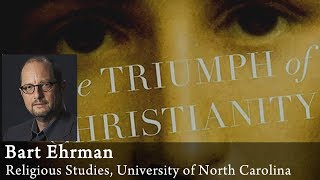
Bart Ehrman (born October 5, 1955) is an American New Testament scholar focusing on textual criticism of the New Testament, the historical Jesus, andthe development of early Christianity. He has written and edited 30 books, including three college textbooks. He has also authored six New York Times bestsellers. He is currently the James A. Gray Distinguished Professor of Religious Studies at the University of North Carolina at Chapel Hill.
Link to Bart Ehrman videos:
http://muslimprophets.com/videos.php?search=Bart+Ehrman
Link to the original video:
https://www.youtube.com/watch?v=dw1T5AEhk9E
DISCLAIMER
We do NOT own the video materials and all credits belong to the respectful owners. In case of copyright issues, please contact us immediately for further credits or clip delete.
COPYRIGHT
Under Section 107 of the Copyright Act 1976, allowance is made for 'fair use' for purposes such as criticism, comment, news reporting, teaching, scholarship and research. Fair use is a use permitted by copyright statute that might otherwise be infringing. Non-profit, educational or personal use tips the balance in favour of fair use.
Explore More
Bart Ehrman Jerusalem Gospel USASearch Google Search Explore Topics
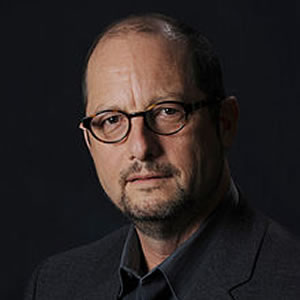 Who is Bart Ehrman?
Bart Ehrman (born 1955) is an American New Testament scholar focusing on textual criticism of New Testament, historical Jesus, and development of early Christianity. Ehrman has written and edited 30 books, including three college textbooks. He has also authored six New York Times bestsellers. He is currently the James A. Gray Distinguished Professor of Religious Studies at the University of North Carolina at Chapel Hill.
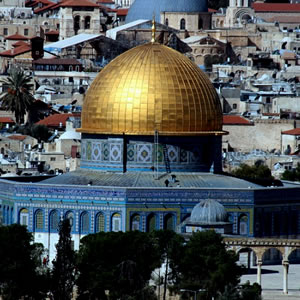 Where is Jerusalem?
Jerusalem is a city in the Middle East. It is located on a plateau in the Judaean Mountains between the Mediterranean and the Dead Sea. It is one of the oldest cities in the world, and is considered holy to the three major Abrahamic religions: Judaism, Christianity, and Islam. Both Israel and the Palestinian Authority claim Jerusalem as their capital, as Israel maintains its primary governmental institutions there and the State of Palestine ultimately foresees it as its seat of power; however, neither claim is widely recognized internationally.
 What is Gospel?
Gospel is the Old English translation of Greek evangelion, meaning "good news". It originally meant the Christian message itself, but in the 2nd century it came to be used for the books in which the message was set out. The four gospels of the New Testament: Matthew, Mark, Luke and John are the main source of information on the life of Jesus.
 What is USA?
The United States of America (USA), commonly known as the United States or America. It is a country comprising 50 states, a federal district, five major self-governing territories, and various possessions. At 3.8 million square miles (9.8 million km2), the United States is the world's third or fourth largest country by total area and is slightly smaller than the entire continent of Europe's 3.9 million square miles (10.1 million km2). With a population of over 327 million people, the US is the third most populous country.