JERUSALEM
It is located on a plateau in the Judaean Mountains between the Mediterranean and the Dead Sea. It is one of the oldest cities in the world, and is considered holy to the three major Abrahamic religions: Judaism, Christianity, and Islam. Both Israel and the Palestinian Authority claim Jerusalem as their capital, as Israel maintains its primary governmental institutions there and the State of Palestine ultimately foresees it as its seat of power; however, neither claim is widely recognized internationally.
Youtube Videos on Jerusalem (71)
 King David's palace and King Solomon's wall in
 Where Jesus wept for
 Jesus'
 The Gates of
 Jesus will return to the Golden Gate,
 Did Muhammad go to
 The Crusades: Saladin and the Fall of
 Siege of
 Romans at the Gates - Siege of
 The Fight for the Walls - Siege of
 Last Stand of the Great Jewish Revolt - Siege of
 In Luke 21:20, Jesus predicted Titus Flavius, Arch of Titus and Siege of
 Seige of
 Siege of
 Jesus' infancy is difficult to reconcile in the Gospels (his birthplace, Bethlehem,
 Will a Temple be built over Al-Aqsa Mosque in
 What events will happen before the Temple is built over the Al-Aqsa Mosque in
 In Judaism,
 In Luke 13:33, no Prophet will die outside
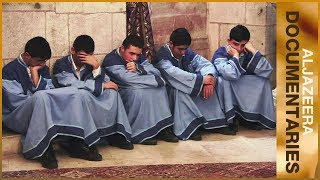 Holding The Key:
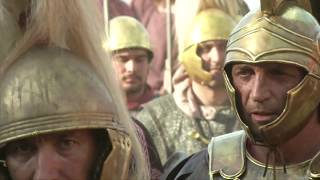 In 70 AD, Rome destroyed
 Apostle Paul disrespects Jesus' disciples, Jesus' family and
 Paul was 'Apostle to Gentiles' and claimed superiority over Jewish-Christians in
 Mark's Gospel was not based on Peter's Testimony or any other
 You are in
 Council of
 Western 'Wailing' Wall in
 In 70 AD, Rome destroyed the
 Respect the Jewish Right to not worship a Man as God - Tovia Singer vs
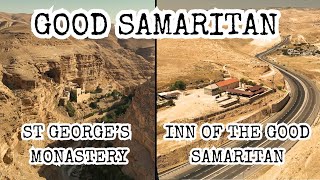 Jesus on the Road from Jericho to
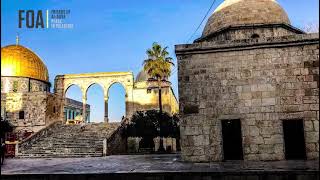
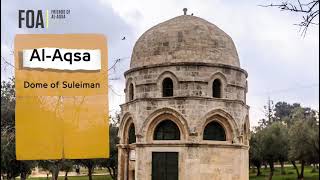 Tour of Solomon's Dome,
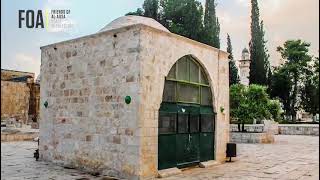
 Tour of Moses' Dome,
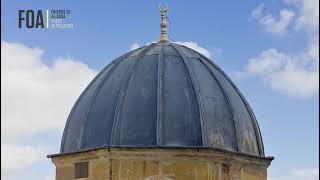
 Tour of Joseph's Dome,
 Tour of Muhammad's Dome,
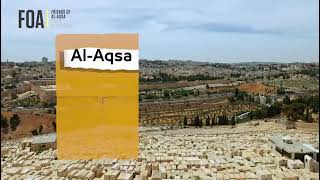 Tour of Al-Aqsa Mosque layers,
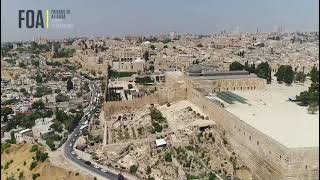 Tour of Al-Aqsa Mosque site,
 Tour of Gate Of Mercy, Muhammad's companions grave site,
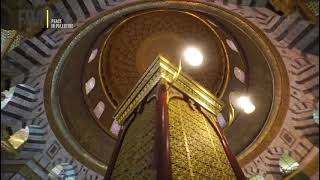 Tour of Al-Aqsa Mosque interior,
 Importance of
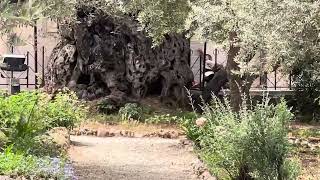 Tour of Garden of Gethsemane on Mount of Olives,
 Tour of First Church,
 Tour of King David's Tomb in the City of David,
 In 70 AD, 1,000,000 'Jewish' Black Men fled from
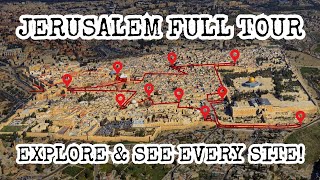 Walking Tour of
 The 'slow death' of Christianity in
 Israeli Zionists ethnically cleanse Christians from
 Armenian Christians Under Attack in
 'God gave us Israel. All of
 Israel blocks Christians from Holy Sepulchre,
 Christians face 'spitting and physical attacks' from Jews in
 Israel blocks Catholic Christians from Holy Sepulchre Church,
 Tombs of Prophets Haggai, Zechariah, & Malachi in
 Why are Christians leaving
 Tour around the Old City
 Muhammad's Night Journey and Early Islam's
 Significance of Qibla (prayer direction) changing from
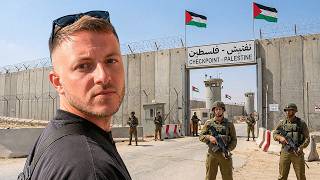 Walking the Streets of
 How Israel denies
 Israel seize land around Prophet Samuel's historic mosque,
 Christian population in East
 Armenian Christians in East
 'Leave or We will kill you': Extremist Israeli Settlers warn Palestinians in Old City,
 Israeli Settlers chant 'DEATH TO ARABS' on
 UNDER ATTACK - 2000 years of Christianity in
 Tour Sisters of Zion, Via Dolorosa, Antonia Fortress,
 Nehemiah - Fixing the Walls of
FAQ on Jerusalem (32)
1.What did early Jewish-Christians think of Apostle Paul?
Between 55 and 66 CE, early Jewish-Christian leaders in Jerusalem rejected Paul's teachings and challenged his authority, leading to a significant decline in his popularity.
2.Who was James, brother of Jesus?
James, the eldest of Jesus' brothers held a key position in the Jerusalem Church until 62 CE, when he was succeeded by his relative Simeon, son of Cleophas.
3.Did Saul kill the early Jewish-Christians?
Before his conversion, Saul actively sought to imprison and execute early Jewish-Christians. Saul believed that he was serving God by finding Christians, throwing them into prison, and even executing them.
2 And devout men carried Stephen to his burial, and made great lamentation over him.
3 As for Saul, he made havock of the church, entering into every house, and haling men and women committed them to prison.
[Acts 8:1-3]
4.What happened after Apostle Paul converted to Christianity?
Following his conversion, Paul did not immediately meet with the original Apostles in Jerusalem; instead, he went to Arabia and returned to Damascus, waiting three years before visiting Peter and James for only fifteen days, avoiding the others.
5.Who was the Tammuz God?
Tammuz was a popular Syrian saviour-God who pre-existed Jesus
Christ yet shared a number of similarities:
* Tammuz was born of a virgin
* Tammuz was killed and rose again every spring.
* Wherever Tammuz was worshipped, he was celebrated with a
human victim in royal robes who was killed and eaten. This was so
the sacrifice, his body and blood might bring salvation to the
community
* One of the chief centres of Tammuz worship was Bethlehem,
said to have been the birthplace of Jesus
* Tammuz was called 'the Carpenter', a title related to the
'Architect' of the universe. Jesus too was called the 'son of the
carpenter'
* Tammuz was said to have entered Jerusalem riding two asses,
because this represented the passage of the sun at the summer
solstice through the sign of Cancer (two asses star-sign)
* In the gospel of Matthew (21:5), Jesus enters Jerusalem on two animals.
6.What did James say of the Old Testament Law?
In the New Testament Epistle of James, the author strongly emphasizes that faith without accompanying righteous deeds is dead and notes that stumbling at just one point makes a person guilty of breaking the entire Law (James 2:10). Early church records and historical scholarship depict James the Just (the brother of Jesus) as a deeply traditional, law-observant leader of the Jerusalem Church. He maintained that Jewish believers should strictly adhere to traditional Mosaic customs, which later created a significant theological tension with Apostle Paul's ministry to the Gentiles.
7.What life did Apostle Paul lead before his miraculous conversion to Christianity?
Before his conversion, Paul was known as Saul and operated as a strict Pharisee and enforcer hostile toward early followers of Jesus. Academic historians note that he worked under the authority of the high priestly administration in Jerusalem to systematically suppress the growing messianic movement, believing he was protecting traditional Judaism from a dangerous heresy
8.Who replaced Jesus after his crucifixion?
Following the crucifixion, leadership of the primary community of believers in Jerusalem fell to Jesus' biological brother, James the Just. Mainstream historical and biblical scholarship confirms that James directed the mother church as an observant Jew, maintaining that followers must continue upholding traditional Mosaic customs and temple practices.
9.Why did James allow Apostle Paul to preach a new religion?
It is suggested James tolerated Paul's expansive missionary activities because the financial collections Paul raised from wealthy Gentile communities directly supported the impoverished Jerusalem mother church. Critical historians clarify that this financial collection, detailed across Paul's letters, was an official diplomatic agreement meant to preserve a fragile unity between Paul's Gentile converts and James' law-abiding Jewish-Christian community.
10.How did James, leader of the Jerusalem Church, view Apostle Paul?
Paul's new doctrine met with disapproval from the Jewish-Christians of the Jerusalem Church led by James, who regarded the substitution of Jesus' atoning death for the observance of the Torah as a lapse into paganism.
Paul was duly summoned to Jerusalem by the leaders James, Peter and John to explain his doctrine in 50 AD.
11.What did James do after Jesus' crucifixion?
In Jerusalem, the disciple James, who acted as the primary leader of Jesus' immediate followers, strongly believed that their movement's future lay as a distinct religious group operating firmly within the confines of the traditional Judaism religion.
12.What did Jesus' 12 disciples do after his crucixion?
After Jesus' crucifixion, his disciples remained in Jerusalem to continue their active preaching and missionary work almost exclusively among their fellow Jewish population.
13.Who was Lazarus of Bethany in the Bible?
In the Gospel of John, Lazarus was a close friend of Jesus Christ and the brother of Mary and Martha. They lived in the village of Bethany near Jerusalem.
14.How is David connected to Mount of Olives?
When his son Absalom led a rebellion against him, David fled Jerusalem and climbed the Mount of Olives on foot, weeping and barefoot (2 Samuel 15:30).
15.How is Ezekiel connected to Mount of Olives?
During the Babylonian captivity, Ezekiel envisioned the glory of the Lord departing from the Temple in Jerusalem and coming to rest above the mountain east of the city (Ezekiel 11:23).
16.How is Muhammad connected to Mount of Olives?
In the Night Journey (Isra and Mi'raj), in the Islamic tradition, during his miraculous night journey from Mecca to Jerusalem, Prophet Muhammad passed by the holy sites surrounding Jerusalem, including the Mount of Olives, before ascending to the heavens from the neighboring Temple Mount.
17.How is David connected to Dome of the Rock?
David brought the Ark of the Covenant to Jerusalem and purchased the threshing floor on Mount Moriah, establishing it as a sacred place for worship.
18.How is Muhammad connected to the Damascus Gate in Jerusalem?
In Islamic tradition, during the Isra and Miraj (the Night Journey), Prophet Muhammad traveled from Mecca to the Al-Aqsa Mosque compound in Jerusalem. While the exact gate through which he entered the city walls is not named in the Quran, regional traditions often associate the northern access from the road to Damascus with the historical approaches into the Old City.
19.How is Jesus connected to the Damascus Gate in Jerusalem?
Jesus traveled repeatedly between Galilee (in the north) and Jerusalem. The route from Galilee enters Jerusalem directly through the northern side of the city wall, where the Damascus Gate stands today.
20.How is John connected to the Damascus Gate in Jerusalem?
Coming from the Judean wilderness and the Jordan River region to the north and east, traditional accounts place his movements and preaching in the areas surrounding Jerusalem's northern and eastern entry points.
21.How is Apostle Paul connected to the Damascus Gate in Jerusalem?
Though recognized as an apostle in Christianity rather than a prophet, Paul famously traveled from Jerusalem north toward Damascus to persecute early Christians before his conversion on the road to Damascus. The Damascus Gate gets its modern English name precisely because it marks the starting point of the ancient highway leading out of Jerusalem toward Damascus.
22.How is Solomon connected to the Zedekiah Cave?
The site is widely known as Solomon's Quarries. Jewish, Christian, and Masonic traditions attribute the origin of the cave to King Solomon, holding that stone was quarried from this underground site to construct the First Temple in Jerusalem.
23.Where was Prophet Daniel born and buried?
Daniel was born around 623 BC in Jerusalem, captured as a teenager during Nebuchadnezzar's siege, and lived most of his life in exile. He died around 538 BC, and his tomb is traditionally believed to be located in Susa (modern-day Iran).
24.Who was Prophet David in Islamic and biblical history?
David was a major prophet, brilliant military leader, and legendary king of the United Kingdom of Israel. Famous for defeating Goliath, he established Jerusalem as his capital and received the divine book of Psalms (Zabur).
25.What were Prophet Ezekiel's major prophecies?
Ezekiel recorded dramatic visions, including God's mobile throne chariot (Merkavah), the inevitable fall and destruction of Jerusalem due to idolatry, divine judgments on surrounding pagan nations, and the eventual construction of a restored, ideal Temple.
26.When did Prophet Ezekiel live, and where is he buried?
Ezekiel was born around 622 BC in Jerusalem, taken into exile in Babylon in 597 BC, and died around 570 BC at approximately 52 years old. His traditional tomb is located in Al-Kifl, Iraq, a historic site revered by Jews, Christians, and Muslims alike.
27.Why is the Tribe of Levi unique among the Twelve Tribes of Israel?
Unlike the other tribes, the Levites were not granted a contiguous territory of land in Canaan. Instead, they were distributed across various cities to serve in the Tabernacle and later the Temple in Jerusalem, receiving tithes from other tribes to support their dedicated spiritual duties.
28.What was Solomon's connection to the First Temple and the Queen of Sheba?
First Temple (Solomon's Temple): He constructed the legendary Temple in Jerusalem to house the Ark of the Covenant, making the city the spiritual center of the realm.
Queen of Sheba (Bilqis): Upon hearing of the Queen of Sheba's sun-worshiping kingdom, Solomon invited her to his court. Impressed by his divine wisdom and the splendor of his kingdom, she abandoned idolatry and embraced monotheism.
29.Who was Prophet Zechariah in religious and historical tradition?
Zechariah (known as Zakariyya in Islam) was a high priest, prophet, and spiritual leader of the Children of Israel. Descended from the priestly line of Aaron, he served in the Second Temple in Jerusalem and is revered in Judaism, Christianity, and Islam for his unyielding faith, devotion, and role as the father of John the Baptist (Yahya).
30.How is Zechariah related to John the Baptist?
Zechariah (known as Zakariyya in Islam) was a high priest, prophet, and spiritual leader of the Children of Israel. Descended from the priestly line of Aaron, he served in the Second Temple in Jerusalem and is revered in Judaism, Christianity, and Islam for his unyielding faith, devotion, and role as the father of John the Baptist (Yahya).
31.Did Prophet David have a Wife?
8 wives. Michal (daughter of King Saul).. Ahinoam of Jezreel.. Abigail (widow of Nabal).. Maacah (daughter of King Talmai of Geshur).. Haggith. Abital. Eglah. Bathsheba (widow of Uriah).. Other unknown concubines and wives in Jerusalem.
32.What are some interesting historical facts about Prophet Muhammad?
- At the time of Muhammad, the Arabs were proud of their language, poetry and rhetoric, as it was popular in society
- Received the Quran written in a unique, poetic style
- Quran has remained unchanged in 1400 years
- Muhammad pointed at the moon causing it to split
- Water flowed from his finger when his companions were thirsty
- Travelled a long distance to Jerusalem overnight (Isra/Miraj)
- Fed an entire army with very little food
Photos on Jerusalem (25)


News on Jerusalem (23)
Photo Album on Jerusalem (23)
Scripture Themes on Jerusalem (17)
Articles on Jerusalem (1)
Red Heifer (Cow) Ritual & Jerusalem End Times in Judaism

28,741 views
|