GOSPEL
It originally meant the Christian message itself, but in the 2nd century it came to be used for the books in which the message was set out. The four gospels of the New Testament: Matthew, Mark, Luke and John are the main source of information on the life of Jesus.
Youtube Videos on Gospel (139)
 What is the Christian
 The
 Is the
 The

 The Infancy
 The
 In
 Where is the
 The Torah and
 Why did Bible
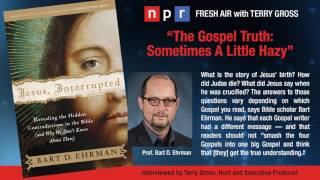 The
 New Testament:
 New Testament:
 New Testament:
 New Testament:
 New Testament:
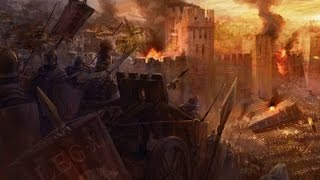 Siege of Jerusalem and destruction of the Jewish Temple and Jesus'

 The
 Forged Fiction:
 Forged Fiction:
 Forged Fiction:
 Forged Fiction:
 Why do we have 4 different Jesus' Resurrection accounts in the
 In Luke 8:45, Jesus asks who touched me. In Mark and Matthew's
 In Mark's
 99% of the foremost Bible Scholars, believe the historical Jesus in Mark's
 If Matthew's
 If Matthew's
 Mark 7:16 is missing from the Bible. Is this a conspiracy to change Mark's
 Which
 In Matthew 2:15 and Hosea 11:1, Jesus came from Egypt. No other
 In Quran 5:68, which
 The Crucifixion of Truth by Tony Bushby (Reading) -
 The Crucifixion of Truth by Tony Bushby (Reading) -
 My Search for
 Jesus' Crucifixion is a celebrated Triumph in John, but a sad Tragedy in Mark, Matthew and Luke's
 Originally, the
 Matthew copied Mark. Therefore, Matthew believed Mark's
 Judas did not author the
 In Marks
 Jesus claims he is divine, God-like in John's
 In the Christian
 Original
 In 70 AD, Mark, the earliest
 Matthew, Mark and Luke are similar and different. Were the
 John's
 Conflicting
 Mark
 Luke's
 John's
 Luke
 Gnostic Christians praise John's
 Mark's
 John-Mark wrote Mark's
 Anonymous author of Mark's
 Source for Mark's
 If Mark's
 Papias (163 AD) described Matthew's
 Matthew and Luke 'revised' the order of historical events copied from Mark's
 Jesus' stories were shared between
 Critical scholars doubt the Jesus' sayings in John's
 Jesus in Luke's
 In Mark's
 In Matthew's
 In Matthew's
 On the
 John's
 In
 Torah, Psalm and
 John's
 John did not write John. Who wrote John's
 Jesus preached the Oral
 Mark is the most reliable
 Jesus spoke Aramaic. Mark spoke Aramaic. Why is Mark's
 Evolution of Jesus Christ:
 In Matthew 4:23, Jesus preached the
 Is Mark's
 Dating Mark's
 Mark's
 Greek philosophy, John's
 Was Mark's
 Some Bible scholars believe Matthew did not write Matthew's
 Mark's
 Jesus became the Passover Lamb in John's
 In John 8, the Adulteress Woman was added to John's
 Christianity is primarily based on
 Four
 Mark's
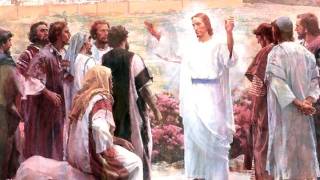 Homer's Odyssey (800 BC, Greek myth) parallels Jesus in Mark's
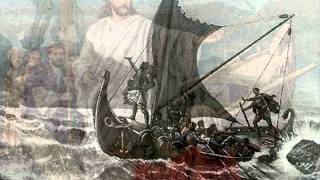 Homer's Odyssey (800 BC, Greek myth) parallels Jesus in Mark's
 Homer's Odyssey (800 BC, Greek myth) parallels Jesus in Mark's
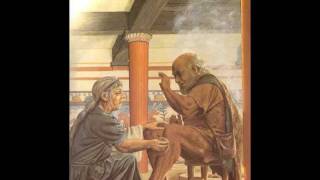 Homer's Odyssey (800 BC, Greek myth) parallels Jesus in Mark's
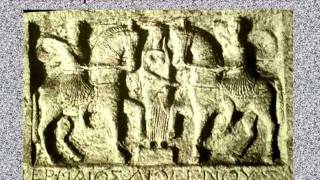 Mark's
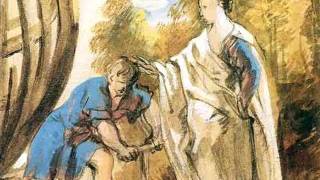 Homer's Odysseus (800 BC, Greek myth), a skilled Craftsman ('tekton') parallels Jesus the Carpenter in Mark's
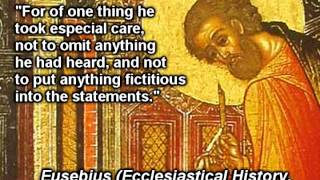
 Celsus, a Greek philosopher in 177 AD wrote against Jesus using
 Jesus' Resurrection:
 John's
 Apostle Paul met Jesus in Spiritual visions. Later,
 Matthew and Luke copied from
 In Christianity, Jesus spoke of Muhammad in a 'Secret'
 In Christianity, Jesus spoke of Muhammad in a 'Secret'
 Jesus is GOD in
 The
 Was Jesus Born of a Virgin? The Earliest
 The Original Jesus Was Hidden in
 Can
 Jesus Is God ONLY in Johns
FAQ on Gospel (29)
1.Do Muslims believe in The Bible?
Muslims believe that God originally revealed the Gospel to Jesus as a source of guidance, light, and instruction.
2.What books did Apostle Paul write?
Romans
Paul explains how the gospel works and how to respond. Paul wrote this letter before he had visited the Roman church.
1 Corinthians
In 55 A.D., Paul admonished the local church that he had founded in Corinth.
2 Corinthians
Come 56 A.D., the Corinthian church had escalated and then resolved their conflict with Paul. Second Corinthians is Paul's a letter of forgiveness and reconciliation.
Galatians
Someone had misled the churches of Galatia re-subjecting them to the Law of Moses and devaluing God's grace. Paul writes the Galatians an aggressive letter to set them straight on their freedom in Christ.
Ephesians
Paul outlines doctrines of grace, peace, and salvation, and then instructs the church to walk in a manner worthy of Jesus Christ.
Philippians
Even though he's suffering in prison, Paul finds joy in Christ. He writes to the church at Philippi urging them to take on a Christlike attitude.
Colossians
This letter explains to the church at Colossae who they are in Christ.
1 Thessalonians
The church of Thessalonica is setting a great example for other churches, even though they're being persecuted for their faith. Paul encourages them to 'excel still more'.
2 Thessalonians
The affliction just won't let up on the Thessalonian church, so Paul coaches them on standing firm until Jesus return.
1 Timothy
This is Paul's guide to godliness and sound teaching for the young pastor Timothy at Ephesus.
2 Timothy
Paul's death is drawing near, and he charges Timothy to carry on his gospel work.
Titus
Paul had left Titus at Crete to set up order in the churches there. Now he writes Titus instructions for leading a
counter-cultural church.
Philemon
It's a message to Philemon, a leader in the Colossian church.
3.What did Apostle Paul think of his fellow Gospel writers?
Paul was deeply unyielding toward alternative views of the faith, explicitly writing in Galatians 1:9 that if any person preached a gospel different from the one his followers had received, that individual should be completely accursed. This indicates he aggressively dismissed the legalistic, Jewish-Christian perspectives held by original disciples like James and Peter.
4.Was Apostle Paul an Apostle?
An Apostle is one of the original 12 disciples called by Jesus to
preach the gospel: Simon Peter, the brothers James and John,
Andrew, Philip, Bartholomew, Matthew, Thomas, James the son of
Alpheus, Thaddaeus, Simon the Zealot, Judas Iscariot.
As Paul never met Jesus, many Galatians and Corinthian Christians
actively challanged Pauls right to even teach, and his right to
call himself an Apostle.
5.How did Matthew (Gospel) support Apostle Pauline Christian doctrine?
The Gospel of Matthew, aimed at law-abiding Jewish-Christians, did not support Pauline doctrine and actually stood in direct opposition to it.
6.Why was Apostle Paul superior to other Apostles?
Paul insisted that his gospel possessed a superior divine authority because he claimed it was delivered directly by the risen Lord Jesus, rather than the earthly, historical Jesus whom the twelve disciples had trained under in-person; this supposed heavenly origin entitled him to act entirely independently of the original Jewish-Christian beliefs and modify their doctrine.
7.Did Apostle Paul face any opposition. If so how?
Yes, early gospel writers strongly opposed Paul's innovations, with John the Evangelist and John of Patmos writing sharp warnings in 1 John and the Book of Revelation to guard believers against a dangerous heretic, a false Jew, a false apostle, and a deceitful doctrine that broke God's commandments.
8.Who was the Tammuz God?
Tammuz was a popular Syrian saviour-God who pre-existed Jesus
Christ yet shared a number of similarities:
* Tammuz was born of a virgin
* Tammuz was killed and rose again every spring.
* Wherever Tammuz was worshipped, he was celebrated with a
human victim in royal robes who was killed and eaten. This was so
the sacrifice, his body and blood might bring salvation to the
community
* One of the chief centres of Tammuz worship was Bethlehem,
said to have been the birthplace of Jesus
* Tammuz was called 'the Carpenter', a title related to the
'Architect' of the universe. Jesus too was called the 'son of the
carpenter'
* Tammuz was said to have entered Jerusalem riding two asses,
because this represented the passage of the sun at the summer
solstice through the sign of Cancer (two asses star-sign)
* In the gospel of Matthew (21:5), Jesus enters Jerusalem on two animals.
9.In John 1:1. Jesus claims to be God?
The Gospel of John opens with the phrase, 'In the beginning was the Word, and the Word was with God, and the Word was God,' which mainstream Christian theology interprets as an explicit declaration of Jesus' pre-existent divinity. Historical and linguistic scholars note that the 'Word' (Logos) represents the divine reason and creative power of God becoming flesh in the person of Jesus.
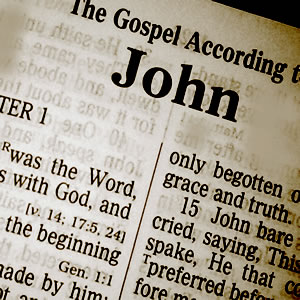
In the beginning was the Word, and the Word was with God, and the Word was God.
In actual fact, the 'Word' is God's wisdom and action and not as a separate deity, as is presented in the Old Testament:
And the word of the Lord was Joseph's helper (Gen.39:2)
And Moses brought the people to meet the word of the Lord (Ex. 19:17)
And the word of the Lord accepted the face of Job (Job 42:9)
And the word of the Lord shall laugh them to scorn (Ps. 2:4)
They believed in the name of His word (Ps. 106:12)
10.How did Jesus tell people to reach God?
In the Synoptic Gospels, Jesus frequently instructs his Jewish audience that the path to God requires loving God completely and strictly upholding the ethical weight of the Mosaic Law (as seen in Matthew 19:17, 'if you want to enter life, keep the commandments'). In the later Gospel of John, the theological focus shifts to a personal, saving faith in Jesus himself as the exclusive mediator to the divine, summarized in John 14:6: 'I am the way, the truth, and the life.'
11.Does the Quran tell Jews and Christians to refer to their Scriptures (Torah and Bible)?
Yes, the Quran references previous scriptures in passages like Surah Al-Ma'idah (5:47), which tells the followers of the Gospel to judge by what God has revealed in it. From an academic perspective, this reflects the historical context of 7th-century Medina, where Jews and Christians were recognized as 'People of the Book' who possessed divine laws. While Islamic theology holds that modern biblical texts have suffered from textual corruption (tahrif), the Quran historically appeals to the core monotheistic truths remaining in those scriptures to validate Muhammad's message.
12.Did God sent Jesus with the task of guiding people?
Yes, both Christian scripture and Islamic theology completely agree that Jesus was explicitly sent by God as a divinely appointed guide, teacher, and messenger to humanity. In the New Testament gospels, his mission is framed as bringing spiritual salvation, healing the sick, and declaring the immediate arrival of the Kingdom of God. Similarly, the Quran defines his core task as delivering the Gospel (Injeel) and serving as a miraculous sign to guide the Children of Israel back to pure monotheistic worship.
13.What did Apostle Paul say about the other gospels?
In Galatians 1:6-9, Paul strongly condemned anyone preaching a different gospel, reflecting a significant conflict in the early church between his Gentile-inclusive mission and strict adherence to the Law.
14.Did Jesus have brothers, sisters and wife?
Jesus may have married because first-century Jews viewed procreation as a sacred duty, and point to non-canonical writings like the Gospel of Philip which allege a romantic connection with Mary Magdalene. However, mainstream historical-critical scholarship and Christian tradition emphasize that there is no verified historical or biblical evidence to support the claim that Jesus married, concluding he practiced lifelong celibacy. The New Testament does explicitly verify that Jesus had brothers and sisters, though theologians debate whether they were biological siblings, step-siblings, or cousins.
Jesus' brothers were married. It is likely that Jesus had a wife for the following reasons:
- Pious 1st century Jews took God's commandment to Adam and Eve to 'multiply' seriously
- No evidence to suggest Jesus was celibate
- As a future king of Israel, Jesus would never have been celibate
- He was close to his companion Mary Magdalene - Gospel of Philip has Jesus kissing Mary on the lips
15.Did Jesus' disciple question his resurrection?
Yes, the New Testament canonical records openly document that even members of Jesus' inner circle of chosen followers struggled to accept his physical resurrection. In the Gospel of Matthew (Matthew 28:17), the text captures his final appearance on a mountain in Galilee, explicitly stating that when the disciples saw him, they worshipped him, 'but some doubted'. Modern historians view this candid admission as highly credible, showing that belief in the resurrection was complex even for early eyewitnesses.
16.Who wrote John's gospel?
The author of the fourth gospel is believed to be a Greek convert with limited knowledge of traditional Judaism, who frequently uses 'the Jews' as an antagonistic term over 60 times in the Gospel of John alone.
17.What were the Apocryphal Gospels?
Apocrypha are works, usually written works, that are of unknown authorship, or of doubtful authenticity, or spurious, or not considered to be within a particular canon.
The Apocrypha (Greek for 'hidden away') are revered Biblical text which were excluded from the canon Bible. They were literally hidden away from the early Christians, and tell a very different story of Jesus.
Gospel of Nazoreans
Gospel of Ebionites
Gospel of Egyptians
Gospel of Peter
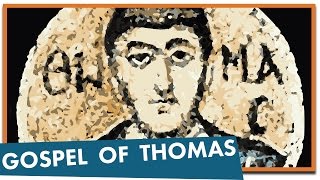
Gospel of Thomas
Gospel of Hebrews
18.What is the significance of the Gospel of Thomas?
Thomas is the most important non-canonical Gospel recently discovered in the last century. It positively features in current studies of Christian origins and the historical Jesus.
Gospel of Thomas with sayings of Jesus is thought to be earliest written record of his life produced within ten years of his death.
19.How was the Gospel of John viewed?
In the 2nd century, some Christians felt John gospel was so different in tone and approach in comparison to the other three synoptic gospels (Mark, Matthew, Luke); it should have been excluded from the cannon.
20.In John 9:38, Jesus is worshipped like a God?
While the verse describes a healed blind man worshipping Jesus, the webpage highlights that this verse is absent from the Codex Sinaiticus, the oldest 4th-century New Testament manuscript . It appears only as a later marginal addition, suggesting a deliberate insertion by a scribe to support the doctrine of Jesus' divinity .
According to verse 38, a blind man is healed by Jesus, and after seeing Jesus he worships him.
In the Codex Sinaticus, the oldest manuscript of John, dated to 330-years after Jesus, verse 38 is not recorded. The entire verse 38 appears as an additional footnote on the side of the Codex Sinaticus.
Verse 38 was inserted into the bible to prove that Jesus was worshipped and that he acknowledged and allowed the people to worship him.
This proves that the early Jewish-Christians did not interpret Johns gospel in the way we do today. At some point a scribe felt so strongly about the divinity of Jesus that he was compelled to include a footnote into the main text as an actual verse.
21.Who was Lazarus of Bethany in the Bible?
In the Gospel of John, Lazarus was a close friend of Jesus Christ and the brother of Mary and Martha. They lived in the village of Bethany near Jerusalem.
22.What miracles were performed through Prophet Jesus?
Blessed with the divine scripture known as the Injeel (Gospel), Jesus performed extraordinary miracles by God's permission—including speaking as an infant in the cradle, restoring sight to the blind, healing lepers, walking on water, multiplying food, and raising the dead back to life.
23.How is Prophet Zechariah viewed across different faith traditions?
Judaism: Recognizes historical prophets named Zechariah, most notably the author of the Book of Zechariah, who encouraged the rebuilding of the Second Temple and foretold messianic prophecies.
Christianity: Honored in the Gospel of Luke as a righteous priest whose prophetic song, the Benedictus, celebrated the coming of the Messiah and the role of his son, John the Baptist.
Islam: Revered as Zakariyya, a noble prophet praised in the Quran (notably in Surah Maryam and Surah Al-Imran) for his patience, devotion, and guardianship of Maryam.
24.What are the Gnostic Gospels?
The Gnostic Gospels are a collection of early texts concerning the life and teachings of Jesus that were explicitly excluded from the canonical New Testament Bible. Unlike the traditional books of Matthew, Mark, Luke and John, these texts focus on secret dialogues and deep esoteric wisdom. The most famous examples include:
* The Gospel of Thomas: A collection of 114 sayings attributed to Jesus, completely lacking a narrative or crucifixion story.
* The Gospel of Mary: Highlights Mary Magdalene as a premier disciple who received secret revelations directly from Jesus.
* The Gospel of Judas: Radically reframes Judas Iscariot not as a traitor, but as Jesus's closest friend acting under divine orders.
25.What are the Six Articles of Faith in Islam?
While the Five Pillars govern outward actions, the Six Articles of Faith (Arkan al-Iman) dictate the core internal theological beliefs required of every Muslim:
1. Belief in Allah as the one and only supreme God.
2. Belief in His angels (such as Gabriel and Michael).
3. Belief in His holy books (including the Torah, Psalms, Gospel and the Quran).
4. Belief in His prophets and messengers (from Adam and Noah to Abraham, Moses, Jesus and Muhammad).
5. Belief in the Day of Judgment and the afterlife (Paradise and Hell).
6. Belief in divine decree or destiny (Qadar), meaning God possesses absolute ultimate knowledge of all events.
26.What is the purpose of the LDS/Mormonism missionary program?
The LDS/Mormonism Church operates a massive global missionary program as a fulfillment of the biblical command to preach the gospel. Young men (typically ages 18-25) serve for 24 months, while young women (ages 19+) serve for 18 months. Missionaries are completely self-funded or supported by their families, volunteer their time, and are assigned to a specific region of the world by Church headquarters to teach the faith and perform community service.
27.What do Mormons believe about the afterlife?
Mormonism/LDS theology features a uniquely optimistic view of the afterlife, teaching that almost all of humanity will inherit a kingdom of heavenly glory. They reject the traditional concept of a binary Heaven and Hell, believing instead in three degrees of glory based on a person's choices and acceptance of Christ:
1. The Celestial Kingdom: The highest realm, where those who accept Christ and keep his covenants live eternally with God and their families.
2. The Terrestrial Kingdom: For honorable people who did not fully accept the gospel of Christ.
3. The Telestial Kingdom: For those who chose a life of sin and rejected the gospel.
28.What does the Greek phrase Ego Eimi mean in the Bible?
The Greek phrase 'Ego Eimi' (??? ????) literally translates to 'I am' or 'I exist.' While it is grammatically a common first-person singular present-tense copula used in everyday conversation, it carries profound theological significance in the Gospel of John, where Jesus uses it to claim a unique divine identity and pre-existence.
29.How many I AM statements are in the Gospel of John?
There are exactly seven famous metaphorical 'I AM' statements where Jesus uses a predicate (e.g., Bread of Life, Light of the World, Gate, Good Shepherd, Resurrection and the Life, Way/Truth/Life, and True Vine). However, there are also several 'absolute' or unpredicated uses (such as John 8:58) where 'Ego Eimi' stands alone, totaling over 20 deliberate uses.
Scripture Themes on Gospel (14)
| 1. Jesus delivers the Sermon on the Mount | Matthew 5 |
| 2. Apostle Paul defends his faith before King Agrippa | Acts 26:1-32 |
| 3. Peter confesses Jesus as the true Messiah | Mark 8:27-30 |
| 4. Apostle Paul and Barnabas preach the gospel on Cyprus | Acts 13:4-12 |
| 5. Peter preaches the gospel to the Roman centurion Cornelius | Acts 10:1-48 |
| 6. Apostle Paul stands trial before Governor Felix | Acts 24:1-24 |
| 7. Apostle Paul debates philosophers at the Areopagus in Athens | Acts 17:22-34 |
| 8. Jesus rewards the faith of the Syrophoenician woman | Mark 7:24-30 |
| 9. Quran confirms truth of Torah and Gospel | Quran 3:3 |
| 10. God teaches Jesus Scripture, wisdom, Torah, and Gospel | Quran 3:48 |
| 11. Jesus sent with Gospel confirming Torah | Quran 5:46 |
| 12. Gospel bestowed upon Jesus | Quran 57:27 |
| 13. Gospel Bestowed Upon Jesus Son of Mary | Quran 57:27 |
| 14. Muhammad Described in the Torah and Gospel | Quran 7:157 |