939 views
·
Last viewed: 23 hrs ago
Uploaded: 13 Nov 2016 (10 years ago) · Shared: 14 Dec 2017
Duration: 28:26
Uploaded: 13 Nov 2016 (10 years ago) · Shared: 14 Dec 2017
Duration: 28:26
Youtube Description
Did His birth occur on December 25th? Can we even know when Christ was born? And, should we really be celebrating His birth? ======== Watch thisProgram, Read the Transcript or Submit a Comment
https://www.ucg.org/beyond-today/beyond-today-television-program/when-was-jesus-born?source=youtube
========
FREE Bible Study Aid
Jesus Christ: The Real Story
https://www.ucg.org/bible-study-tools/booklets/jesus-christ-the-real-story?source=youtube
========
Subscribe to Beyond Today Email
https://www.ucg.org/subscribe-to-email-updates?source=youtube
========
Search for a United Church of God Congregation in Your Area
https://www.ucg.org/congregations?source=youtube
Explore More
Early Christian Beyond Today Christmas PaganSearch Google Search Explore Topics
 What is Early Christian?
Early Christianity, the period of Christianity preceding the First Council of Nicaea in 325 AD. This typically divides historically into the Apostolic Age and the Ante-Nicene Period (from the Apostolic Age until Nicea). The first Christians, as described in the first chapters of the Book of Acts, were all Jews either by birth or conversion and historians refer to them as Jewish Christians. The early Gospel message spread orally, probably originally in Aramaic, and later in Greek. The New Testament's Acts of the Apostles and Epistle to the Galatians record that the first Christian community centered on Jerusalem and that its leaders included Peter, James, the brother of Jesus, and John the Apostle.
 Who are Beyond Today?
Beyond Today is a free religious magazine published bi-monthly by the United Church of God (UCG). Subscriptions and printing costs are covered by tithed donations from UCG's members and employees. Subject matter includes Christian living, Bible prophecy, warnings to the English-speaking world, social issues, defense of creationism against evolution, world news, and prophecy,
 What is Christmas?
Christmas is an annual festival commemorating the birth of Jesus Christ. It is observed primarily on December 25 as a religious and cultural celebration among billions of people around the world. Christmas Day is a public holiday in many of the world's nations, is celebrated religiously by a majority of Christians, as well as culturally by many non-Christians, and forms an integral part of the holiday season centered around it. Although the month and date of Jesus' birth are unknown, by the early-to-mid fourth century the Western Christian Church had placed Christmas on December 25, a date that was later adopted in the East. Today, most Christians celebrate on December 25 in the Gregorian calendar, which has been adopted almost universally in the civil calendars used in countries throughout the world.
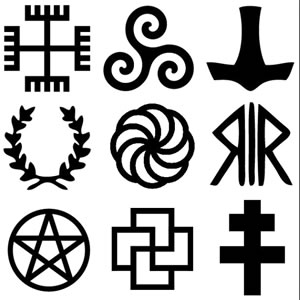 What is Pagan?
Paganism is a term first used in the fourth century by early Christians. It was applied on populations of the Roman Empire who practiced polytheism, either because they were increasingly rural and provincial relative to the Christian population or because they were not milites Christi (soldiers of Christ). Alternate terms in Christian texts for the same group were hellene, gentile, and heathen. Pagan and paganism were pejorative terms for the same polytheistic group, implying its inferiority. Paganism has broadly connoted the "religion of the peasantry", and for much of its history was a derogatory term. Both during and after the Middle Ages, pagan was a pejorative term that was applied to any non-Abrahamic or unfamiliar religion, and the term presumed a belief in false god(s).