PHILOSOPHY
The term was probably coined by Pythagoras (c. 570-495 BCE). Philosophical methods include questioning, critical discussion, rational argument, and systematic presentation. Classic philosophical questions include: Is it possible to know anything and to prove it? What is most real? Philosophers also pose more practical and concrete questions such as: Is there a best way to live? Is it better to be just or unjust (if one can get away with it)? Do humans have free will?
Search Result on 'Philosophy' (44 total)
FAQ on Philosophy (28)
1.Are children born believing in a God?
Led by two academics at Oxford University, the 1.9 million UK pound study found that human thought processes were 'rooted' to religious concepts.
The project involved 57 academics in 20 countries around the world, and spanned disciplines including anthropology, psychology, and philosophy.
The co-director of the project, Professor Roger Trigg, from the University of Oxford, said the research showed that religion was 'not just something for a peculiar few to do on Sundays instead of playing golf'.
'We have gathered a body of evidence that suggests that religion is a common fact of human nature across different societies. This suggests that attempts to suppress religion are likely to be short-lived as human thought seems to be rooted to religious concepts, such as the existence of supernatural agents or gods, and the possibility of an afterlife or pre-life.'
2.Can an atheist believe in a higher power, spirituality, or a creator?
Strictly speaking, No. If a person explicitly believes in a conscious 'creator' or personal deity, they are classified as a theist or deist rather than an atheist. However, because atheism strictly refers to a rejection of traditional gods, some atheists may still explore secular spirituality, a universal consciousness, or non-theistic philosophy (such as certain traditions within secular Buddhism or Taoism) that do not command worship of a personified creator.
3.What is the meaning of Yin and Yang in Chinese religion?
In Chinese religion and philosophy, Yin and Yang represent the concept of dualism, stating that cosmic harmony relies on the balance of two contrary yet complementary forces. Yin represents the feminine, passive, dark, cold, and earthly elements, while Yang represents the masculine, active, bright, hot, and heavenly elements. Nothing is purely Yin or purely Yang; everything exists in a fluid, interconnected state of balance.
4.What is Confucianism and who founded it?
Confucianism (historically known as Ruism) is an ancient Chinese belief system, philosophy, and ethical framework founded by the Chinese philosopher Confucius (Kong Fuzi) in the 6th-5th century BCE. Developed during a time of intense political chaos known as the Spring and Autumn period, Confucius sought to restore societal harmony, effective government, and peace by establishing practical codes of moral conduct and deep social responsibility.
5.Is Confucianism a religion or a philosophy?
Confucianism is primarily classified as an ethical and philosophical system rather than an organized religion. It lacks a centralized creator God, a formal priesthood, and a defined theology regarding the afterlife. However, it contains deep spiritual elements such as ancestor veneration, the honoring of sacred rituals, and a profound reverence for a cosmic order known as Tian (Heaven) leading many scholars to view it as a hybrid socio-political religion.
6.Is Deism considered an actual religion?
Deism is generally classified as a theological philosophy or a religious belief system rather than an organized religion. It lacks the traditional components of a mainstream religion, such as sacred scriptures, formal houses of worship, a designated priesthood, and rigid creeds. Instead, it is an individual intellectual stance that rejects blind faith and dogma in favor of empirical observation and scientific reasoning.
7.Does Deism still exist today?
Yes, modern Deism remains an active, global philosophy. While it still lacks a traditional church infrastructure, the internet has allowed for a massive resurgence of the movement. Organizations like the World Union of Deists connect thousands of modern practitioners online. Additionally, Deistic thought heavily underpins the beliefs of millions of people who identify as 'Spiritual but Not Religious'—those who firmly believe in a higher power or cosmic source but completely reject organized religion.
8.What is the Druze religion?
The Druze religion is a monotheistic, Abrahamic, and highly secretive syncretic faith that emerged during the 11th century in Cairo, Egypt. Adherents, known as the Druze, are a distinct ethnoreligious group primarily living in the Levant. The faith blends the foundational monotheism of Shia Isma'ili Islam with elements of Christianity, Gnosticism, ancient Greek philosophy (such as Neoplatonism and Pythagoreanism), and Hinduism.
9.What is Epicureanism and who founded it?
Epicureanism is an ancient Greek philosophy and way of life founded in Athens around 307 BCE by the philosopher Epicurus. It teaches that the ultimate goal of human life is to achieve ataraxia (a state of profound peace and freedom from mental anxiety) and aponia (the absence of physical pain). Epicurus established a highly influential school called 'The Garden,' which uniquely welcomed women and enslaved people as equal members.
10.What is Falun Gong?
Falun Gong is a spiritual discipline and new religious movement that originated in China in the early 1990s. The practice combines gentle qigong exercises and meditation with a moral philosophy focused on self-cultivation. It operates without a formal hierarchy, clergy, or physical places of worship, focusing instead on individual daily practice and moral improvement.
11.What are the core principles of Falun Gong?
The moral philosophy of Falun Gong centers on three foundational principles: Truthfulness (Zhen), Compassion (Shan), and Forbearance (Ren). Practitioners believe that by aligning their daily thoughts and actions with these virtues, they can improve their character, eliminate negative karma, and achieve spiritual enlightenment.
12.What is the difference between Hare Krishna and mainstream Hinduism?
Hare Krishna is not a separate religion from Hinduism; rather, it is a highly focused monotheistic tradition within Hinduism. While mainstream Hinduism often encompasses a vast pantheon of various gods and paths, Gaudiya Vaishnavism teaches that Krishna is the Supreme Personality of Godhead, and that all other deities are his expansions or demigods. It places an exclusive emphasis on Bhakti (loving devotion) over intellectual philosophy or ascetic rituals.
13.Who is the founder of Jainism?
Unlike many world religions, Jainism does not have a single historical founder. Instead, Jains believe their eternal truth is periodically revived by a lineage of 24 enlightened spiritual teachers known as Tirthankaras (Ford-makers). The 24th and final Tirthankara of the current cosmic era was Vardhamana Mahavira (599-527 BCE), a contemporary of Gautama Buddha who formalized and revitalized the philosophy into the organized practice known today.
14.What role do crystals and gemstones play in New Age practices?
In New Age philosophy, crystals and gemstones are believed to hold distinct energetic frequencies that can interact with the human energy field. Practitioners use them for 'crystal healing', placing specific stones on or near the body to clear blockages, balance the chakras, or amplify intention. For example, amethyst is commonly associated with spiritual clarity, while rose quartz is used to promote love and emotional healing.
15.Is New Thought a religion or a philosophy?
New Thought is generally considered a spiritual philosophy that is expressed through various religious denominations. While it operates as a loose network of ideas rather than a single, rigid church, it has birthed several organized religious organizations. The most prominent denominations under the New Thought umbrella include Unity (Unity Church), Religious Science (Science of Mind), and Divine Science.
16.What is the New Thought view on sin, evil, and hell?
New Thought completely rejects the concepts of original sin, a literal devil, and eternal damnation in hell. In this philosophy, 'sin' is simply an old archer's term meaning 'to miss the mark', interpreted as a mistake or ignorance of one's true divine nature. Evil and suffering are not created by a dark cosmic force, but are the natural, shadow results of human beings misusing their creative thoughts and feeling separated from God.
17.What is Scientology and how did it start?
Scientology is a modern religious movement developed in the 1950s by American science fiction author Ron Hubbard. It grew directly out of his 1950 self-help system called Dianetics: The Modern Science of Mental Health. Hubbard officially incorporated the first Church of Scientology in 1954 in Los Angeles, California, framing it as a applied religious philosophy focused on spiritual rehabilitation.
18.Is Sikhism a branch of Hinduism or Islam?
No, Sikhism is an entirely independent, distinct world religion with its own unique scriptures, traditions and philosophy. While it originated in a geographical region dominated by Hinduism and Islam and shares some terminology (like karma or allah as names for God), it fundamentally rejects core aspects of both, such as Hindu idol worship, asceticism, and the caste system, as well as Islamic concepts of exclusive salvation or a binary heaven and hell.
19.What is Stoicism and how did it start?
Stoicism is an ancient Greek philosophy founded in Athens by Zeno of Citium around 300 BC. The school of thought takes its name from the Stoa Poikile (Painted Porch), a public colonnade where Zeno and his disciples gathered to debate. It teaches that the path to a fulfilled, peaceful life is found by accepting the present moment, mastering ones desires, and using reason to understand the world.
20.Is Stoicism a religion or a philosophy?
Stoicism is a school of Hellenistic philosophy, not a religion. It lacks traditional religious elements such as a personalized creator god, divine intervention, formal houses of worship, priesthoods, or rigid dogmatic creeds. However, Stoicism offers a comprehensive moral framework and a deeply spiritual view of the universe, leading many modern practitioners to utilize it as a secular alternative to religion.
21.What is the Stoic view on death and the afterlife?
Stoicism treats death as a completely natural, indifferent event - a simple reorganization of the physical elements that make up a human body. Because the philosophy focuses intensely on maximizing virtue in the present life, it remains largely agnostic or indifferent about a literal afterlife. Whether the soul dissolves back into the universe's cosmic energy or continues in a new form, a Stoic believes there is nothing to fear in death.
22.What are the 4 cardinal virtues of Stoicism?
Stoic theology and ethics are entirely centered on the cultivation of character. The philosophy teaches that virtue is the sole good and divides it into four core virtues:
1. Wisdom (Phronesis): Knowing what is good, what is bad, and what is indifferent.
2. Courage (Andreia): Standing firm and acting rightly in the face of fear or adversity.
3. Justice (Dikaiosyne): Treating others fairly, with kindness, and contributing to the common good.
4. Temperance (Sophrosyne): Practicing self-control, moderation, and discipline.
23.What is the Stoic "Dichotomy of Control"?
In Stoicism, the Dichotomy of Control is the most fundamental practical tool in Stoic philosophy, famously articulated by Epictetus. It states that everything in life falls into one of two categories:
1. Things we control: Our thoughts, impulses, desires, actions, and character.
2. Things we do not control: The economy, the weather, the past, the future, other people's actions, and our own physical health or death.
Stoicism teaches that true peace of mind (ataraxia) is achieved by focusing 100% of our energy on what we can control, while completely accepting what we cannot.
24.What is Taoism and how did it start?
Taoism is an ancient Chinese philosophy and religion that originated over 2,500 years ago. It is traditionally attributed to the legendary sage Laozi (Lao Tzu), who is said to have written the foundational text of the faith, the Tao Te Ching. It began as a philosophical system focused on harmony with the natural world and evolved into a vibrant religious tradition with rituals, deities, and temples during the Han Dynasty.
25.Is Taoism a religion or a philosophy?
Historically and culturally, Taoism is both a philosophy and an organized religion, and the two are deeply intertwined.
* Philosophical Taoism (Daojia): Focuses heavily on the early texts like the Tao Te Ching and Zhuangzi, emphasizing meditation, mindfulness, nature and living effortlessly.
* Religious Taoism (Daojiao): Features an intricate pantheon of gods, ritual worship, ancestral veneration, shrines, and a priesthood dedicated to spiritual cultivation, community blessings and exorcisms.
26.What is the fundamental battle between good and evil in Zoroastrianism?
Zoroastrian philosophy is famously dualistic, centering on a continuous moral and cosmic battle:
* Asha (Truth, Order, and Goodness): Directed by Ahura Mazda and supported by the Amesha Spentas (Holy Immortals).
* Druj (Chaos, Deceit, and Evil): Spearheaded by Angra Mainyu (also known as Ahriman), the destructive spirit who introduces suffering, disease, and death into the world.
Human beings are viewed as vital active combatants in this war, possessing free will to choose between light and darkness.
27.Who was Alice Bailey?
Alice Bailey (1880-1949) was a British-American writer, esoteric teacher, and prominent occultist who famously coined and popularized the term "New Age". Born Alice La Trobe-Bateman in Manchester, England, she relocated to the United States in 1907. After a brief period in the Theosophical Society, she broke away to co-found the Lucis Trust and the Arcane School in 1922 to disseminate her vast spiritual philosophy.
28.What are Alice Bailey's "Blue Books"?
The "Blue Books" is the popular collective term for the 24 volumes of esoteric philosophy written by Alice Bailey between 1919 and 1949. They are named for their distinctive blue covers published by the Lucis Publishing Company. Nineteen of these volumes were written in telepathic collaboration with the Tibetan Master Djwhal Khul, while five were authored by Bailey independently.
Youtube Videos on Philosophy (13)
 Suck the teats of Greek
 Greek
 Greek language,
 In 180 AD, Theophilus of Antioch borrowed Greek
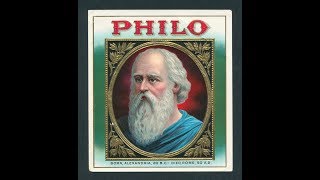 Philo of Alexandria mixed Greek
 God is One. He moves by Spirit. He creates through Spoken Word (Trinity is from Pagan
 Greek
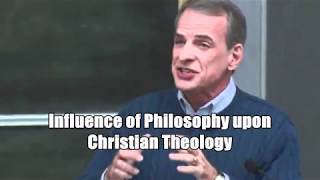 Greek
 Philo of Alexandria used Greek
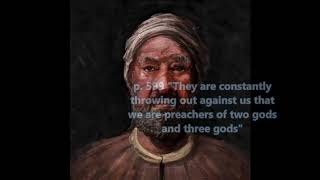 Majority rejected Tertullian's Trinity (240 AD), based on Greek
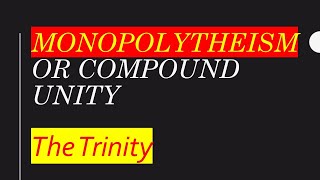 Christian Trinity is Mono-Polytheism adopted from Greek
 Early Christianity influenced by Egyptian, Greek
 Did Christianity borrow from Pagan Myths? | Inspiring
Articles on Philosophy (1)
Greek Philosophy and Pagan Influence in the New Testament Bible: Historical Analysis

22,083 views
|
Scripture Themes on Philosophy (1)
| 1. Jethro explains value of lawful wealth | Quran 11:86 |