CHURCH
The earliest identified Christian church is a house church founded between 233 AD and 256 AD. The word church also describes a body or assembly of Christian believers, while "the Church" refers to the worldwide Christian religious community.
Youtube Videos on Church (129)
 In Psalm 22:16, how did the
 Jesus' birthplace (
 How the Early Christian
 Catholic
 Catholic
 Catholic
 In 1 John 5:8, the
 Spanish Inquisition - How the Catholic
 The Roman Catholic
 Irenaeus,
 False
 1 John 5:7 added the Trinity to the Bible. Why did the
 Why the
 Early
 Crusades: Roman Catholic
 Jesus' brother, James was leader of Early
 The Catholic
 Christianity is over and
 Constantine, Mithras and Paganism of the
 Paganism in Today's Christian
 Early
 Jesus' Resurrection: Mark 16:9-20 was quoted by Early
 Why do Christians believe Jesus is God, when this was a lie invented by the later
 Persecution in the Early
 Orthodox Christian
 Rome: Constantine & The Early Roman
 Creeds and
 Early
 Pornography ruins our Childhood. The Amish
 Pornography ruins our Childhood. The Amish
 Pornography ruins our Childhood. The Amish
 The Crucifixion of Truth by Tony Bushby (Reading) - Hidden
 Origins of Christmas: Early
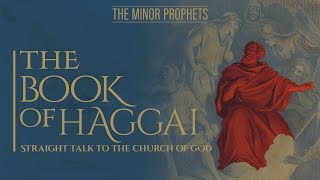 Prophet Haggai: Straight Talk to the
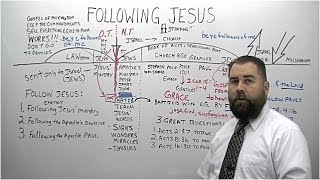 Many follow Jesus, do Works, yet will go to Hellfire. Follow the Risen Jesus, have Faith, obey the
 Secret Societies - History of the Roman Catholic
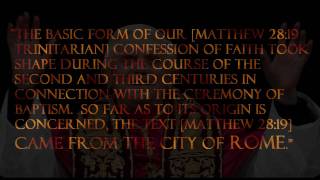 In Matthew 28:19, the Trinity text was a later insertion and corruption, after 200 AD, by the Catholic
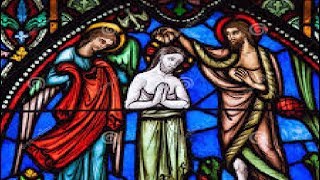 In Matthew 28:19, is not a Trinitarian verse. Trinity came through evolution and Early
 Russian Orthodox
 Holding The Key: Jerusalem's
 Inside The Vatican: The Catholic
 Early
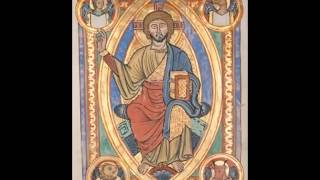
 In 325 AD, Trinity became Official
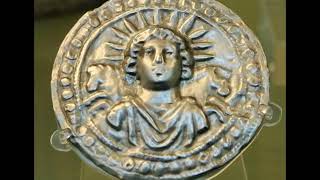
 Christmas, 25th December was Ancient Pagan festival.
 The Christian
 In 601 AD, Pope Gregory I adopted Pagan customs and festivals into Christian
 Apostle Paul disrespects Jesus' disciples, Jesus' family and Jerusalem
 Paul was 'Apostle to Gentiles' and claimed superiority over Jewish-Christians in Jerusalem
 In the Early
 Fullness of truth is in the Catholic Apostolic
 Early
 After 100 years,
 Papias (163 AD), Proto-Orthodox
 21 Ecumenical
 In 382 AD, Council of Rome was earliest
 Apostolic Fathers (75-200 AD) put context to the Early
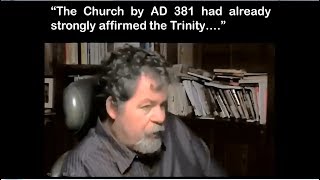 By 381 AD, the
 It's Time to Quit the Catholic
 Heresy in the Early
 Prove the
 Which Early
 History of
 Pauline Christianity came to dominate the early
 Trinity took 400 years to develop with
 History of The Roman Catholic
 Eusebius, an early
 Early
 Absolute Equality forced the
 Which
 Origen, an Early
 Historically, St Paul's Cathedral was not a Christian
 Book of Revelation was rejected by many early
 Christian
 In 1646, the
 Jesus is not a Trinity? Get out of my
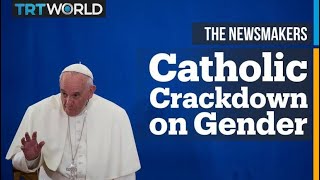 Catholic
 Biggest challenges facing the
 Role of Israel in the Christian
 Role of Israel in the Christian
 Homosexuality cause of conflict in Christian
 Homosexuality cause of conflict in Christian
 Ignatius' Letter to Smyrnaeans (110 AD) is earliest mention of 'Catholic' or 'Universal
 Why I left the
 Rise of the Atheist/Godless
 Child Abuse is everywhere, not just the Catholic
 Early
 In 70 AD, Rome destroyed the Jerusalem
 Respect the Jewish Right to not worship a Man as God - Tovia Singer vs Jerusalem
 Catholic
 Dennis, Glendale, disabled, divorced at 60 years, spent savings, sleeping homeless on
 Jesus and Apostle Paul warned of the UN Agenda 2030 'Antichrist System' - Northlake
 Hagia Sophia conversion into Mosque from Museum or Imperial
 California, USA: Our
 NWO and Vatican Catholic
 Why Christian
 Jesus crucifixion, burial tomb, resurrection in Golgotha, Calvary.
 Climate Change is the NWO Religion of Urban Atheists | Northlake
 Let Women keep Silent in the
 Tour of First
 Passion City
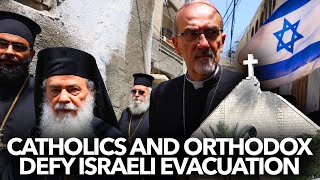 Israeli Zionists demand Christians and Catholic
 Jesus Never Claimed to Be God. The
 Fear of Losing My Daughter in the Israeli
 The
 Christian
 Israel recruits Christian
 Hellfire does not exist in Christianity. Did your
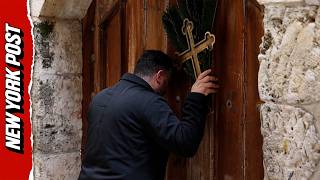 Israel blocks Catholic Christians from Holy Sepulchre
 Black Man told to act like White Jesus. Forgive everyone except his Own People | Umar Johnson vs
 Emperor Constantine and Augustine influence over the Early
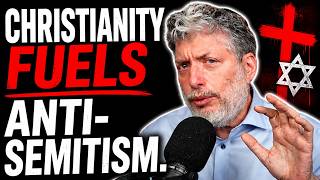 Christian
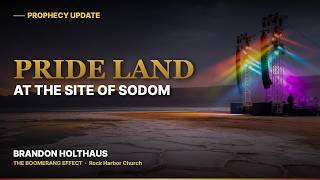 PRIDE LAND 2026, 4-day 'largest ever' LGBTQ festival at Dead Sea, Israel | Rock Harbor
 Christian
 Tour of Ephesus, the City where Apostle Paul established a
 Israel Attacks Zawtar's
 Catholic
 Catholic
 My Visit to the
News on Church (87)
FAQ on Church (70)
1.Why should we believe the Quran if it comes 600 years after Jesus?
The Quran may have come 600 years after Jesus, but does that make it false? Jesus came 1600 years after Moses, does that make Jesus false? The underlying or main argument here is the time between one person and another, but as we can see, if time is a problem then Christians should reject the other Prophets and Messengers since they have a greater number of years between them.
The complete manuscript collections of the New Testament and Old Testament date to the 4th and 5th century, within 100 years of the Qur'an, if Christians want to reject the Qur'an because it is 600 years after Jesus then they must be consistent and also reject the New Testament.
It should be noted that the Church itself did not ordain or make it canon (law) that the New Testament should be scripture until 393 and 397 CE in the Carthaginian councils. With all of these evidences, and centuries between Jesus and the New Testament, then they must reject the New Testament first.
2.Did Jesus claim to be 'King of the Jews'?
A political placard accusing Jesus of making this claim was nailed to his cross, and this historical artifact can be found today at the Church of Santa Croce in Rome.
3.How was Jesus Jewish?
Jesus fully observed the laws of the Torah, maintained kosher dietary regulations, and never asked his followers to abandon Judaism, as they continued to meet at the Temple and practice circumcision rather than establishing a separate religion or attending a church.
4.Who was James, brother of Jesus?
James, the eldest of Jesus' brothers held a key position in the Jerusalem Church until 62 CE, when he was succeeded by his relative Simeon, son of Cleophas.
5.Did Saul kill the early Jewish-Christians?
Before his conversion, Saul actively sought to imprison and execute early Jewish-Christians. Saul believed that he was serving God by finding Christians, throwing them into prison, and even executing them.
2 And devout men carried Stephen to his burial, and made great lamentation over him.
3 As for Saul, he made havock of the church, entering into every house, and haling men and women committed them to prison.
[Acts 8:1-3]
6.What books did Apostle Paul write?
Romans
Paul explains how the gospel works and how to respond. Paul wrote this letter before he had visited the Roman church.
1 Corinthians
In 55 A.D., Paul admonished the local church that he had founded in Corinth.
2 Corinthians
Come 56 A.D., the Corinthian church had escalated and then resolved their conflict with Paul. Second Corinthians is Paul's a letter of forgiveness and reconciliation.
Galatians
Someone had misled the churches of Galatia re-subjecting them to the Law of Moses and devaluing God's grace. Paul writes the Galatians an aggressive letter to set them straight on their freedom in Christ.
Ephesians
Paul outlines doctrines of grace, peace, and salvation, and then instructs the church to walk in a manner worthy of Jesus Christ.
Philippians
Even though he's suffering in prison, Paul finds joy in Christ. He writes to the church at Philippi urging them to take on a Christlike attitude.
Colossians
This letter explains to the church at Colossae who they are in Christ.
1 Thessalonians
The church of Thessalonica is setting a great example for other churches, even though they're being persecuted for their faith. Paul encourages them to 'excel still more'.
2 Thessalonians
The affliction just won't let up on the Thessalonian church, so Paul coaches them on standing firm until Jesus return.
1 Timothy
This is Paul's guide to godliness and sound teaching for the young pastor Timothy at Ephesus.
2 Timothy
Paul's death is drawing near, and he charges Timothy to carry on his gospel work.
Titus
Paul had left Titus at Crete to set up order in the churches there. Now he writes Titus instructions for leading a
counter-cultural church.
Philemon
It's a message to Philemon, a leader in the Colossian church.
7.Where is Pauline Christianity today?
Pauline Christianity constitutes the majority of modern Christianity, though some scholars question if the early, law-observant Jewish-Christian church was more accurate than Paul's later, Trinitarian-focused theology.
8.Why are their so many similarities between Jesus Christ and all the pagan Gods?
It is probable the reason why the Church priests burned and destroyed the earlier records of pagan Gods was to hide the evidence for the real origins of their own Christian mythology.
9.What is the King James Version (KJV) of the New Testament?
The King James Version (KJV) of the New Testament was completed in 1611 by 8 members of the Church of England.
There were (and still are) no original texts to translate. The oldest manuscripts we have were written down hundreds of years after the last Apostle died. There are over 8000 of these old manuscripts, with no two alike.
The King James translators chose to use none of the texts. Instead, they edited previous translations to create the New Testament their king and parliament would approve.
So today, 21st century Christians believe the 'Word of God' is a book edited in the 17th century from 16th century translations of 8000 contradictory copies of 4th century scrolls that claim to copies of lost letters written in the 1st century by unknown authors.
10.Who were the authors of the books in the Bible?
Mainstream biblical scholarship notes that the four New Testament gospels were originally written anonymously and did not carry their authors' signatures inside the early texts. Christian tradition later attributed them to Matthew, Mark, Luke, and John based on early church history and theological consensus.
11.Jesus saith unto him, I am the way, the truth, and the life: no man cometh unto the Father, but by me [John 14:6] - An Explanation
In mainstream Christian theology, this declaration is interpreted as an absolute statement of Jesus’ unique and exclusive role as the divine mediator through whom humanity achieves spiritual reconciliation with God the Father. Non-Christian perspectives and comparative religion commentators frequently analyze the passage to understand how early church doctrines gradually distinguished the Christian faith from traditional, law-observant Judaism.
12.Can Jesus wipe away our sins?
During the 4th and 5th centuries, the early church held historic councils (such as Nicaea and Chalcedon) to legally resolve intense theological disputes regarding how Jesus could be both human and divine. These imperial debates aimed to establish a unified orthodoxy and eliminate alternative theological views that threatened the political and religious cohesion of the Roman Empire.
13.How did the Christian Trinity come about?
The New Testament gospels show Jesus selecting twelve apostles to lead his immediate followers, but he did not lay down a detailed blueprint for a complex institutional priesthood or administrative hierarchy. The elaborate structures, clerical offices, and distinct liturgical traditions seen in modern churches developed gradually over centuries as the movement adapted to Roman institutional frameworks.
The concept of a dual human and divine nature in the person of Jesus is known as the Hypostatic Union, an essential component of modern Trinitarianism.
Yet it was not until the Council of Chalcedon that we see the emergence of an official doctrine of the Trinity in a form that is recognisable with what Christian Trinitarians believe in today. This took place in the fifth century, over 400 years after Jesus!
The evangelical theologian and Professor Wayne A. Grudem sums this up as follows:
'A precise understanding of how full deity and full humanity' argues Grudem, 'could be combined together in one person was formulated only gradually in the church and did not reach the final form until the Chalcedonian Definition in 451 AD.
14.Does the Bible support the Trinity (3-in-1) God concept?
Mainstream biblical scholars and historians state that the doctrine of the Trinity is never explicitly laid out as a formal dogma anywhere in the text of the Old or New Testaments. While the New Testament contains early triadic formulas (such as the baptismal command in Matthew 28:19 and apostolic blessings in 2 Corinthians 13:14), the actual systemic theology of a three-in-one God was developed later by early church fathers over centuries. Christian theologians argue that the doctrine is implicitly woven throughout the scriptures, while critics and Islamic scholars point to the lack of clear, direct scriptural definitions to argue it was a later modification of strict biblical monotheism.
15.What did James say of the Old Testament Law?
In the New Testament Epistle of James, the author strongly emphasizes that faith without accompanying righteous deeds is dead and notes that stumbling at just one point makes a person guilty of breaking the entire Law (James 2:10). Early church records and historical scholarship depict James the Just (the brother of Jesus) as a deeply traditional, law-observant leader of the Jerusalem Church. He maintained that Jewish believers should strictly adhere to traditional Mosaic customs, which later created a significant theological tension with Apostle Paul's ministry to the Gentiles.
16.Do all Christians believe Jesus was God or Son of God?
The early Jewish-Christians such as the Ebonites, the Cerinthians, the Basilidians, the Capocratians, and the Hypisistarians. The Arians, Paulicians and Goths also accepted Jesus as a prophet of God.
Even in the modern age there are churches in Asia, in Africa, the Unitarian church, the Jehovah's witnesses, and even the majority of todays Anglican Bishops do not worship Jesus as God.
17.What did Apostle Paul say about the other gospels?
In Galatians 1:6-9, Paul strongly condemned anyone preaching a different gospel, reflecting a significant conflict in the early church between his Gentile-inclusive mission and strict adherence to the Law.
18.Why did early Christians have church synods and councils?
Early Christian bishops organized regional synods and ecumenical councils to systematically define orthodox Christian doctrines and combat widespread heresies. These massive assemblies were essential for creating a unified creed, standardizing the New Testament canon, and establishing clear administrative laws for a rapidly growing global church. Prominent gatherings, like the Council of Nicaea, were often financed and politically mandated by Roman emperors to secure empire-wide religious stability.
19.What is the Christian Trinity?
Orthodox Christian theologians define the doctrine of the Trinity as the belief that the Father is God, the Son is God, and the Holy Spirit is God, existing eternally as three distinct Persons within one single, undivided divine Being. These three Persons are considered entirely co-equal in power and co-eternal in time, with the Son being understood as 'eternally begotten' of the Father and existing simultaneously as 100% God and 100% man. The platform notes that many modern Christians mistakenly believe they are practicing Trinitarianism simply by acknowledging the Father, Son, and Holy Spirit, without understanding the complex historical and philosophical mechanics required by the formal church dogma.
20.What happened to Christians who questioned their creed?
Once Catholicism became the official state religion of the Roman Empire in the 4th century, it became highly dangerous to question or deviate from imperial doctrinal definitions. Imperial authorities enforced a strict monopoly on thought by carrying out systematic book burnings, completely destroying the philosophical refutations written by early critics like Celsus and Porphyry. As a result, modern academic knowledge of these ancient counter-arguments is limited to surviving snippets quoted inside the church's own refutation books.
- Porphyry (3rd century philosopher) wrote a 15-volume refutation of Christianity, the gospels and resurrection
- Celsus (2nd century philosopher) rejected the impossible concept of the resurrection
Once Christianity was established as the state religion, it became dangerous, as a subject of Rome, to question the doctrinal version of events.
21.Many Christians believe that Jesus abolished the Old Testament dietary laws
Many Christians believe that Jesus abolished the Old Testament dietary laws. The dietary interpretation of Jesus' words (i.e. swine pig consumption) does not exist in the Textus Receptus Bible, the authoritative Greek New Testament text that was accepted by the Christian Church until about 100 years ago.
This parenthetic interpretation of Jesus words was obviously a comment that some Bible scribe wrote in the margin of the text. Later scribes accidentally or deliberately incorporated the marginal comment into the text itself, so the statement appears only in corrupted texts.
But the statement does not appear in the Textus Receptus, so the KJV says nothing about Jesus 'declaring all foods clean.'
God had clearly prohibited pig, swine and pork in the Old Testament. This verse was over whether or not 'unwashed hands' caused clean food to become unclean.
'Thus he declared all foods clean' is completely missing from the Textus Receptus, the authoritative Greek New Testament line used for centuries. It claims this widespread dietary interpretation was likely a later scribal note added to the margins of the text, which was subsequently mistaken for Jesus' actual words in corrupted versions.
22.Who replaced Jesus after his crucifixion?
Following the crucifixion, leadership of the primary community of believers in Jerusalem fell to Jesus' biological brother, James the Just. Mainstream historical and biblical scholarship confirms that James directed the mother church as an observant Jew, maintaining that followers must continue upholding traditional Mosaic customs and temple practices.
23.Why did James allow Apostle Paul to preach a new religion?
It is suggested James tolerated Paul's expansive missionary activities because the financial collections Paul raised from wealthy Gentile communities directly supported the impoverished Jerusalem mother church. Critical historians clarify that this financial collection, detailed across Paul's letters, was an official diplomatic agreement meant to preserve a fragile unity between Paul's Gentile converts and James' law-abiding Jewish-Christian community.
24.How did James, leader of the Jerusalem Church, view Apostle Paul?
Paul's new doctrine met with disapproval from the Jewish-Christians of the Jerusalem Church led by James, who regarded the substitution of Jesus' atoning death for the observance of the Torah as a lapse into paganism.
Paul was duly summoned to Jerusalem by the leaders James, Peter and John to explain his doctrine in 50 AD.
25.What are the origins of Christian church music?
Saint Ambrose (334-397), a keen advocate of church music is credited with introducing it into Christian worship.
26.How did early Catholics learn about Christianity?
Early Catholics were taught Christianity by the priests, nuns and at Catholic schools - and not through Bible study. The priests role was to pass on Christian beliefs and practise to his congregation. The priest acted as an intermediary between God and the people; as mankind was regarded as inherently sinful.
Catholics were discouraged from individual Bible study and pushed towards conforming with traditional Church teachings.
27.Was Jesus a Catholic Christian?
Historically, Jesus was a practicing Jew, and the original Jesus movement was a reform movement within Judaism . Conversely, the Catholic Church views Jesus' mission as universal, intended for the entire world, not just the Jewish people .
28.How was the Bible used to manipulate the people?
The 16th century translators of the Geneva Bible harnassed it to promote their anti-monarchist views.
The medieval Church prohibited use of the Bible to ensure people believed that they were told, not what they read, or others read to them.
29.What are the main practices of the Aladura Church?
30.Is Aladura the same as Pentecostalism?
31.Why do Aladura church members wear white?
32.Is Mary mentioned in both the Bible and the Quran?
Yes, Mary plays a central role in both scriptures:
Bible: Featured prominently in the Gospels of Matthew, Luke, and John, highlighting her devotion, presence at Jesus's birth, early life, miracles, crucifixion, and early church gathering.
Quran: An entire chapter, Surah Maryam (Chapter 19) is named in her honor. She is praised as a noble, chaste, and chosen woman above all women of the worlds.
33.What is the difference between Authoritarian and Totalitarian?
1. Authoritarianism: 'Do Not Challenge the State'
Authoritarian leaders or small elites focus strictly on monopolising political power. They do not have a grand plan to reshape human nature or build a new utopia.
* The Invisible Boundary: There is a clear distinction between the state and civil society. If you run a business, go to church, or raise a family, the government rarely intervenes, provided your activities remain strictly non-political.
* The Goal: Depoliticisation. The regime rules smoothly when the general public is quiet, neutral, and indifferent to politics.
2. Totalitarianism: 'Everything Within the State'
Totalitarianism is an extreme, all-encompassing form of authoritarianism.
* No Private Sphere: The boundary between public and private life is completely erased. The state utilizes tools like secret police, mandatory youth groups, mass surveillance, and neighborhood spies to monitor personal thoughts, media consumption, and even family dynamics.
* The Goal: Total mobilization and ideological purity. Silence is viewed as suspicion. Citizens are forced to actively participate in state-mandated events, and failing to show enough enthusiasm can be treated as treason. Education and media are weaponised to fundamentally brainwash the population.
34.What is the Cao Dai hierarchy and structure?
The institutional structure of Cao Dai is closely modeled after the hierarchical organization of the Roman Catholic Church. The administrative governance features a supreme leader known as the Giao Tong (equivalent to a Pope), followed by a legislative body of Cardinals, Archbishops, and Priests who manage the spiritual laws and temple networks. The administrative duties are uniquely divided across distinct branches tasked with judicial oversight, executive functions and mediumship.
35.What is the Christian Science religion?
Christian Science is a nontrinitarian Christian new religious movement founded in New England during the late 19th century. Its official organizational name is the Church of Christ, Scientist. The religion emphasizes the absolute goodness of God and relies on a system of spiritual healing through prayer, viewing the teachings and healings of Jesus Christ as supreme, practical, and scientifically verifiable laws of the universe.
36.Who founded Christian Science?
The Christian Science religion was founded by Mary Baker Eddy in 1879 in Boston, Massachusetts. Eddy established the church following a dramatic personal recovery from a severe spinal injury in 1866, which she attributed to reading a New Testament healing account. In 1875, she published her foundational textbook, Science and Health with Key to the Scriptures, which remains the definitive companion guide to the Bible for all Christian Scientists.
37.What do Christian Science followers believe about medical treatment?
Christian Scientists traditionally choose to rely on systematic prayer rather than modern medical intervention to treat physical and mental illness. They believe that sickness is rooted in a spiritual misunderstanding of reality rather than a purely physical cause. However, the church does not have a formal doctrine of excommunication for seeking doctors; members are free to make their own healthcare decisions, and they routinely obey public health mandates like quarantine laws and vaccinations.
38.What is a Christian Science Practitioner?
A Christian Science Practitioner is a church member who devotes themselves full-time to the ministry of spiritual healing through prayer. They act as professional spiritual healers available to the public, praying specifically for individuals seeking relief from physical disease, emotional distress, or life challenges. Practitioners do not provide medical advice or physical treatments; their work is strictly confined to spiritual, mental treatment based on the teachings of Mary Baker Eddy.
39.What happens during a Christian Science church service?
Christian Science Sunday services are highly unique because they do not have ordained clergy or preaching pastors. Instead, the service is conducted by two elected lay members called Readers. The sermon consists entirely of specific readings from two books: the Holy Bible and Science and Health with Key to the Scriptures. The church also hosts Wednesday evening testimony meetings, where congregants publicly share stories of physical and mental healings they experienced through prayer.
40.Does Deism still exist today?
Yes, modern Deism remains an active, global philosophy. While it still lacks a traditional church infrastructure, the internet has allowed for a massive resurgence of the movement. Organizations like the World Union of Deists connect thousands of modern practitioners online. Additionally, Deistic thought heavily underpins the beliefs of millions of people who identify as 'Spiritual but Not Religious'—those who firmly believe in a higher power or cosmic source but completely reject organized religion.
41.Why has Eckankar faced controversies and criticism?
Eckankar has historically faced criticism from religious scholars and skeptics regarding the originality of its foundational texts. In the late 1970s and 1980s, researchers like religious studies professor David C. Lane alleged that founder Paul Twitchell extensively plagiarized sections of his books from various sources, including the Radhasoami movement, Sant Mat, and Scientology. The church generally addresses these criticisms by stating that Twitchell was a master compiler of universal, timeless truths that belong to all humanity.
42.Is Gnosticism considered an actual religion?
Historically, Gnosticism functioned as a diverse network of mystical sects and religious schools rather than a single, institutionalized religion. Gnostics did not have a central Vatican or unified creed; instead, different teachers (like Valentinus or Basilides) ran independent communities. While early mainstream church authorities condemned them as heretics, modern scholars recognize Gnosticism as a distinct, highly influential branch of esoteric religious thought.
43.What is the Nag Hammadi Library?
The Nag Hammadi Library is a collection of 13 ancient, leather-bound papyrus codices discovered buried in a jar near Nag Hammadi, Egypt in 1945. Written primarily in Coptic, these 52 texts revolutionized the modern understanding of early religion. The library preserved the original, long-lost writings of the Gnostics, which had been systematically destroyed by the early institutional church, giving the world direct access to their mystical philosophies.
44.What happens at a Kingdom Hall?
A Kingdom Hall is the official place of worship for Jehovah Witnesses believers. Their meetings resemble lecture-based Bible studies rather than traditional church services. A typical service includes a public Bible discourse, a structured study of a pre-selected article from the Watchtower magazine using a Q&A format, prayers and singing. Meetings are open to the public and no collections are passed.
45.What is Mormonism and how did it start?
Mormonism is a Christian restorationist movement that began in upstate New York in the 1820s. It was founded by Joseph Smith, who stated that God the Father and Jesus Christ appeared to him in a vision to restore the original Christian Church. Adherents, historically called Mormons, prefer to be known as Latter-day Saints (LDS), reflecting their belief that they belong to Christ's re-established church in the modern era.
46.What is the Book of Mormon and how does it relate to the Bible?
The Book of Mormon is a sacred text that Latter-day Saints revere as scripture alongside the Holy Bible. Believed to be a record of ancient prophets who lived on the American continent from roughly 600 BC to 400 AD, it was translated by Joseph Smith from golden plates. Church members view the Book of Mormon as 'Another Testament of Jesus Christ' that supports, clarifies, and works in tandem with the Bible.
47.Do Mormons still practice polygamy (plural marriage)?
No, The Church of Jesus Christ of Latter-day Saints does not practice polygamy and has strictly forbidden it for more than 130 years. While early church members practiced plural marriage in the 19th century, the practice was officially ended by Church President Wilford Woodruff in 1890. Today, any member practicing polygamy is excommunicated. Fundamentalist groups that still practice polygamy are entirely separate from the mainstream LDS Church.
48.What is the purpose of the LDS/Mormonism missionary program?
The LDS/Mormonism Church operates a massive global missionary program as a fulfillment of the biblical command to preach the gospel. Young men (typically ages 18-25) serve for 24 months, while young women (ages 19+) serve for 18 months. Missionaries are completely self-funded or supported by their families, volunteer their time, and are assigned to a specific region of the world by Church headquarters to teach the faith and perform community service.
49.Who leads the Mormon/LDS Church today?
The Church is led by a living prophet who serves as the President of the Church. He is sustained by members as a seer and revelator who receives direct divine guidance for the world today. The President is assisted by two counselors (forming the First Presidency) and the Quorum of the Twelve Apostles. This leadership structure mimics the organizational pattern established by Jesus Christ in the New Testament.
50.Is New Thought a religion or a philosophy?
New Thought is generally considered a spiritual philosophy that is expressed through various religious denominations. While it operates as a loose network of ideas rather than a single, rigid church, it has birthed several organized religious organizations. The most prominent denominations under the New Thought umbrella include Unity (Unity Church), Religious Science (Science of Mind), and Divine Science.
51.What is Scientology and how did it start?
Scientology is a modern religious movement developed in the 1950s by American science fiction author Ron Hubbard. It grew directly out of his 1950 self-help system called Dianetics: The Modern Science of Mental Health. Hubbard officially incorporated the first Church of Scientology in 1954 in Los Angeles, California, framing it as a applied religious philosophy focused on spiritual rehabilitation.
52.What is Auditing in Scientology?
Auditing is the core spiritual practice of Scientology. It is a form of personal counseling where a church minister or trained specialist (an auditor) guides a practitioner through a series of structured questions. The goal is to locate and neutralize 'engrams' painful, subconscious memories of past trauma from this life or previous lives to free the individual from their negative effects.
53.Is Scientology recognized as an official religion?
The legal status of Scientology varies significantly around the world:
* United States: The IRS officially granted full tax-exempt status to the Church of Scientology as a bona fide religion in 1993.
* International: It is legally recognized as a religion in countries like the UK, Colombia, Spain and Australia. However, other countries such as Germany and France do not recognize its religious status and classify it as a commercial enterprise or a controversial sect.
54.What is the Scientology stance on mental health and psychiatry?
Scientology is vehemently opposed to psychiatry and psychiatric medication. The church views psychiatry as a destructive, unscientific practice that treats human beings as mere animals rather than spiritual entities. They advocate exclusively for spiritual and holistic alternatives to mental distress, operating an advocacy group called the Citizens Commission on Human Rights (CCHR) to actively campaign against psychiatric treatments.
55.Who leads the Church of Scientology today?
Following the death of founder Ron Hubbard in 1986, leadership of the church passed to David Miscavige. He serves as the Chairman of the Board of the Religious Technology Center (RTC), the entity that holds the ultimate authority over the trademarks and scriptures of Dianetics and Scientology. Miscavige has been the undisputed leader of the global organization for several decades.
56.What is the Adventist Church and how did it start?
The Seventh-day Adventist Church is a Protestant Christian denomination that officially organized in 1863 in Battle Creek, Michigan. It grew out of the 'Millerite movement' of the 1840s, a widespread religious awakening led by William Miller, who eagerly anticipated the second coming of Jesus Christ. Following what is historically known as the 'Great Disappointment' when Christ did not visibly return, a core group of believers re-examined biblical prophecy and established the Adventist church.
57.Who was Ellen G. White and why is she important?
Ellen G. White was a co-founder of the church and a highly prolific author whom Seventh-day Adventists revere as a modern-day prophet. The church teaches that she possessed the biblical spiritual 'gift of prophecy'. While Adventists maintain that the Bible is the sole standard of faith and practice, her extensive writings on theology, education, lifestyle, and health are viewed as divinely inspired guidance that helped shape and unify the church's direction.
58.What is the Seventh-day Adventist dietary law?
Seventh-day Adventists are globally recognized for their emphasis on health, viewing the human body as a holy temple. Their health message encourages:
• Clean and Unclean Meats: Strictly adhering to biblical dietary laws (Leviticus 11) meaning they completely abstain from pork, shellfish and scavengers.
• Vegetarianism: The church strongly advocates for a well-balanced plant-based diet. A high percentage of members are vegetarian or vegan.
• Abstinence: Total avoidance of alcohol, tobacco, recreational drugs, and often mind-altering substances like caffeine.
59.Is the Seventh-day Adventist Church considered a cult?
No, mainstream theologians and Christian organizations do not classify the Seventh-day Adventist Church as a cult. While some evangelical critics historically labeled them as such due to unique doctrines like the Saturday Sabbath and the status of Ellen G. White. Modern consensus recognizes them as a legitimate, orthodox Protestant denomination. They firmly affirm the divinity of Jesus Christ, salvation through His grace, and the supreme authority of the Bible.
60.What role do education and healthcare play in the Adventists church?
The Seventh-day Adventist Church operates one of the largest Protestant parochial school and healthcare networks in the world. To fulfill their global mission of physical and spiritual healing, the church runs thousands of primary schools, universities (such as Andrews University and Loma Linda University), and hundreds of hospitals, clinics, and sanitariums worldwide, alongside the global disaster relief agency ADRA (Adventist Development and Relief Agency).
61.What is the Unification Church and how did it start?
The Unification Church is a new religious movement founded in Seoul, South Korea, in 1954 by Sun Myung Moon. Emerging in the aftermath of the Korean War, the church was established under the official name The Holy Spirit Association for the Unification of World Christianity. Moon claimed to have received a vision from Jesus Christ on a Korean mountain side at age 15, instructing him to complete Christ's unfinished mission on Earth.
62.What are the core beliefs of the Unification Church?
The foundational theology of the movement is contained in The Divine Principle, a sacred text written by Sun Myung Moon. Core doctrines include:
* The Three Blessings: God's original plan for humans to achieve individual spiritual perfection, establish ideal families, and hold righteous stewardship over creation.
* The Fall of Man: The belief that Eve had a spiritual affair with Lucifer and a physical relationship with Adam, corrupting the human lineage with Satanic blood.
* Restoration: The process of purifying human lineage through sacred marriage rites to establish the sinless Kingdom of God on Earth.
63.Why is the Unification Church famous for "Mass Weddings"?
The Unification Church is globally famous for its massive group marriage ceremonies, officially called the Holy Marriage Blessing Ceremony. In these events, thousands of couples often from different countries and entirely unacquainted before being matched are married simultaneously. In Unification theology, these ceremonies are not mere weddings but a vital, sacred ritual meant to cleanse the couples and their future children from original sin.
64.Who leads the Unification Church today?
Following the death of founder Sun Myung Moon in 2012, leadership of the primary global organization passed to his widow, Hak Ja Han, who is referred to by members as the 'True Mother'. Sun Myung Moon and Hak Ja Han together are revered by adherents as the 'True Parents' of humanity. However, Moon's death also triggered succession disputes, leading to several splinter factions, most notably the Sanctuary Church (Rod of Iron Ministries) led by his son, Sean Moon.
65.Is the Unification Church considered a Christian religion?
While the Unification Church utilizes Christian terminology, references the Bible, and centers on the figures of Jesus and God, mainstream Christian denominations do not recognize it as an orthodox Christian church. Catholic, Orthodox, and Protestant theologians reject Unification theology due to its unique beliefs. Most notably, the church teaches that Jesus failed to achieve his complete mission because he was crucified before he could marry and father sinless children.
66. What is the modern name of the Unification Church?
To shift away from localized church framing and its historical public controversies, the organization underwent major rebranding. Today, its official primary name is the Family Federation for World Peace and Unification (FFWPU). It also operates globally through various front groups, cultural organizations, and non-profits, such as the Universal Peace Federation (UPF) and the Women's Federation for World Peace (WFWP).
67.What is the origin of the term "Moonies"?
The term 'Moonies' was coined by the media and the public in the 1970s as a derivative of the founder's last name, Moon. While it was widely used for decades to describe members of the church, the organization and its adherents consider 'Moonies' to be a highly derogatory and offensive pejorative. They request to be identified officially as Unificationists or members of the Family Federation.
68.Why has the Unification Church faced controversy?
The movement has been a frequent subject of intense international scrutiny for several major reasons:
1. Cult Accusations: During the 1970s and 1980s 'anti-cult movement' critics accused the church of using coercive brainwashing, deceptive recruitment tactics, and separating young members from their families.
2. Financial Networks: The church operates a multi-billion-dollar global business empire spanning manufacturing, media (like The Washington Times), seafood distribution, and real estate, leading to allegations of exploiting volunteer labor for corporate wealth.
69.Do Unificationists believe Sun Myung Moon was the Messiah?
Yes, adherents believe that Sun Myung Moon and his wife Hak Ja Han are the Messiah, fulfilled in the role of the 'True Parents'. Church doctrine teaches that while Jesus provided spiritual salvation, Moon was sent to complete Christ's physical mission by establishing a sinless family unit. Members believe that through the True Parents, the spiritual and physical lineage of humanity can be restored back to God's original, uncorrupted design.
70.What is the stance of the Unitarian Universalist Church on LGBTQ+ rights and social justice?
The Unitarian Universalist Association (UUA) is widely recognized as one of the most progressive religious bodies in the world. UU congregations were among the very first to ordain women, openly LGBTQ+ ministers, and perform same-sex commitment ceremonies decades before legal marriage equality. The church views social action—including racial justice, reproductive freedom, environmental activism, and LGBTQ+ advocacy as a direct, fundamental expression of their religious values.
Articles on Church (10)




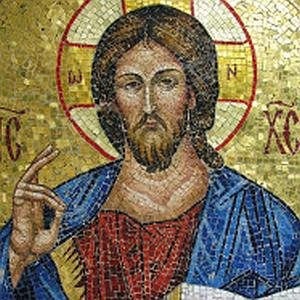

Photo Album on Church (10)
Topics with Church (9)


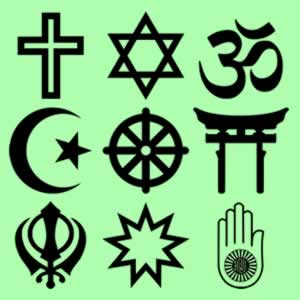
Scripture Themes on Church (7)
| 1. Peter heals Aeneas and raises Dorcas from the dead | Acts 9:36-43 |
| 2. Ananias and Sapphira face judgment for dishonesty in the early Church | Acts 5:1-11 |
| 3. Apostle Paul conducts missionary journeys across Greece and Asia | Acts 17-20:6 |
| 4. Peter preaches the gospel to the Roman centurion Cornelius | Acts 10:1-48 |
| 5. Apostle Peter receives a vision of unclean animals | Acts 10:9-23 |
| 6. A multi-ethnic church is established in Antioch | Acts 11:19-30 |
| 7. Jesus outlines principles for reconciliation and forgiveness | Matthew 18:15-22 |