After three days Paul called together those who were the leaders of the Jews. When they had come together, he said to them, “I, brothers, though I had done nothing against the people, or the customs of our fathers, still was delivered prisoner from Jerusalem into the hands of the Romans,
who, when they had examined me, desired to set me free, because there was no cause of death in me.
But when the Jews spoke against it, I was constrained to appeal to Caesar, not that I had anything about which to accuse my nation.
For this cause therefore I asked to see you and to speak with you. For because of the hope of Israel I am bound with this chain.”
They said to him, “We neither received letters from Judea concerning you, nor did any of the brothers come here and report or speak any evil of you.
But we desire to hear from you what you think. For, as concerning this sect, it is known to us that everywhere it is spoken against.”
When they had appointed him a day, many people came to him at his lodging. He explained to them, testifying about God’s Kingdom, and persuading them concerning Jesus, both from the law of Moses and from the prophets, from morning until evening.
Some believed the things which were spoken, and some disbelieved.
When they didn’t agree among themselves, they departed after Paul had spoken one word, “The Holy Spirit spoke rightly through Isaiah, the prophet, to our fathers,
saying,
‘Go to this people, and say,
in hearing, you will hear,
but will in no way understand.
In seeing, you will see,
but will in no way perceive.
For this people’s heart has grown callous.
Their ears are dull of hearing.
Their eyes they have closed.
Lest they should see with their eyes,
hear with their ears,
understand with their heart,
and would turn again,
and I would heal them.’
“Be it known therefore to you, that the salvation of God is sent to the nations, and they will listen.”
When he had said these words, the Jews departed, having a great dispute among themselves.
Paul stayed two whole years in his own rented house, and received all who were coming to him,
preaching God’s Kingdom, and teaching the things concerning the Lord Jesus Christ with all boldness, without hindrance.
ACTS 28:17-31
Apostle Paul preaches the kingdom of God under guard in Rome
Follow the concluding historical chapters of the book of Acts as Paul preaches the kingdom of Jesus under house guard in the capital of Rome. 647 views · Last view: 1 day ago
Follow the concluding historical chapters of the book of Acts as Paul preaches the kingdom of Jesus under house guard in the capital of Rome. 647 views · Last view: 1 day ago
Explore More
Apostle Paul Roman GODSearch Google Search Explore Topics
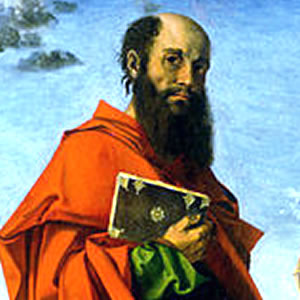 Who was Apostle Paul?
Paul the Apostle (Latin: Paulus), commonly known as Saint Paul and also known by his Jewish name Saul of Tarsus was an apostle (though not one of the Twelve Apostles) who taught the gospel of Christ to the first century world. Paul is generally considered one of the most important figures of the Apostolic Age and in the mid-30s to the mid-50s AD he founded several churches in Asia Minor and Europe. He took advantage of his status as both a Jew and a Roman citizen to minister to both Jewish and Roman audiences. According to writings in the New Testament and prior to his conversion, Paul was dedicated to persecuting the early disciples of Jesus in the area of Jerusalem. In Acts, Paul was traveling on the road from Jerusalem to Damascus on a mission to 'arrest them and bring them back to Jerusalem' when the resurrected Jesus appeared to him in a great light. He was struck blind, but after three days his sight was restored by Ananias of Damascus and Paul began to preach that Jesus of Nazareth is the Jewish Messiah and the Son of God.
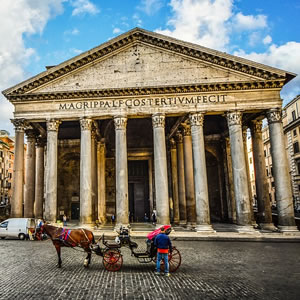 What is Roman?
In historiography, ancient Rome is Roman civilization. From the founding of the city of Rome in the 8th century BC to the collapse of the Western Roman Empire in the 5th century AD, encompassing the Roman Kingdom, Roman Republic and Roman Empire until the fall of the western empire. The civilization began as an Italic settlement in the Italian peninsula, dating from the 8th century BC, that grew into the city of Rome and which subsequently gave its name to the empire over which it ruled and to the widespread civilisation the empire developed. The Roman empire expanded to become one of the largest empires in the ancient world, though still ruled from the city, with an estimated 50 to 90 million inhabitants (roughly 20% of the world's population) and covering 5.0 million square kilometres at its height in AD 117.
 Who is GOD?
In monotheism and henotheism, God is conceived as the Supreme Being and principal object of faith. The concept of God as described by theologians commonly includes the attributes of omniscience (infinite knowledge), omnipotence (unlimited power), omnipresence (present everywhere), omnibenevolence (perfect goodness), divine simplicity, and eternal and necessary existence. In theism, God is the creator and sustainer of the universe In deism, God is the creator, but not the sustainer, of the universe Monotheism is the belief in the existence of one God or in the oneness of God In pantheism, God is the universe itself In atheism, God is purported not to exist, while deemed unknown or unknowable within the context of agnosticism.