385 views
·
Last viewed: 5 hrs ago
Uploaded: 21 Jul 2026 (3 months ago) · Shared: 22 Jul 2026
Duration: 42:49
Uploaded: 21 Jul 2026 (3 months ago) · Shared: 22 Jul 2026
Duration: 42:49
Video Description
Ever wondered how modern concepts of the afterlife truly developed? In this eye-opening discussion, renowned biblical scholar Dr. Bart Ehrman explores the fascinating early history of heaven and hell
Explore More
Early Christian Christianity Bart Ehrman Evolution Judaism Heaven JESUS
Search Google Search Explore Topics
 What is Early Christian?
Early Christianity, the period of Christianity preceding the First Council of Nicaea in 325 AD. This typically divides historically into the Apostolic Age and the Ante-Nicene Period (from the Apostolic Age until Nicea). The first Christians, as described in the first chapters of the Book of Acts, were all Jews either by birth or conversion and historians refer to them as Jewish Christians. The early Gospel message spread orally, probably originally in Aramaic, and later in Greek. The New Testament's Acts of the Apostles and Epistle to the Galatians record that the first Christian community centered on Jerusalem and that its leaders included Peter, James, the brother of Jesus, and John the Apostle.
 What is Christianity?
Christianity is a global religion centered on the life and teachings of Jesus Christ, who followers believe is the Son of God. It's a monotheistic faith, meaning Christians believe in one God who exists in three co-equal persons: God the Father, God the Son (Jesus Christ), and the Holy Spirit. Christianity is based on the Bible, with the Old Testament and New Testament serving as sacred texts.
 Who is Bart Ehrman?
Bart Ehrman (born 1955) is an American New Testament scholar focusing on textual criticism of New Testament, historical Jesus, and development of early Christianity. Ehrman has written and edited 30 books, including three college textbooks. He has also authored six New York Times bestsellers. He is currently the James A. Gray Distinguished Professor of Religious Studies at the University of North Carolina at Chapel Hill.
 What is Evolution?
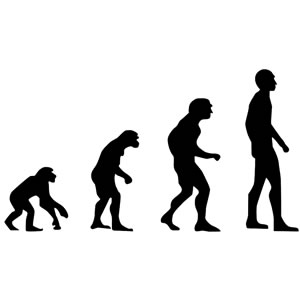
Evolution is change in the heritable characteristics of biological populations over successive generations. Evolutionary processes give rise to bio-diversity at every level of biological organisation, including the levels of species, individual organisms, and molecules. In the mid-19th century, Charles Darwin formulated the scientific theory of evolution by natural selection, published in his book On the Origin of Species (1859). Evolution by natural selection is a process first demonstrated by the observation that often, more offspring are produced than can possibly survive.
 What is Judaism?
Judaism encompasses the religion, philosophy, culture and way of life of the Jewish people. Judaism is a monotheistic religion, with the Torah as its foundational text (part of the larger text known as the Tanakh or Hebrew Bible), and supplemental oral tradition represented by later texts such as the Midrash and the Talmud. Judaism is considered by religious Jews to be the expression of the covenantal relationship that God established with the Children of Israel. Judaism includes a wide corpus of texts, practices, theological positions, and forms of organization. Within Judaism there are a variety of movements, most of which emerged from Rabbinic Judaism, which holds that God revealed his laws and commandments to Moses on Mount Sinai in the form of both the Written and Oral Torah. The Jews are an ethnoreligious group and include those born Jewish and converts to Judaism. In 2012, the world Jewish population was estimated at about 14 million, or roughly 0.2% of the total world population. About 42% of all Jews reside in Israel and about 42% reside in the United States and Canada, with most of the remainder living in Europe.
 What is Heaven?
Heaven, or the Heavens, is a common religious cosmological or supernatural place where beings such as deities, angels, souls, saints, or venerated ancestors are said to originate, be enthroned, or reside. Heaven is often described as a 'highest place', the holiest place, a paradise, in contrast to Hell or the Underworld or the 'low places' and universally or conditionally accessible by earthly beings according to various standards of divinity, goodness, piety, faith, or other virtues or right beliefs or simply divine will.