265 views
·
Last viewed: 21 mins ago
Uploaded: 03 Apr 2019 (8 years ago) · Shared: 21 Jul 2026
Duration: 1:32:50
Uploaded: 03 Apr 2019 (8 years ago) · Shared: 21 Jul 2026
Duration: 1:32:50
Youtube Description
The traditional narrative of Islam’s origins centers on the career of the prophet Muhammad (d. 632 CE) in Arabia and the rapid spread of his movementthroughout the Near East immediately after his death. Over the past half-century, however, scholars have come to realize that this picture is the product of the Islamic community of the eighth, ninth, and later centuries and that its goal of providing a satisfying narrative may not accurately reflect how Islam actually began and grew into the major world religion we know today. In this lecture, Fred M. Donner argues that a more historically accurate view of Islam’s origins has been hindered by the scarcity of documentary evidence from the seventh century and considers some of the key sources that may help us understand these momentous events in Islamic history.
Explore More
Fred Donner The Quran Judaism IslamSearch Google Search Explore Topics
 Who is Fred Donner?
Fred McGraw Donner (born 1945) is a scholar of Islam and Professor of Near Eastern History at the University of Chicago. He has published several books about early Islamic history. Donner received his PhD in Near Eastern Studies from Princeton in 1975. He taught Middle Eastern history in the History Department at Yale University from 1975-1982 before taking his position at the University of Chicago in 1982. Donner's main argument is that what came to be called Islam began as a monotheistic "Believers' movement" inaugurated by Muhammad which included righteous Christians and Jews as well as those monotheists who followed the teachings of the Quran.
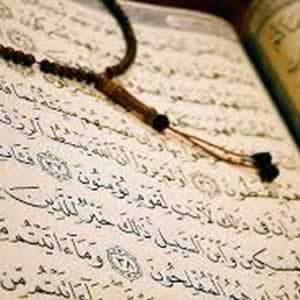 What is The Quran?
Quran, literally meaning "the recitation" is the central religious text of Islam, which Muslims believe to be a revelation from God (Allah). It is widely regarded as the finest work in classical Arabic literature. The Quran is divided into chapters (surah in Arabic), which are then divided into verses (ayah). Muslims believe that the Quran was verbally revealed by God to Muhammad through the angel Gabriel (Jibril), gradually over a period of approximately 23 years, beginning on 22 December 609 CE, when Muhammad was 40, and concluding in 632, the year of his death. Muslims regard the Quran as the most important miracle of Muhammad, a proof of his prophethood, and the culmination of a series of divine messages that started with the messages revealed to Adam and ended with Muhammad.
 What is Judaism?
Judaism encompasses the religion, philosophy, culture and way of life of the Jewish people. Judaism is a monotheistic religion, with the Torah as its foundational text (part of the larger text known as the Tanakh or Hebrew Bible), and supplemental oral tradition represented by later texts such as the Midrash and the Talmud. Judaism is considered by religious Jews to be the expression of the covenantal relationship that God established with the Children of Israel. Judaism includes a wide corpus of texts, practices, theological positions, and forms of organization. Within Judaism there are a variety of movements, most of which emerged from Rabbinic Judaism, which holds that God revealed his laws and commandments to Moses on Mount Sinai in the form of both the Written and Oral Torah. The Jews are an ethnoreligious group and include those born Jewish and converts to Judaism. In 2012, the world Jewish population was estimated at about 14 million, or roughly 0.2% of the total world population. About 42% of all Jews reside in Israel and about 42% reside in the United States and Canada, with most of the remainder living in Europe.
 What is Islam?
One of the major religions of the world, Islam literally translates to "submission," as a follower of Islam (Muslims) devotes their life to that of their God. The religion began with the teachings of Muhammad in the 7th century. The theology of Islam is based on the Qur'an, which was given to Muhammad by God. Some of the major fundamental principles of Islam include the Five Pillars, which hope to unite all Muslims into a community. Two different factions of Muslims exist - the majority are known as Sunni, with a small percentage known as Shi'a - both predominantly reside throughout the Middle East. Muhammad died in 632 AD and the religion of Islam formally started after his death. The Quran was formally compiled and finalised in 650 AD, prior to which it was 'memorised' and written across many parchments.