699 views
·
Last viewed: 1 day ago
Uploaded: 20 Jan 2017 (10 years ago) · Shared: 03 Jan 2017
Duration: 5:39
Uploaded: 20 Jan 2017 (10 years ago) · Shared: 03 Jan 2017
Duration: 5:39
Youtube Description
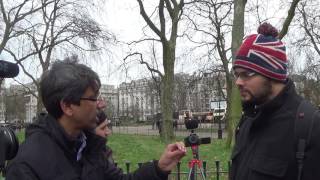
Judaism teaches that our forefather Abraham faithfully kept the Torah during his lifetime. Muslim caller asks Rabbi Tovia Singer a pressing question:How could Abraham have possibly kept the Torah many centuries before Moses delivered the Torah at Mt. Sinai?
Explore More
Tovia Singer Torah Sin ABRAHAM
MOSES
ABRAHAM
MOSES
Search Google Search Explore Topics
 Who is Tovia Singer?
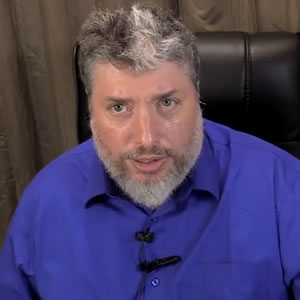
Tovia Singer (born 1960) is a Jewish rabbi. Singer is the founder and director of Outreach Judaism, Indonesia.
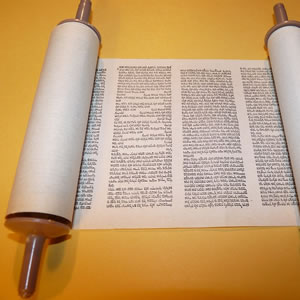 What is the Torah?
Torah, "Instruction", "Teaching" or "Law" has a range of meanings. Common to all these meanings, Torah consists of the origin of Jewish peoplehood: their call into being by God, their trials and tribulations, and their covenant with their God, which involves following a way of life embodied in a set of moral and religious obligations and civil laws. In rabbinic literature the word Torah denotes both the five books "Torah that is written" and the Oral Torah "Torah that is spoken". The Oral Torah consists of interpretations and amplifications which according to rabbinic tradition have been handed down from generation to generation and are now embodied in the Talmud and Midrash. According to rabbinic tradition, all of the teachings found in the Torah, both written and oral, were given by God through the prophet Moses, some at Mount Sinai and others at the Tabernacle, and all the teachings were written down by Moses, which resulted in the Torah that exists today. The majority of Biblical scholars believe the written books were a product of the Babylonian captivity (c. 600 BCE), based on earlier written and oral traditions, which could only have arisen from separate communities within ancient Israel, and that it was completed by the period of Achaemenid rule (c. 400 BCE).
 What is Sin?
In Abrahamic contexts, sin is the act of violating God's will. Sin can also be viewed as anything that violates the ideal relationship between an individual and God; or as any diversion from the ideal order for human living. To sin has been defined as "to miss the mark". Sins fall in a spectrum from minor errors to deadly misdeeds. Catholicism regards the least corrupt sins as venial sins which are part of human living and carry immediate consequences on earth, and, if unrepented for, more painful purgation, assuming the person is destined to heaven, as it is written in the formation letter "Purgatory", "most of the early Fathers of the Church speak of a cleansing fire, though we cannot tell whether this means actual or spiritual fire." Conversely, sins of great evil are mortal sins which bring the consequence of hell if they are not addressed either through an act of perfect contrition or going to confession about them.