210 views
·
Last viewed: 2 days ago
Uploaded: 31 May 2026 (5 months ago) · Shared: 22 Jun 2026
Duration: 20:52
Uploaded: 31 May 2026 (5 months ago) · Shared: 22 Jun 2026
Duration: 20:52
Youtube Description
Help us combat aggressive Jewish evangelism in Israel: https://outreachjudaism.org/partners/ Let’s Get Biblical Study Guide (Volume 1 & 2)https://outreachjudaism.org/shop/lets-get-biblical-expanded-2-volume-study-guide/
https://outreachjudaism.org/
www.videvo.net
https://www.youtube.com/user/tenaktalk
Music: https://www.purple-planet.com
Use in accordance with Israel's Copyright Law 5768-2007 section 27a.
Music at the end: Adon Olam https://youtu.be/a6oS9N0hJTY
http://www.toviasinger.tv/
#toviasinger #Judaism #Christianity #Messiah #joerogan
Explore More
Christianity Tovia Singer Trinity Isaiah SinSearch Google Search Explore Topics
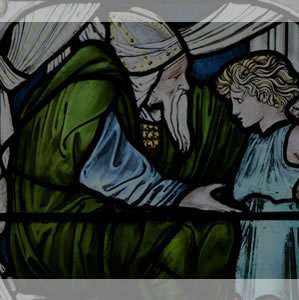 What is Christianity?
Christianity is a global religion centered on the life and teachings of Jesus Christ, who followers believe is the Son of God. It's a monotheistic faith, meaning Christians believe in one God who exists in three co-equal persons: God the Father, God the Son (Jesus Christ), and the Holy Spirit. Christianity is based on the Bible, with the Old Testament and New Testament serving as sacred texts.
 Who is Tovia Singer?
Tovia Singer (born 1960) is a Jewish rabbi. Singer is the founder and director of Outreach Judaism, Indonesia.
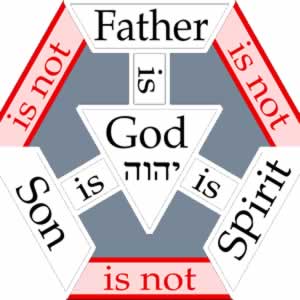 What is Trinity?
The Christian doctrine of the Trinity (Latin: trinus "threefold") holds that God is one God, but three coeternal consubstantial persons or hypostases. These being the Father, the Son (Jesus Christ), and the Holy Spirit - as "one God in three Divine Persons". The three Persons are distinct, yet are one "substance, essence or nature" (homoousios).
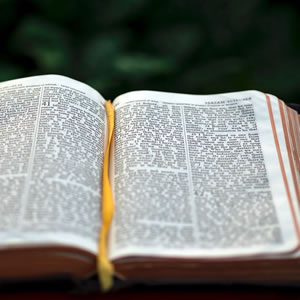 What is Isaiah?
Book of Isaiah, or Isaiah is the first of the Latter Prophets in the Hebrew Bible and the first of the Major Prophets in the Christian Old Testament. It is identified by a superscription as the words of the 8th-century BCE prophet Isaiah ben Amoz, but there is extensive evidence that much of it was composed during the Babylonian captivity and later. The consensus through most of the 20th century, that the book comprises three separate collections of oracles: Proto-Isaiah (chapters 1-39), containing the words of Isaiah; Deutero-Isaiah (chapters 40-55), the work of an anonymous 6th-century BCE author writing during the Exile; and Trito-Isaiah (chapters 56-66), composed after the return from Exile. While virtually no scholars today attribute the entire book, or even most of it, to one person, the book's essential unity has become a focus in current research.
 What is Sin?
In Abrahamic contexts, sin is the act of violating God's will. Sin can also be viewed as anything that violates the ideal relationship between an individual and God; or as any diversion from the ideal order for human living. To sin has been defined as "to miss the mark". Sins fall in a spectrum from minor errors to deadly misdeeds. Catholicism regards the least corrupt sins as venial sins which are part of human living and carry immediate consequences on earth, and, if unrepented for, more painful purgation, assuming the person is destined to heaven, as it is written in the formation letter "Purgatory", "most of the early Fathers of the Church speak of a cleansing fire, though we cannot tell whether this means actual or spiritual fire." Conversely, sins of great evil are mortal sins which bring the consequence of hell if they are not addressed either through an act of perfect contrition or going to confession about them.