Is Judaism to blame for the Genocide in Palestine? | CJ Werleman Show
12:46
303 views
·
Last viewed: 22 hrs ago Uploaded:
21 Nov 2025 (9 months ago)
·
Shared: 27 Feb 2026
Video Description (from Youtube)
Israel’s ultimate propaganda weapon has always been to equate criticism of the state with hatred of the Jewish people. But that weapon just misfired—badly.
In this episode, we expose how prominent
Jewish celebrities and cultural icons are shattering the 'Antisemitism' shield by blaming Zionism—not Judaism—for the catastrophe in Gaza. From Hollywood stars to renowned intellectuals, these are the Jewish voices saying 'Not In Our Name,' and they are dismantling the Israeli government's narrative from the inside.
❌ *YouTube Demonetized Our Channel Because We Expose Israel* ❌
💪 Please HELP me expose Israel and injustices in Muslim world via Patreon HERE: ▶ https://www.patreon.com/c/cjwerleman
One-time donations can be made here: ▶ https://www.paypal.me/cjwerleman
We can't sustain, improve and grow this program without your help via Patreon membership.
Thank you for your support and understanding.
#islam
DISCLAIMER
All videos are shared for educational and information purposes only. All videos are hosted and viewable on Youtube servers. Video titles are generated using the original video title; overall content theme including actual dialogue and speech (Transcript); and A.I-based recommendations with a focus on SEO, keyword density, and internal search functions. The video title does not represent the views held by the Youtube video uploader, or any individual, organisation or business.
A news media channel devoted to exposing and countering injustices in the Muslim world. CJ Werleman is a journalist, published author, political
commentator, and activist who has dedicated his journalism career to exposing discrimination and injustices against Muslim communities around the world. Insights the mainstream media too often ignores.
From Palestine to Kashmir; from Burma to Syria; from India to China; from refugee camps in Europe to those in the South Pacific; Muslims are either occupied, oppressed, bombed, or vilified.
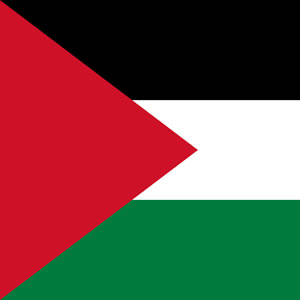
Palestine is a geographic region in Western Asia. It is usually considered to include the Gaza Strip, the West Bank, Israel, and in some definitions
some parts of western Jordan. The name was used by ancient Greek writers, and it was later used for the Roman province Syria Palaestina, the Byzantine Palaestina Prima, and the Islamic provincial district of Jund Filastin. The region comprises most of the territory claimed for the biblical regions known as the Land of Israel, the Holy Land or Promised Land. Historically, it has been known as the southern portion of wider regional designations such as Canaan, Syria, ash-Sham, and the Levant. Situated at a strategic location between Egypt, Syria and Arabia, and the birthplace of Judaism and Christianity, the region has a long and tumultuous history as a crossroads for religion, culture, commerce, and politics.

Genocide is intentional action to destroy a people. People are defined as an ethnic, national, racial, or religious group in whole or in part. The
hybrid word "genocide" is a combination of the Greek word genos ("race, people") and the Latin suffix -cide ("act of killing"). The United Nations Genocide Convention, which was established in 1948, defines genocide as "acts committed with intent to destroy, in whole or in part, a national, ethnic, racial or religious group". The Political Instability Task Force estimated that, between 1956 and 2016, a total of forty-three genocides took place, causing the death of about 50 million people. The UNHCR estimated that a further 50 million had been displaced by such episodes of violence up to 2008.
<br><br>
The Holocaust is a specific instance of genocide. It refers specifically to the systematic, bureaucratic, state-sponsored persecution and murder of approximately six million Jewish people by the Nazi regime and its collaborators.
Judaism encompasses the religion, philosophy, culture and way of life of the Jewish people. Judaism is a monotheistic religion, with the Torah as its
foundational text (part of the larger text known as the Tanakh or Hebrew Bible), and supplemental oral tradition represented by later texts such as the Midrash and the Talmud. Judaism is considered by religious Jews to be the expression of the covenantal relationship that God established with the Children of Israel.
<br><br>
Judaism includes a wide corpus of texts, practices, theological positions, and forms of organization. Within Judaism there are a variety of movements, most of which emerged from Rabbinic Judaism, which holds that God revealed his laws and commandments to Moses on Mount Sinai in the form of both the Written and Oral Torah.
<br><br>
The Jews are an ethnoreligious group and include those born Jewish and converts to Judaism. In 2012, the world Jewish population was estimated at about 14 million, or roughly 0.2% of the total world population. About 42% of all Jews reside in Israel and about 42% reside in the United States and Canada, with most of the remainder living in Europe.

The earliest Jewish-Christians strictly followed traditional Hebrew practices, including daily prayers, circumcision, rituals for purity, fasting, dietary laws, and temple, according to the source material.
A political placard accusing Jesus of making this claim was nailed to his cross, and this historical artifact can be found today at the Church of Santa Croce in Rome.
Jesus fully observed the laws of the Torah, maintained kosher dietary regulations, and never asked his followers to abandon Judaism, as they continued to meet at the Temple and practice circumcision rather than establishing a separate religion or attending a church.
Between 55 and 66 CE, early Jewish-Christian leaders in Jerusalem rejected Paul's teachings and challenged his authority, leading to a significant decline in his popularity.
Before his conversion, Saul actively sought to imprison and execute early Jewish-Christians. Saul believed that he was serving God by finding Christians, throwing them into prison, and even executing them.
1 And Saul was consenting unto his death. And at that time there was a great persecution against the church which was at Jerusalem; and they were all scattered abroad throughout the regions of Judaea and Samaria, except the apostles.
2 And devout men carried Stephen to his burial, and made great lamentation over him.
3 As for Saul, he made havock of the church, entering into every house, and haling men and women committed them to prison.
[Acts 8:1-3]
Faithful Jews viewed Paul's salvation theory as blatant blasphemy because his theological teachings explicitly ridiculed all previous revelations from God, including the sacred Torah, while teaching a doctrine that went against the absolute oneness of God.
The Jewish Rabbis preached a person was saved so long as their intention was to remain within the covenant, and one truly repented and seek forgiveness for their sins.
Paul preached that every person was 'damned' until they was offered salvation. Mans problem was that he was 'in the flesh' in bondage to the Law, sold under Sin, enslaved by the fundamental spirits of the universe (ie. dead).
Paul preached the only cure was liberation from slavery and death by union with Christ, who had conquered death and sin.
The earliest Jewish-Christians did not believe that the resurrection meant Jesus was God, but rather that he was a righteous man approved by God through miracles, wonders, and signs. Based on texts like Acts 2:22-24, they maintained the theological view that Jesus had been raised by God, not that he was the Creator himself.
It was Apostle Paul's dramatic conversion and subsequent teachings that directly resulted in the permanent theological separation of Christianity from Judaism. Within mere months of Jesus' departure, the original human-centric and law-abiding message was fundamentally altered into an independent religious system.
The Bible claims the Messiah will accomplish certain signs:
1. Build the Third Temple (Ezekiel 37:26-28).
2. Gather all Jews back to the Land of Israel (Isaiah 43:5-6).
3. Usher in an era of world peace, and end all hatred, oppression, suffering and disease. As it says: 'Nation shall not lift up sword against nation, neither shall man learn war anymore.' (Isaiah 2:4)
4. Spread universal knowledge of the God of Israel, which will unite humanity as one. As it says: 'God will be King over all the worldon that day, God will be One and His Name will be One' (Zechariah 14:9).
The historical fact is that Jesus fulfilled none of these messianic prophecies.
Christians counter that Jesus will fulfill these in the Second Coming, but Jewish sources show that the Messiah will fulfill the prophecies outright, and no concept of a second coming exists.
The Quran recognizes Jews and Christians as 'People of the Book' (Ahl al-Kitab), acknowledging that they were given previous divine revelations through prophets like Moses and Jesus. While it praises the righteous among them, it also critiques their theological developments, specifically rejecting the Christian doctrine of the Trinity and the divine sonship of Jesus.
Paul was widely viewed by mainstream Jewish communities as a radical apostate and religious heretic because he preached that observance of the Mosaic Torah was no longer required for salvation. This fierce theological conflict frequently resulted in severe public opposition, legal charges before Roman authorities, and physical riots during his travel throughout ancient Mediterranean cities.
Yes, the Quran references previous scriptures in passages like Surah Al-Ma'idah (5:47), which tells the followers of the Gospel to judge by what God has revealed in it. From an academic perspective, this reflects the historical context of 7th-century Medina, where Jews and Christians were recognized as 'People of the Book' who possessed divine laws. While Islamic theology holds that modern biblical texts have suffered from textual corruption (tahrif), the Quran historically appeals to the core monotheistic truths remaining in those scriptures to validate Muhammad's message.
First-century Jewish expectations, as discussed in this analysis of Trinity dogma, centered on a human leader, such as a prophet or king from David's line, rather than a divine figure.
A human empowered by God. Not a God-man, a person of the Godhead or part of a Triune God (Trinity)
From the lineage of Abraham (Gen. 22:18)
From the tribe of Judah (Gen. 49:10)
A descendant of David (2 Sam. 7:12)
A Lord under Yahweh, the God of Israel (Ps. 110:1)
From amongst their own people (Jer. 30:21)
The platform asserts that Jesus did not claim divinity in this instance, and that his mention of Psalm 82:6 in John 10:34 was a defense noting that human judges are called 'gods' in scripture, thus challenging the accusation of blasphemy.
In the text of the Torah (Leviticus 19:27), God explicitly forbids cutting or rounding off the corners of the hair on the sides of the head and marring the edges of the beard.
It was Apostle Paul's dramatic conversion and subsequent teachings that directly resulted in the permanent theological separation of Christianity from Judaism. Within mere months of Jesus' departure, the original human-centric and law-abiding message was fundamentally altered into an independent religious system.