1052 views
·
Last viewed: 11 hrs ago
Uploaded: 26 May 2025 (1 year ago) · Shared: 31 May 2025
Duration: 2:28:51
Uploaded: 26 May 2025 (1 year ago) · Shared: 31 May 2025
Duration: 2:28:51
Youtube Description
#wahhabism #Haqiqatjou #muslimskeptic Watch the documentary: https://youtu.be/APA0htT-AV0 Support our work with a donation:https://muslimskeptic.com/contribute/
Newsletter: https://muslimskeptic.com/newsletter
MuslimSkeptic:
Twitter: https://x.com/muslimskeptichq
Rumble: https://rumble.com/c/MuslimSkeptic
Daniel Haqiqatjou:
Twitter: https://x.com/haqiqatjou
Telegram: https://t.me/haqiqatjou
Explore More
Daniel Haqiqatjou Saudi Arabia Palestine Madkhali Wahhabi IslamSearch Google Search Explore Topics
 Who is Daniel Haqiqatjou?
Daniel Haqiqatjou was born in Houston, Texas. He attended Harvard University where he majored in Physics and minored in Philosophy. He completed a Masters degree in Philosophy at Tufts University. Haqiqatjou also studies traditional Islamic sciences part-time. He writes and lectures on contemporary issues surrounding Muslims and Modernity.
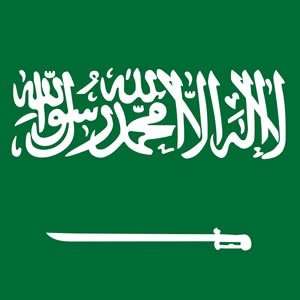 What is Saudi Arabia?
Saudi Arabia, officially the Kingdom of Saudi Arabia (KSA) is a country in Western Asia constituting the bulk of the Arabian Peninsula. With a land area of approximately 2,150,000 km2 (830,000 sq mi), Saudi Arabia is geographically the largest sovereign state in the Middle East, the 2nd largest in the Arab world (after Algeria), the 5th largest in Asia, and the 12th largest in the world. Saudi Arabia is bordered by Jordan and Iraq to the north, Kuwait to the northeast, Qatar, Bahrain, and the United Arab Emirates to the east, Oman to the southeast and Yemen to the south; most of its terrain consists of arid desert, lowland and mountains. As of October 2018, the Saudi economy was the largest in the Middle East and the 18th largest in the world. Saudi Arabia also enjoys one of the world's youngest populations; 50% of its 33.4 million people are under 25 years old.
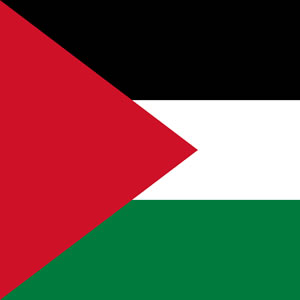 Where is Palestine?
Palestine is a geographic region in Western Asia. It is usually considered to include the Gaza Strip, the West Bank, Israel, and in some definitions, some parts of western Jordan. The name was used by ancient Greek writers, and it was later used for the Roman province Syria Palaestina, the Byzantine Palaestina Prima, and the Islamic provincial district of Jund Filastin. The region comprises most of the territory claimed for the biblical regions known as the Land of Israel, the Holy Land or Promised Land. Historically, it has been known as the southern portion of wider regional designations such as Canaan, Syria, ash-Sham, and the Levant. Situated at a strategic location between Egypt, Syria and Arabia, and the birthplace of Judaism and Christianity, the region has a long and tumultuous history as a crossroads for religion, culture, commerce, and politics.
 What is Madkhali?
Madkhalism is a branch of the larger Salafi movement that emphasizes loyalty to and submission to secular and authoritarian governments, particularly in the Arab world, based on the teachings of Sheikh Rabee al-Madkhali. Madkhalism is a quietist ideology that some critics view as excessively submissive to authority and potentially neglecting important social issues.
 What is Wahhabi?
Wahhabism is an Islamic doctrine and religious movement founded by Muhammad ibn Abd al-Wahhab. It has been variously described as "ultraconservative", "austere", "fundamentalist", or "puritan(ical)"; as an Islamic "reform movement" to restore "pure monotheistic worship" (tawhid) by devotees; and as a "deviant sectarian movement", "vile sect" and a distortion of Islam by its opponents. The term Wahhabi(ism) is often used polemically and adherents commonly reject its use, preferring to be called Salafi or muwahhid, claiming to emphasize the principle of tawhid (the "uniqueness" and "unity" of God), for exclusivity on monotheism, dismissing other Muslims as practising shirk (idolatry).
 What is Islam?
One of the major religions of the world, Islam literally translates to "submission," as a follower of Islam (Muslims) devotes their life to that of their God. The religion began with the teachings of Muhammad in the 7th century. The theology of Islam is based on the Qur'an, which was given to Muhammad by God. Some of the major fundamental principles of Islam include the Five Pillars, which hope to unite all Muslims into a community. Two different factions of Muslims exist - the majority are known as Sunni, with a small percentage known as Shi'a - both predominantly reside throughout the Middle East. Muhammad died in 632 AD and the religion of Islam formally started after his death. The Quran was formally compiled and finalised in 650 AD, prior to which it was 'memorised' and written across many parchments.