922 views
·
Last viewed: 23 mins ago
Uploaded: 23 Dec 2017 (9 years ago) · Shared: 02 Aug 2018
Duration: 7:25
Uploaded: 23 Dec 2017 (9 years ago) · Shared: 02 Aug 2018
Duration: 7:25
Youtube Description
There is a lot of misconceptions by Muslims who think that the Bible should be translated as Torah and Injeel. But the reality is when we set asidenames and look at definitions, we realize that neither the Old Testament nor New Testament fulfill the conditions of what is described in the Quran as revelation (i.e. Wahhi.)
This format is creates so that brothers and sisters can download the videdo and upload them to their FB pages and Twitter accounts.
Please don't forget to like the video and subscribe if you already haven't. Jizak Allah Khair.
Explore More
Ahmed Deedat Gospel Injeel Psalm Torah GODSearch Google Search Explore Topics
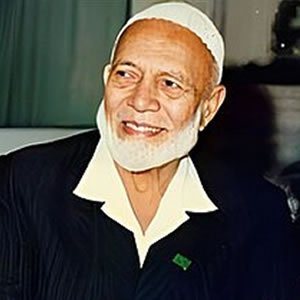 Who is Ahmed Deedat?
Ahmed Deedat (1 July 1918-8 August 2005) was a South African writer and public speaker of Indian descent. He was best known as a Muslim missionary, who held numerous inter-religious public debates with evangelical Christians, as well as video lectures on Islam, Christianity, and the Bible. Deedat established the IPCI, an international Islamic missionary organisation, and wrote several widely distributed booklets on Islam and Christianity. He was awarded the King Faisal International Prize in 1986 for his 50 years of missionary work. He wrote and lectured in English.
 What is Gospel?
Gospel is the Old English translation of Greek evangelion, meaning "good news". It originally meant the Christian message itself, but in the 2nd century it came to be used for the books in which the message was set out. The four gospels of the New Testament: Matthew, Mark, Luke and John are the main source of information on the life of Jesus.
 What is Injeel?
Injeel, or Injil is the Arabic name for the Gospel of Jesus (Isa). The Injil is described by the Quran as one of the four Islamic holy books which was revealed by God, the others being the Zabur (Psalms), the Tawrat (Torah), and the Quran. The word Injil is also used in the Quran, the Hadith and early Muslim documents to refer to both a book and revelations made by God to Jesus. Muslims believe the Injeel is lost and no longer available. The Injeel is not the modern New Testament Bible.
 What is Psalm?
The Book of Psalms ("praises"), commonly referred to simply as Psalms or "the Psalms". This is the first book of the Ketuvim ("Writings"), the third section of the Hebrew Bible, and thus a book of the Christian Old Testament. The title is derived from the Greek translation, psalmoi, meaning "instrumental music" and, by extension, "the words accompanying the music". The book is an anthology of individual psalms, with 150 in the Jewish and Western Christian tradition and more in the Eastern Christian churches. Many are linked to the name of David, but his authorship is not accepted by modern scholars.
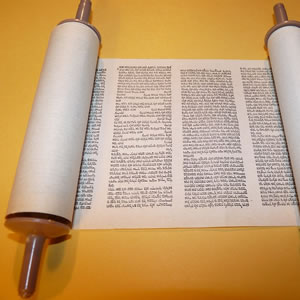 What is the Torah?
Torah, "Instruction", "Teaching" or "Law" has a range of meanings. Common to all these meanings, Torah consists of the origin of Jewish peoplehood: their call into being by God, their trials and tribulations, and their covenant with their God, which involves following a way of life embodied in a set of moral and religious obligations and civil laws. In rabbinic literature the word Torah denotes both the five books "Torah that is written" and the Oral Torah "Torah that is spoken". The Oral Torah consists of interpretations and amplifications which according to rabbinic tradition have been handed down from generation to generation and are now embodied in the Talmud and Midrash. According to rabbinic tradition, all of the teachings found in the Torah, both written and oral, were given by God through the prophet Moses, some at Mount Sinai and others at the Tabernacle, and all the teachings were written down by Moses, which resulted in the Torah that exists today. The majority of Biblical scholars believe the written books were a product of the Babylonian captivity (c. 600 BCE), based on earlier written and oral traditions, which could only have arisen from separate communities within ancient Israel, and that it was completed by the period of Achaemenid rule (c. 400 BCE).
Who is GOD?In monotheism and henotheism, God is conceived as the Supreme Being and principal object of faith. The concept of God as described by theologians commonly includes the attributes of omniscience (infinite knowledge), omnipotence (unlimited power), omnipresence (present everywhere), omnibenevolence (perfect goodness), divine simplicity, and eternal and necessary existence. In theism, God is the creator and sustainer of the universe In deism, God is the creator, but not the sustainer, of the universe Monotheism is the belief in the existence of one God or in the oneness of God In pantheism, God is the universe itself In atheism, God is purported not to exist, while deemed unknown or unknowable within the context of agnosticism.