UNITARIAN UNITERIANISM
The teaching that God is three distinct hypostases or persons who are coeternal, coequal, and indivisibly united in one being, or essence (from the Greek ousia). Certain religious groups that emerged during the Protestant Reformation have historically been known as antitrinitarian, but are not considered Protestant in popular discourse due to their nontrinitarian nature. According to churches that consider the decisions of ecumenical councils final, Trinitarianism was definitively declared to be Christian doctrine at the 4th-century ecumenical councils, that of the First Council of Nicaea (325 AD), which declared the full divinity of the Son, and the First Council of Constantinople (381 AD), which declared the divinity of the Holy Spirit. In terms of number of adherents, nontrinitarian denominations comprise a minority of modern Christianity. The largest nontrinitarian Christian denominations are The Church of Jesus Christ of Latter-day Saints ("Mormons") and Jehovah's Witnesses.
Search Result on 'Uniterianism' (30 total)
Youtube Videos on Uniterianism, Unitarian (14)
 Early Christians were Unitarian, not Trinitarians? - Adnan vs Christian
 Are you a Trinitarian, Modalist or Biblical Unitarian?
 The Lost Early History of Unitarian Christianity - Dale Tuggy
 You are a Unitarian. You are a Muslim - Muhammad Tawheed vs Jamaican Live
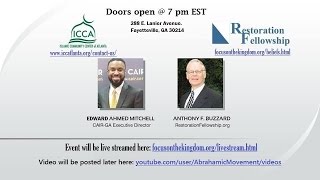 Jesus the Jew was a Unitarian. Monotheism is common amongst Unitarian Christians and Islam - Anthony Buzzard vs Ahmed Mitchell
 In Mark 12:29, the Lord our God is One, unitarian (mono-theos), not Trinitarian - Restoration Fellowship
 Jesus was a Jew on Unitarian Monotheism, not a Trinitarian - Anthony Buzzard
 Unitarian Christians believe in One God; oppose Trinity - John Schoenheit (BiblicalUnitarian)
 There is only one, true God, a 'Unitarian' Father in New Testament; not a Trinity - Dale Tuggy
 Jesus Worship His Father. How can Jesus be The Father? - Unitarian vs Trinitarian
 Jesus was a Unitarian Monotheist - Anthony Buzzard
 The Jewish God is Unitarian, not Trinitarian - Jews For Judaism
 Is Jesus the Real Messiah? | DEBATE: Tovia Singer vs Tom Huszti (Unitarian)
 The Names and Titles of Jesus Christ | Biblical Unitarian
FAQ on Uniterianism, Unitarian (12)
1.In the beginning was the Word, and the Word was with God, and the Word was God [John 1:1] - An Explanation
John 1:1 declares, 'In the beginning was the Word, and the Word was with God, and the Word was God,' utilizing the philosophical Greek concept of the Logos to establish the eternal pre-existence of Christ before his physical incarnation on Earth. While Trinitarian theology views this text as definitive proof of Jesus' divinity within the Godhead, Unitarian and Islamic scholars argue that the 'Word' refers functionally to God's divine command, creative wisdom, or verbal decree rather than a separate co-equal deity.
2.Are Jesus and God the same?
Mainstream Christian orthodoxy, solidified at the Council of Nicaea, dictates that Jesus and God are the same in essence (homoousios), defining Jesus as the pre-existent Word of God who took on human flesh. However, secular historians and Unitarian theologians point out that the Synoptic Gospels make explicit distinctions between Jesus and God, such as when Jesus prays to the Father or denies knowing the timing of the Final Hour. Islamic theology strictly rejects any identification of Jesus with God, viewing the claim as a violation of absolute monotheism (Tawhid).
3.Do all Christians believe Jesus was God or Son of God?
The early Jewish-Christians such as the Ebonites, the Cerinthians, the Basilidians, the Capocratians, and the Hypisistarians. The Arians, Paulicians and Goths also accepted Jesus as a prophet of God.
Even in the modern age there are churches in Asia, in Africa, the Unitarian church, the Jehovah's witnesses, and even the majority of todays Anglican Bishops do not worship Jesus as God.
4.Does the Old Testament teach the Christian Trinity?
Mainstream biblical scholars and historians agree that the Old Testament does not explicitly teach the doctrine of the Trinity, nor did ancient Jewish communities possess a concept of a triune Godhead. There is no historical evidence in pre-Christian Jewish literature including the Hebrew text, the Dead Sea Scrolls, or ancient commentaries of a belief in a plurality of divine Persons. While Christian theologians retrospectively interpret certain plural expressions (such as 'Let us make man' in Genesis 1:26) as hints of the Trinity, ancient Judaism strictly maintained a unitarian monotheistic understanding of God.
5.What is Unitarian Universalism and how did it start?
Unitarian Universalism (UU) is a liberal, non-creedal religion formed in 1961 through the consolidation of two historic Christian denominations: the Universalists and the Unitarians. Both movements originated in Europe and grew during the Protestant Reformation and Enlightenment, challenging orthodox Christian dogmas. Today, the religion has evolved beyond its Judeo-Christian roots into a pluralistic faith that welcomes diverse spiritual perspectives.
6.Is Unitarian Universalism a Christian religion?
While Unitarian Universalism has historical roots in liberal Christianity, it is no longer considered a strictly Christian denomination. Early Unitarians rejected the traditional doctrine of the Trinity (believing God is one entity), and early Universalists argued against a literal hell, believing a loving God grants universal salvation to all humanity. Today, UU is an independent, pluralistic faith where Christians, Jews, Buddhists, Agnostics, Atheists and Pagans worship together.
7.What are the core beliefs of Unitarian Universalists?
Unitarian Universalism is unique because it is a non-creedal religion with no official dogma or mandatory statement of belief. Instead of demanding a shared creed, members are united by a covenant to support each others free and responsible search for truth and meaning. Spiritual authority is placed in the individuals conscience and lived experience rather than in a holy book or religious hierarchy.
8.What are the Principles and Sources of Unitarian Universalism?
Rather than a fixed doctrine, UU congregations are guided by Shared Values (formerly framed as the Seven Principles) and draw wisdom from Six Sources. The values emphasize the inherent worth and dignity of every person, justice, equity, and a commitment to dismantling racism and systemic oppression. The Sources include:
1. Direct experiences of transcending mystery and wonder.
2. Words and deeds of prophetic people throughout history.
3. Wisdom from the world's major religions (including Judaism, Christianity, Islam, and Eastern faiths).
4. Humanist teachings that counsel us to heed the guidance of reason and science.
5. Earth-centered traditions that celebrate the sacred circle of life.
9.What does the Flaming Chalice symbol mean in Unitarian Universalism?
The Flaming Chalice is the official, universal symbol of Unitarian Universalism. Usually displayed prominently at the front of a UU sanctuary, a large chalice is ritually lit at the beginning of every worship service. The symbol originated during World War II when the Unitarian Service Committee used it to identify safe passages and humanitarian aid for refugees fleeing Nazi persecution. Today, the flame represents light, hope, religious freedom, and the warmth of community.
10.Do Unitarian Universalism followers believe in God or an afterlife?
Because UU is a pluralistic faith, beliefs about God and the afterlife vary completely from person to person within the same congregation. Some members hold a traditional monotheistic belief in God, others hold pantheistic views of a universal life force, and many identify as Atheists or Secular Humanists. Similarly, there is no official doctrine on the afterlife; the religious focus is entirely placed on creating a just, loving world in the present life rather than securing salvation for the next.
11.Can you be an Atheist or Buddhist and a Unitarian Universalist?
Yes, you can absolutely hold dual religious identities within Unitarian Universalism. Because the faith values the 'free and responsible search for truth', congregations explicitly welcome Religious Humanists, Jewish UUs, Christian UUs, Buddhist UUs, and Earth-centered Pagans. Members are encouraged to draw from whatever spiritual, scientific, or philosophical paths bring them the most profound moral clarity and personal peace.
12.What is the stance of the Unitarian Universalist Church on LGBTQ+ rights and social justice?
The Unitarian Universalist Association (UUA) is widely recognized as one of the most progressive religious bodies in the world. UU congregations were among the very first to ordain women, openly LGBTQ+ ministers, and perform same-sex commitment ceremonies decades before legal marriage equality. The church views social action—including racial justice, reproductive freedom, environmental activism, and LGBTQ+ advocacy as a direct, fundamental expression of their religious values.
Topics with Uniterianism, Unitarian (2)

Articles on Uniterianism, Unitarian (2)
Trinitarian vs Non-Trinitarian Views (Unitarian, Modalist & Arian)

23,036 views
|
93 Bible Verses on Why Unitarian Christians Reject Jesus' Divinity

18,450 views
|