BAAL
From its use among people, it came to be applied to gods. Scholars previously associated the theonym with solar cults and with a variety of unrelated patron deities, but inscriptions have shown that the name Baal was particularly associated with the storm and fertility god Hadad and his local manifestations.
Known by epithets like 'rider of the clouds' and 'Victorious Baal', he was associated with rain, lightning, wind, fertility, and kingship, and was often depicted in opposition to sea and death deities like Yammu and Mot. Worship of Baal spread throughout the Levant, Egypt, and the Mediterranean.
The Hebrew Bible includes use of the term in reference to various Levantine deities, often with application towards Hadad, who was decried as a false god. In the Hebrew Bible, Baal appears frequently as a foreign or rival deity, with prophets like Elijah opposing his cult, while in early Israelite contexts, the title may have sometimes referred to Yahweh.
Depiction as a false god was taken over into Christianity and Islam, sometimes under the form Beelzebub in demonology.
Youtube Videos on Baal (11)
 Pagan Origins of Judaism: Evidence for Israelite Gods, El, Asherah, Adonai,
 El,
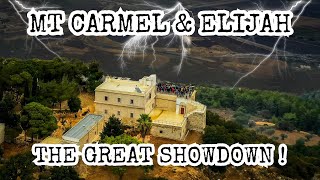 Mount Carmel: Elijah confronts 850 false Prophets of
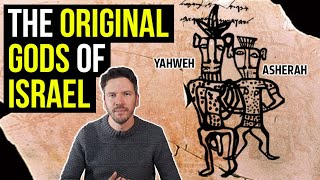 The Gods of Israel (El,
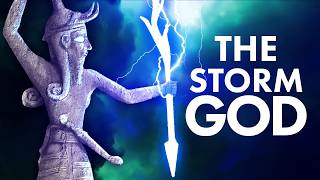 Who Was
 Gods of Canaan: El, Asherah,
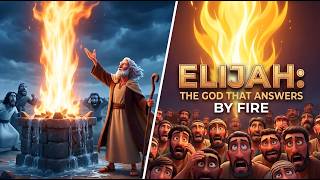 Elijah & God vs
 Elijah and the Prophets of
 Elijah vs 450 Prophets of
 Sacrifice To
 Polytheism in Early Judaism: Yahweh is Our God. So is
FAQ on Baal (8)
1.Should Christians celebrate Jesus on 25th December?
Any believing Christian who is aware of the historical, pagan 'Sun-Baal' connections of this date should entirely avoid celebrating Christmas. It points to certain denominations, such as Jehovah Witnesses, who explicitly refuse to participate in the celebration for this very reason.
2.How did the Sun-God manifest itself?
The Sun God was recognized across ancient cultures by various names, including Apollo, Dionysus, Hercules, Mithras, Adonis, Attis, and within the Babylonian Baal-Astarte-Tammuz triad.
3.Who was the Babylonian Baal God?
Details of the Babylonion Baal or Bel God were found by German excavators in 1904 at the site of the ancient city of Ashur.
* Details of Baal's capture and his trial in the House on the Mount
* Baal's torture and being led away to his death
* The city broke out in fighting
* Baal's clothes were carried away
* A woman wiped away blood from the weapon thrust into his heart
* A weeping woman came to lament him at the 'Gate of Burial'
* Baal was brought back to life at the spring equinox
4.How is Elijah connected to Baalbek?
The prophet Elijah is directly associated with Baalbek. According to classical Quranic commentaries and Islamic tradition (such as the writings of Ibn Kathir and Al-Tabari), Prophet Elijah was sent to the region of Baalbek to preach against the worship of the Canaanite storm god, Baal. The city's original ancient name stems from this deity, meaning 'Lord of the Beqaa Valley'.
In Chapter 37 of the Quran (Surah As-Saffat), Elijah's direct confrontation with his idol-worshipping people is mentioned: 'And Elijah was indeed one of the messengers. Remember when he said to his people, 'Will you not fear God? Do you call upon Baal and leave the Best of Creators, Allah...?' (Quran 37:123-126).
While the Biblical text places Elijah's confrontation with the prophets of Baal primarily in the Kingdom of Israel (such as Mount Carmel), early Middle Eastern geographic traditions linked the worship of Baal and Elijah's mission directly to the city of Baalbek. Near the ancient city, local folklore and regional geography still mark sites and traditions referencing Elijah's presence during his hiding and preaching.
5.Is Prophet Elijah mentioned in the Quran?
Yes, Elijah is mentioned by name in the Holy Quran (in Surah Al-An'am and Surah As-Saffat). He is praised as one of the righteous prophets who warned his people against worshipping the pagan idol Baal and called them to worship God alone.
6.What was the duel on Mount Carmel between Elijah and the false prophets?
To prove the existence of the one true God, Elijah challenged 450 prophets of Baal to a divine test on Mount Carmel. While the false prophets failed to evoke a response from Baal, Elijah prayed to God, who instantly sent fire down from heaven to consume his sacrifice, proving God's absolute sovereignty.
7.What is the famous story of Phinehas at Peor?
In the Book of Numbers (Chapter 25), when the Israelites began worshiping Baal of Peor and engaging in widespread immorality, a severe plague struck the camp. Phinehas intervened decisively to stop the sin and appease divine wrath, immediately halting the plague that had already killed 24,000 people.
8.Was Prophet Elijah involved in any Battles or Wars?
The Clash at Mount Carmel (approx. 860 BC) - Elijah vs Prophets of Baal - 450 deaths
Scripture Themes on Baal (2)
| 1. Elijah confronts the prophets of Baal on Mount Carmel | 1 Kings 18 |
| 2. Elijah denounces worship of Baal | Quran 37:125 |
Articles on Baal (1)
60 Pagan Gods in the Old Testament (Baal, Asherah, Moloch): Comprehensive List
40,679 views
|