Search Result on 'Noah' (206 total)
Scripture Themes on Noah (95)
Youtube Videos on Noah (48)
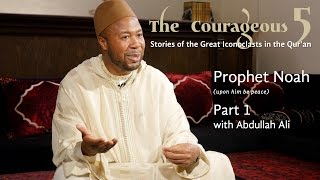 Prophet
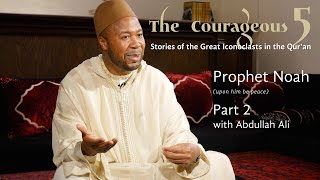 Prophet
 Prophet

 Story of
 Flood of
 Story of Prophet
 Story of
 Did
 Prophets in the Bible and Quran: Aaron, David, Job and
 Prophet
 African Black man was a 'cursed race' due to the sins of Ham,
 In Quran 29:14,
 Reflections on Prophets: People of
 Reflections on Prophets:
 Stories of Prophets: Seth, Enoch &
 Prophet

 What 'Orwellian' really means? -
 Powerful Prophets: Adam and
 Before
 Biblical differences in Creation Story and
 500 Worldwide Flood Stories besides
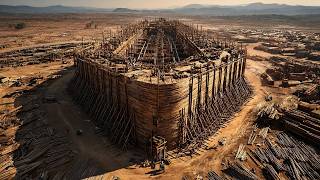 How
 Tomb of
 Different Versions of
 Archaeology for the worship of Idols and Gods in
 How
 Flood Stories of

 Shem, the firstborn of
 Understanding What Caused
 What Ham did to
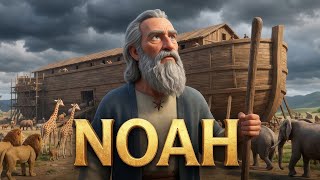
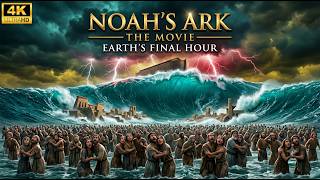 Story of
FAQ on Noah (40)
1.What is Islam?
Islam translates to submission and full surrender to God. Under this core definition, all historical prophets sent to humanity are considered Islamic prophets. This extensive list features prominent figures such as Adam, Abraham, Noah, Moses, David, Jesus, and Muhammad.
2.What are the names of some prophets?
The Quran mentions multiple prophets by name, including Biblical figures such as Noah, Abraham, Moses, David, and Jesus, alongside non-Biblical prophets like Luqman, Eber, and Ezekiel.
3.How are Noah, Abraham, Moses and Jesus considered Muslim Prophets, when Islam came 600-years after Jesus?
A Muslim is essentially defined as anyone who believes in and submits to one God; because all of these historical prophets consistently preached the message of pure Monotheism and called people to worship the Creator alone, they are considered to be Muslim in-essence regarding their foundational theological beliefs.
4.What is the God of the Old Testament like?
The God of the Old Testament is a jealous, bloodthirsty, vicious God that mercilessly commanded horrific attrocities like, for example:
Killing every human on the planet except the handful that went with Noah.
Moses commanding his people to shed each others blood as atonement for creating and worshiping the golden calf
The genocide of the people in the promised land when the Hebrews finally ended their 40-year stay in the dessert. Under the command of God, they wiped out whole cities, killing every man, woman and child.
5.Does God make a distinction between clean and unclean animals?
In biblical literature, the operational distinction between clean and unclean animals is established long before the formal revelation of the Mosaic dietary laws at Mount Sinai. Within the Genesis account of Noah's Flood, God directly commands Noah to gather seven pairs of every clean animal and only one pair of every unclean animal onto the Ark. This narrative indicates that early biblical figures possessed an innate understanding of which specific creatures were approved for divine sacrificial offerings and human survival.
6.Does God define clean and unclean animals, i.e. those we can eat?
In biblical literature, the operational distinction between clean and unclean animals is established long before the formal revelation of the Mosaic dietary laws at Mount Sinai. Within the Genesis account of Noah's Flood, God directly commands Noah to gather seven pairs of every clean animal and only one pair of every unclean animal onto the Ark. This narrative indicates that early biblical figures possessed an innate understanding of which specific creatures were approved for divine sacrificial offerings and human survival.
7.What was Prophet Seth's core role in human history?
Seth's main legacy was preserving the monotheistic, God-fearing lineage of early humanity. While the line of Cain strayed, Seth's descendants maintained moral purity and established the direct ancestral line leading to major prophets like Noah, Abraham, Moses, Jesus, and Muhammad.
8.Who was Aram in biblical genealogy?
According to the Book of Genesis, Aram was the son of Shem and the grandson of Prophet Noah (Nuh). His line forms part of the post-flood repopulation of the Near East.
9.Who was Prophet Arphaxad in Islamic tradition?
Arphaxad (Arfakhshad) was a post-flood patriarch, the son of Shem, and the grandson of Prophet Nuh (Noah). He served as a crucial genealogical and spiritual link carrying early monotheistic traditions down the lineage toward Prophet Ibrahim (Abraham).
10.Why is Arphaxad significant in prophetic genealogy?
Arphaxad was the first child born in the post-flood era. He represents a key ancestral bridge connecting Noah's immediate survivors to the lineage of major patriarchs and prophets, leading directly down to Ibrahim, Ismail, Ishaq, and ultimately Prophet Muhammad.
11.Who was Prophet Eber in Islamic and biblical history?
Eber was a great post-flood patriarch, prophet, and the direct great-grandson of Shem. He served as a crucial ancestral bridge connecting Noah to Ibrahim (Abraham) and preserved the original monotheistic faith when humanity began turning back to idolatry.
12.Who was Prophet Japheth in Islamic and biblical history?
Japheth (Yafith) was a major post-flood patriarch, family leader, and one of the three sons of Noah (Nuh) who survived the Great Flood inside the Ark.
13.How is Prophet Japheth connected to Prophet Noah?
Japheth (Yafith) was a major post-flood patriarch, family leader, and one of the three sons of Noah (Nuh) who survived the Great Flood inside the Ark.
14.Is Prophet Japheth mentioned in the Quran?
Japheth is not mentioned by his explicit name in the Holy Quran, but Quranic commentary and Hadith literature reference Noah's sons repopulating the Earth after the deluge. His life and lineage are detailed by classical Islamic historians like Ibn Kathir and Al-Tabari.
15.What was Japheth's role in preserving early monotheism?
While not traditionally classified as a law-giving prophet with a new scripture, Japheth played a crucial role in carrying Noah's early monotheistic teachings, moral laws, and historical records into newly formed post-flood civilizations.
16.Who was Prophet Methuselah in religious and historical tradition?
Methuselah (Matushelah) was an antediluvian patriarch, prophet, and prominent leader in the generations before the Great Flood. He was the son of Enoch (Idris), the father of Lamech, and the grandfather of Noah (Nuh).
17.How was Methuselah related to Prophet Enoch?
Methuselah (Matushelah) was an antediluvian patriarch, prophet, and prominent leader in the generations before the Great Flood. He was the son of Enoch (Idris), the father of Lamech, and the grandfather of Noah (Nuh).
18.What was Methuselah's spiritual role before the Great Flood?
Inheriting the prophetic legacy of his father Enoch, Methuselah served as a spiritual leader and preacher of monotheism. He spent centuries warning an increasingly corrupt human society to repent and return to righteousness, helping preserve sacred knowledge and divine records until his grandson Noah was called to build the Ark.
19.How is Prophet Methuselah viewed across different faith traditions?
Judaism & Christianity: Revered in the Book of Genesis as a righteous patriarch whose immense lifespan represented God's patience with humanity before sending judgment.
Islam: Honored in traditional Islamic histories and scholarly commentaries (such as those by Ibn Kathir) as a noble, monotheistic patriarch and link in the ancestral chain of prophets between Adam and Noah.
20.Who was Prophet Noah across major world religions?
Noah (Nuh) is a major prophet and patriarch in Judaism, Christianity, and Islam. Recognized as the 'Second Father of Humanity', he was sent during an era of deep spiritual corruption to call people back to monotheism and righteousness.
21.What was the purpose of building Noahs Ark?
When his society persistently rejected his warnings and mocked his teachings over centuries, God commanded Noah to construct a massive wooden vessel, the Ark, to preserve his family, righteous followers, and breeding pairs of animal species from a catastrophic global deluge.
22.How long did Noah preach to his people?
According to Islamic tradition (Surah Al-Ankabut), Noah spent 950 years actively preaching to his community. Biblical timelines also attribute a total lifespan of 950 years to Noah, highlighting his extraordinary patience and steadfastness (Sabr).
23.How is Prophet Noah honored in different faith traditions?
Judaism & Christianity: Detailed in the Book of Genesis, he is revered as a righteous man who 'walked with God' and established the Seven Laws of Noah (Noahide Laws) for all humanity.
Islam: Reverted as Nuh, one of the five Ulul Azm (Arch-Prophets of Firm Resolve), with an entire chapter of the Quran (Surah Nuh) dedicated to his mission and steadfast faith.
24.How long did Prophet Seth live, and what was his legacy?
According to biblical and traditional accounts, Seth lived for 912 years. He established early religious order, preserved divine knowledge, and became the direct ancestor of major pre-flood figures, including Enoch (Idris), Methuselah, and Noah (Nuh).
25.Who was Prophet Shem in religious and historical tradition?
Shem (known as Sam in Islamic tradition) was a major post-flood patriarch, prophet, and one of the three sons of Noah (Nuh) who survived the Great Flood aboard the Ark.
26.How was Shem connected to Prophet Noah?
Shem (known as Sam in Islamic tradition) was a major post-flood patriarch, prophet, and one of the three sons of Noah (Nuh) who survived the Great Flood aboard the Ark.
27.What role did Shem play after the Great Flood?
Following the recession of the floodwaters, Shem helped rebuild human civilization under his father Noah's guidance. He inherited the spiritual leadership and central territorial regions of the ancient Middle East, preserving the original monotheistic teachings (Hanif) amid post-flood migrations.
28.How long did Prophet Shem live, and what is his direct connection to Abraham?
Scriptural and traditional chronologies indicate that Shem lived for 600 years. Because of his extraordinary longevity, he lived long enough to personally witness and mentor ten generations of his descendants, serving as a direct lineage link between Noah and Abraham (Ibrahim).
29.How is Prophet Shem viewed across different faith traditions?
Judaism: Revered in the Book of Genesis as a blessed son of Noah whose lineage preserved godliness; rabbinic tradition frequently identifies him with Melchizedek, the righteous King of Salem.
Christianity: Honored as a direct, foundational patriarch in the Old Testament genealogy of Jesus Christ.
Islam: Honored in classical historical texts (such as those by Al-Tabari and Ibn Kathir) as the noble, monotheistic son of Nuh from whom the prophets of the Middle East descended.
30.Did Prophet Noah have a Wife?
1 wife . Naamah (Book of Genesis).
31.Was Prophet Noah involved in any Battles or Wars?
Unknown
32.What are some interesting historical facts about Prophet Adam?
- First man created by God
- Had no mother or father
- Lived 930 years
- Died 216 years before the birth of Noah
- Married to Eve
33.What are some interesting historical facts about Prophet Abraham?
- The king put Abraham into a fire which remained burning for a long period, but Abraham was not burnt. He came out of the fire alive
- God ordered Abraham to sacrifice his son, Isaac or Ishmael. At the time of sacrifice, a lamb appeared and was sacrificed instead
- Abraham was son of Terah
- Lived to 175 years of age
- He knew Shem, son of Noah 150 years
- Noah died 2 years before Abraham was born
- Heber outlived Abraham by 4 years
- Travelled from Ur in Iraq to Haran in Turkey, and onto the promised land of Canaan (Palestine)
- Travelled to Egypt
34.What are some interesting historical facts about Prophet Terah?
- Three times great grandson of Eber
- Lived for 205 years
- 130 years old when Abraham was born
- Lived amongst, sat and talked with Noah and Shem
35.What are some interesting historical facts about Prophet Seth?
- Adam's third son
- Lived for 912 years
- Seth knew Noah for 34 years before he died
36.What are some interesting historical facts about Prophet Noah?
- Built an Ark and saved animals and others from the flood
- Noah lived for 950 years
- Methuselah knew Noah 600 years and died the year of the flood
- Talked with his father, Lemech for 595 years
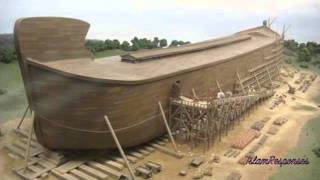
- Noah's Ark was 300x50x30 cubits. It had three decks and was waterproofed using pitch (Genesis 6:14)
- The floods were caused by 40 days of rain (Genesis 7:12)
- Noah spent 371 days in the Ark
- The Ark landed on the mountains of Ararat, Turkey (Genesis 8:4)
- Noah, his wife, their three sons and their wives were saved from the floods (Genesis 6:18)
37.What are some interesting historical facts about Prophet Eber?
- Great grandson of Shem
- Lived for 464 years
- Knew both Noah and Shem
38.What are some interesting historical facts about Prophet Shem?
- Son of Noah
- Lived for 600 years
- Talked with Methuselah for 98 years
- Lived after the flood for 502 years
39.What are some interesting historical facts about Prophet Isaac?
- Son of Abraham and Sarah
- Lived for 180 years
- Knew Shem, son of Noah for 50 years
40.What are the Six Articles of Faith in Islam?
While the Five Pillars govern outward actions, the Six Articles of Faith (Arkan al-Iman) dictate the core internal theological beliefs required of every Muslim:
1. Belief in Allah as the one and only supreme God.
2. Belief in His angels (such as Gabriel and Michael).
3. Belief in His holy books (including the Torah, Psalms, Gospel and the Quran).
4. Belief in His prophets and messengers (from Adam and Noah to Abraham, Moses, Jesus and Muhammad).
5. Belief in the Day of Judgment and the afterlife (Paradise and Hell).
6. Belief in divine decree or destiny (Qadar), meaning God possesses absolute ultimate knowledge of all events.