CREATION
Scripture Themes on Creation (30)
Youtube Videos on Creation (26)

 The

 Does God exist in his
 The
 Before
 Before
 Jews are Monotheists. One Creator (God) and His
 In Micah 5:2, the Trinity holds Jesus pre-existed
 Let's discuss Evolution,

 Did Jesus Pre-exist
 In Quran 36:36, the
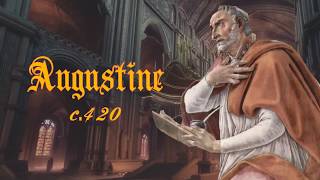 In 420 AD, Augustine of Hippo believed Jesus participated in the
 Islamic views on Evolution and
 In Romans 15:20, Apostle Paul announces
 In John 12:41 and 17:5, did Jesus pre-exist
 In 1916, British influence led to
 Jesus, the Christian God can come In & Out of His
 New World Order:
 Biblical differences in
 Genesis - The
 Adam and Eve - The
FAQ on Creation (21)
1.What is the basic teaching of Islam about God?
Islam teaches that there is one, and only one, God Who is the Creator and Controller of the entire universe. He is unique in every respect, and there is nothing which bears any likeness to Him. He is the Knower of all things, and has full power over the whole of creation. He does not stand in need of anything at all, while everything is totally dependent on Him. He possesses all the perfect qualities, and man should worship Him, and Him alone.
2.Is Allah the Moon-God?
No, this is a entirely false claim that originally originated from a Christian pastor named Robert Morey; Islam explicitly refutes this idea, maintaining that Allah is the all-powerful, unique Creator of the entire universe and not a pagan entity or a creation like the moon.
3.Do Muslims believe in a God?
Yes, Muslims believe in Allah as the all-powerful, eternal Creator who is separate from creation, has no partners, no gender, and is the absolute sole entity worthy of human worship.
He is transcendent and not a part of his creation. He is all-powerful, absolutely Just and He is First, Last, and Everlasting; He was when nothing was, and will be when nothing else remains. Also, There is no other entity in the entire universe worthy of worship besides Him.
This belief in God is how one becomes a Muslim and is similar to the first commandment of Christianity and Judaism: You shall have no other gods before Me.
Allah the Eternal,Absolute;
He does not beget,not nor is He begotten,
And there is none like Him. [Quran 1:1-4]
4.When is the Day of Judgement?
The specific timing, hour, and date of the Final Hour and Day of Judgement is completely unknown to creation, as that absolute knowledge belongs entirely and exclusively to God.
5.How did Apostle Paul view Jesus?
Paul viewed Jesus as the divine image of God, the firstborn of creation, and the fullness of God, as outlined in Colossians 1:15-20.
6.Was Jesus sent with his own Word?
In the New Testament gospels, Jesus repeatedly emphasizes that his teachings and doctrine are not his own independent creation, but rather the direct words and commandments of the Father who sent him. He portrays himself as a faithful messenger and servant completely aligned with the will of God, speaking exactly what he was commanded to say.
7.Does the Quran encourage ill-treatment of non-Muslims?
No, orthodox Islamic theology strictly prohibits the unprovoked abuse, exploitation, or mistreatment of peaceful non-Muslims, explicitly warning in the Hadith literature that anyone who oppresses a religious minority will face divine complaints from the Prophet himself on the Day of Judgment. Scriptural texts command Muslims to uphold agreements, demonstrate broad compassion to all of creation, and engage in respectful theological dialogue.
8.Why do Muslims say non-Muslims will go to Hell?
One of the basic teachings of Islam is that God does not have a favorable opinion of those who knowingly deny His right to be worshiped alone (as He alone is responsible for our creation, our sustenance, and our judgement) and reject any of His messengers.
This is not to say that there will be conveyor belts for each religion, and we just jump on and go to either Heaven or Hell according to what we call ourselves. Each person will be judged based on their understanding of God's message, as well as his or her capability and intentions to follow the path to God as best he or she could.
Muslims are not allowed to say that someone will go to hell just because they call themselves a Christian, Jew, or Polytheist. Muslims are not allowed to speak without knowledge. And each person's destination in the Hereafter is known only to God.
It is interesting to note that some people of different faiths insist on telling everyone who does not go to their specific place of worship that they will certainly be going to Hell (knowledge they do not have). But when they see this Quran verse, they are upset by it.
9.How is Adam connected to Dome of the Rock?
Traditional lore across early monotheistic texts links the central rock to the creation of Adam, viewing it as the 'Foundation Stone' (Even Shetiyya) from which the world was formed.
10.Is Prophet Adam mentioned in the Quran and the Bible?
Yes, Adam is a central figure in Judaism, Christianity, and Islam. In the Quran, he is mentioned by name 25 times and is highlighted as God's Khalifah (vicegerent or steward) on Earth. In the Bible, his creation, life in Eden, and initial command from God are detailed in the Book of Genesis.
11.What is the difference between Gnosticism and Christianity?
While Christian Gnostics used the same vocabulary as early mainstream Christians, they held fundamentally different views on God, creation, and the material world:
* The Creator: Mainstream Christians worship God as the benevolent creator of the world. Gnostics believe the physical universe was created by an inferior, flawed deity called the Demiurge.
* The Physical World: Christianity views creation as fundamentally good but fallen. Gnosticism views the physical world as a flawed, illusory trap or spiritual prison.
* Salvation: Christians believe salvation comes from faith (pistis) in Jesus Christ and forgiveness of sins. Gnostics believe salvation comes from inner knowledge (gnosis) that wakes the soul from material ignorance.
12.Who is Sophia in Gnosticism?
Sophia (the Greek word for Wisdom) is a central, tragic figure in Gnostic cosmology and creation myths. She is an Aeon—a divine emanation from the supreme spiritual realm. According to Gnostic myth, Sophia experienced a flawed desire to create a being without the consent of her divine counterpart. This independent act caused a rupture in the heavens, resulting in the accidental birth of the ignorant Demiurge and the subsequent creation of the material world.
13.Who is the founder of Islam?
Muslims believe that Islam does not have a human founder, as it is the eternal truth revealed by God since the creation of the world. However, historically, the religion was revived and formalized by the Prophet Muhammad (born in Mecca around 570 CE). Muslims revere Muhammad not as a divine being or creator, but as the final and ultimate prophet sent to restore the pure monotheistic faith of Abraham, Moses, and Jesus.
14.What do Jains believe about God and creation?
Jainism is a non-theistic religion because it rejects the concept of a creator God or a supreme cosmic ruler. Jains believe the universe is eternal, uncreated, and operates automatically based on its own independent cosmic laws. Instead of a divine creator, Jains define 'God' as Jina - any human soul that has successfully achieved absolute perfection, shed all karma, and attained infinite knowledge, serving as an inspiration rather than a deity who grants favors.
15.What is the significance of the Shabbat (Sabbath)?
Shabbat is the Jewish day of rest, observed from Friday evening at sundown until Saturday night. It commemorates God's day of rest after creation. Observant Jews refrain from creative or constructive work (such as driving, using electronics, or cooking) to focus entirely on family, community, prayer and rest.
16.Why do Adventists worship on Saturday instead of Sunday?
The practice of Saturday worship is the defining feature of the denomination. Adventists observe the Sabbath on the seventh day of the week (Saturday), tracking it from Friday sunset to Saturday sunset. They believe that the Saturday Sabbath is a perpetual, unchangeable commandment established by God at Creation and encoded in the Ten Commandments, arguing that the historical shift to Sunday worship was a human tradition rather than a biblical directive.
17.What are the core beliefs of Sikhism?
Sikhism is a strictly monotheistic faith based on several foundational principles:
* Ik Onkar: The belief in one supreme, eternal, and formless Creator who dwells within all creation.
* Equality and Justice: Complete rejection of the caste system, racial discrimination, and gender inequality.
* The Three Pillars: Living a life centered on Naam Japna (remembering God), Kirat Karni (earning an honest living), and Vand Chhakna (sharing with those in need).
18.What are the "5 Ks" in Sikhism?
The 5 Ks (Panj Kakar) are five physical articles of faith worn by initiated (Khalsa) Sikhs as a commitment to their faith and community identity:
1. Kesh: Uncut hair, symbolizing acceptance of God's perfect creation.
2. Kangha: A wooden comb, representing cleanliness and order.
3. Kara: An iron or steel bracelet, symbolizing eternity and restraint from wrongdoing.
4. Kachera: Cotton undergarments, signifying self-control and chastity.
5. Kirpan: A ceremonial sword, representing the duty to protect the weak and fight for justice.
19.Why do Sikhs grow their hair and not cut it?
Sikhs grow their hair, a practice known as Kesh, out of deep devotion, spiritual identity, and alignment with the divine. Uncut hair is one of the mandatory '5 Ks' (articles of faith) that initiated Sikhs commit to keeping throughout their lives. Five reasons why Sikhs do not cut their hair:
1. Acceptance of God’s Perfect Creation
The core philosophical reason for keeping Kesh is living in harmony with Hukam (the divine will). Sikhs believe that God created the human body perfectly just as it is. By leaving their hair untouched, a Sikh demonstrates complete acceptance of God's design, choosing not to alter or vanity-modify the natural form they were given.
2. A Symbol of Spiritual Growth and Energy
In Sikh mysticism, hair is viewed as more than just dead cells; it is seen as a living extension of the body that interacts with a person's spiritual energy. Long hair is believed to act as a natural antenna that helps channel cosmic energy, enhancing meditation (Naam Simran) and aiding a person's focus on spiritual awakening.
3. Emulating the Sikh Gurus
All ten living human Gurus in Sikh history, starting with Guru Nanak, kept their hair uncut. For a practicing Sikh, maintaining Kesh is a profound way to honor, connect with, and physically look like their spiritual masters. It acts as a continuous, daily pledge of allegiance to the path laid out by the Gurus.
4. Sovereignty, Dignity, and Equality
Historically in South Asia, long hair and turbans were privileges strictly reserved for royalty, rulers, and the high-caste ruling elite. In 1699, Guru Gobind Singh (the tenth Guru) revolutionized society by establishing the Khalsa (the community of initiated Sikhs) and mandating that all Sikhs keep their hair uncut and wear a turban. This acted as a radical statement of social justice: it declared that every individual possesses equal royal dignity, sovereignty, and self-worth, completely dismantling the oppressive caste system.
5. High Visibility and Accountability
The Gurus intentionally designed Sikhs to have a highly distinctive appearance. A Sikh with long hair and a turban cannot hide in a crowd. This visible identity holds a Sikh strictly accountable to the highest moral and ethical standards of their faith. Historically and today, it signals to anyone in danger that a Sikh is nearby and obligated by their faith to stand up for the weak and defend justice.
20.What are the core beliefs of the Unification Church?
The foundational theology of the movement is contained in The Divine Principle, a sacred text written by Sun Myung Moon. Core doctrines include:
* The Three Blessings: God's original plan for humans to achieve individual spiritual perfection, establish ideal families, and hold righteous stewardship over creation.
* The Fall of Man: The belief that Eve had a spiritual affair with Lucifer and a physical relationship with Adam, corrupting the human lineage with Satanic blood.
* Restoration: The process of purifying human lineage through sacred marriage rites to establish the sinless Kingdom of God on Earth.
21.How do Unitarians and Jehovah's Witnesses translate John 8:58?
Non-Trinitarian groups often translate 'Ego Eimi' in John 8:58 as a progressive perfect tense rather than a present tense, rendering it as 'I have been' (e.g., 'before Abraham came into existence, I have been'). They argue that Jesus was asserting his literal or conceptual pre-existence as God's first creation (the Messiah), rather than claiming to be Yahweh Himself.
News on Creation (2)
| 1. The Story of God - A Buddhist Perspective on Creation | Patheos |
| 2. Would you Adam and Eve it? Why creation story is at heart of a new spiritual divide | The Guardian |
Articles on Creation (1)
Palestine, Zionism & Creation of Israel (1948): Historical Overview

26,572 views
|