YAHWEH
His exact origins are disputed, although they reach back to the early Iron Age and even the Late Bronze: his name may have begun as an epithet of El, head of the Bronze Age Canaanite pantheon, but the earliest plausible mentions of Yahweh are in Egyptian texts that refer to a similar-sounding place name associated with the Shasu nomads of the southern Transjordan. In the oldest biblical literature, Yahweh is a typical ancient Near Eastern "divine warrior", who leads the heavenly army against Israel's enemies; he later became the main god of the Kingdom of Israel (Samaria) and of Judah, and over time the royal court and temple promoted Yahweh as the god of the entire cosmos, possessing all the positive qualities previously attributed to the other gods and goddesses.
Youtube Videos on Yahweh (44)
 In 200 years, Christianity lost Jesus' Jewish teachings; adopting Greek and Roman Paganism -
 Trinity is from Paganism; not found in New Testament -
 Interesting Facts About Jesus -
 False Church doctrine and False Christian teachings -
 Yeshua The Real Messiah -
 Pagan Origins of Christmas Exposed -
 Pagan Origins of New Years Day Exposed -
 Pagan Origins of Easter Exposed -
 Sabbath: Was it Saturday or Sunday? -
 Bible Secrets Unveiled -
 In Exodus 3:14 and Exodus 3:15, I Am is a name of
 Pagan Origins of Judaism: Evidence for Israelite Gods, El, Asherah, Adonai, Baal, Elohim and
 Did You Know Christmas is Pagan? -
 Archaeologists discover
 Father, Jesus, Holy Spirit. They are all
 In Genesis 19:24 and Zecheriah 2:11, there is only one
 In Genesis 19:24, the LORD is mentioned twice. Is there two
 In Genesis 1:1, Elohim ('God') is singular when applied to
 Jesus is not
 James Dunn: Jesus is not
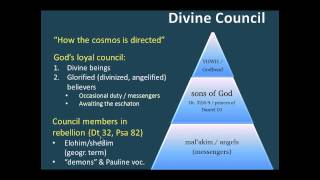 Many Biblical Gods (Elohim) are ordered to obey
 Father, Son and Holy Spirit is
 In Psalm 89:6,
 How did Yeshua ('
 How did Yeshua ('
 Did Jesus speak of His Own or in name of
 In Genesis 16:7, did Hagar speak to
 Jesus instructed Jews to worship
 Valentinus (100-160 AD, Gnostic Christian) wrote of Monad, the highest, mysterious, unknowable God; rival to Demiurge (
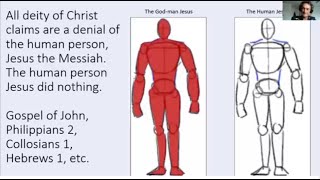 Historical development of Christian Trinity, Jesus-Man & Jesus-God-
 Father generated Jesus-Son. Can Jesus generate The Father-
 Origins of
 Polytheism to

 Origins of
 Goddess Asherah, the Secret Wife of God
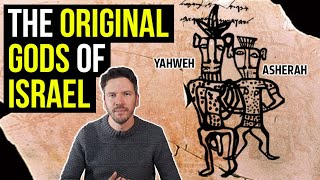 The Gods of Israel (El, Baal,
 Who Was Baal and
 Early Judaism was Polytheism: GOD
 The Evolution of God from
 Did
 Did Ancient Israelites Sacrifice Children to
 Polytheism in Early Judaism:
FAQ on Yahweh (7)
1.What does the name Jesus mean?
Linguistically, the name Yeshua (Jesus) means 'Yahweh is salvation' or 'The Lord saves' in ancient Hebrew. It is the exact same name as the Old Testament figure Joshua, highlighting a theological theme of deliverance and salvation within biblical history.
2.Where did the name Yahweh come from?
The name Yahweh is the principal, sacred vocalisation of the Hebrew Tetragrammaton (YHWH), revealed historically to Moses in the Old Testament Book of Exodus as God's personal covenant name. Biblical scholars note its linguistic roots link directly to an archaic Hebrew verb meaning 'To Be,' signifying the eternal, self-existing, and uncreated nature of the Creator.
3.In the time of Jesus, what qualities would identify the Messiah, to the Jews?
First-century Jewish expectations, as discussed in this analysis of Trinity dogma, centered on a human leader, such as a prophet or king from David's line, rather than a divine figure.
A human empowered by God. Not a God-man, a person of the Godhead or part of a Triune God (Trinity)
From the lineage of Abraham (Gen. 22:18)
From the tribe of Judah (Gen. 49:10)
A descendant of David (2 Sam. 7:12)
A Lord under Yahweh, the God of Israel (Ps. 110:1)
From amongst their own people (Jer. 30:21)
4.How did the 1st century Jews view the Holy Spirit?
The Holy Spirit was understood as God's active, divine power, rather than a distinct, third person of a Trinity.
First century Jews believed the Holy Spirit was another name for God, similar to Yahweh, Elohim or El Shaddai - not a separate Person in the Trinity!
There is no record of Jesus ever trying to correct the Jews and prove the Holy Spirit was a third Person in the Trinity.
5.What is the connection between Ego Eimi and Exodus 3:14?
In Exodus 3:14, God reveals His divine name to Moses as 'I AM WHO I AM' (Hebrew: Ehyeh Asher Ehyeh). In the Greek Old Testament (Septuagint), this is rendered as 'Ego eimi ho on' ('I am the Being'). Scholars note that Jesus' absolute uses of 'Ego Eimi' echo both Exodus 3:14 and the self-declarations of Yahweh found throughout the book of Isaiah.
6.How do Unitarians and Jehovah's Witnesses translate John 8:58?
Non-Trinitarian groups often translate 'Ego Eimi' in John 8:58 as a progressive perfect tense rather than a present tense, rendering it as 'I have been' (e.g., 'before Abraham came into existence, I have been'). They argue that Jesus was asserting his literal or conceptual pre-existence as God's first creation (the Messiah), rather than claiming to be Yahweh Himself.
7.How does Isaiah influence the meaning of Ego Eimi in John?
In the Septuagint translation of Isaiah (e.g., Isaiah 41:4, 43:10, and 45:18), God repeatedly declares 'Ego Eimi' to assert that He alone is Yahweh and there is no other Savior. New Testament scholars recognize that John's Jesus adopts this precise phrasing from Isaiah to show that the long-awaited salvation and physical embodiment of Yahweh is now present in Christ.
Topics with Yahweh (4)



Articles on Yahweh (3)
God vs Allah vs Yahweh vs Elohim: Linguistic Comparison

23,718 views
|
Abraham's Sacrifice of Isaac vs Yahweh's Sacrifice of Jesus

25,267 views
|
27 Bible Verses on Yahweh vs Elohim(s)

31,315 views
|