UNIVERSE
While the spatial size of the entire Universe is still unknown, it is possible to measure the observable universe. The earliest scientific models of the Universe were developed by ancient Greek and Indian philosophers and were geocentric, placing Earth at the centre of the Universe. Over the centuries, more precise astronomical observations led Nicolaus Copernicus to develop the heliocentric model with the Sun at the centre of the Solar System.
FAQ on Universe (27)
1.What is the basic teaching of Islam about God?
Islam teaches that there is one, and only one, God Who is the Creator and Controller of the entire universe. He is unique in every respect, and there is nothing which bears any likeness to Him. He is the Knower of all things, and has full power over the whole of creation. He does not stand in need of anything at all, while everything is totally dependent on Him. He possesses all the perfect qualities, and man should worship Him, and Him alone.
2.Is Allah the Moon-God?
No, this is a entirely false claim that originally originated from a Christian pastor named Robert Morey; Islam explicitly refutes this idea, maintaining that Allah is the all-powerful, unique Creator of the entire universe and not a pagan entity or a creation like the moon.
3.Do Muslims believe in a God?
Yes, Muslims believe in Allah as the all-powerful, eternal Creator who is separate from creation, has no partners, no gender, and is the absolute sole entity worthy of human worship.
He is transcendent and not a part of his creation. He is all-powerful, absolutely Just and He is First, Last, and Everlasting; He was when nothing was, and will be when nothing else remains. Also, There is no other entity in the entire universe worthy of worship besides Him.
This belief in God is how one becomes a Muslim and is similar to the first commandment of Christianity and Judaism: You shall have no other gods before Me.
Allah the Eternal,Absolute;
He does not beget,not nor is He begotten,
And there is none like Him. [Quran 1:1-4]
4.What is Pre-destination?
Pre-destination is defined as the theological belief that absolutely everything that will happen in the universe has already been completely decided by God or fate. Under this doctrine, events are unalterably locked in place and cannot be changed or modified by human free will or action.
5.How did Apostle Paul differ with the Jewish Rabbis?
The Jewish Rabbis preached a person was saved so long as their intention was to remain within the covenant, and one truly repented and seek forgiveness for their sins.
Paul preached that every person was 'damned' until they was offered salvation. Mans problem was that he was 'in the flesh' in bondage to the Law, sold under Sin, enslaved by the fundamental spirits of the universe (ie. dead).
Paul preached the only cure was liberation from slavery and death by union with Christ, who had conquered death and sin.
6.Who was the Tammuz God?
Tammuz was a popular Syrian saviour-God who pre-existed Jesus
Christ yet shared a number of similarities:
* Tammuz was born of a virgin
* Tammuz was killed and rose again every spring.
* Wherever Tammuz was worshipped, he was celebrated with a
human victim in royal robes who was killed and eaten. This was so
the sacrifice, his body and blood might bring salvation to the
community
* One of the chief centres of Tammuz worship was Bethlehem,
said to have been the birthplace of Jesus
* Tammuz was called 'the Carpenter', a title related to the
'Architect' of the universe. Jesus too was called the 'son of the
carpenter'
* Tammuz was said to have entered Jerusalem riding two asses,
because this represented the passage of the sun at the summer
solstice through the sign of Cancer (two asses star-sign)
* In the gospel of Matthew (21:5), Jesus enters Jerusalem on two animals.
7.Who is the supreme god in Zoroastrianism?
The supreme creator god in Zoroastrianism is Ahura Mazda, which translates to 'Wise Lord.' He is viewed as all-good, omniscient, and the source of all light, truth, and order in the universe.
8.How do Zoroastrians view the afterlife?
Zoroastrian eschatology teaches that after death, the soul crosses the Chinvat Bridge (the Bridge of the Requiter). Righteous souls cross safely into paradise, while wicked souls fall into a temporary state of punishment before a final renewal and cleansing of the universe.
9.How do atheists view science and the origin of the universe?
Most atheists rely on a naturalistic worldview that prioritizes the scientific method over supernatural explanations. While science itself is a methodology that neither proves nor disproves the existence of a spiritual creator, atheists typically favor cosmological and biological explanations such as the Big Bang theory and evolutionary biology because they are built on peer-reviewed, falsifiable, and physical evidence rather than subjective faith.
10.What do Cao Dai followers believe?
Cao Dai followers believe that all religions originate from the same divine truth and have been revealed by God at different times throughout human history. The core theology centers on a single Supreme Being (Cao Dai) who created the universe. Practitioners believe in reincarnation, karma, and the ultimate liberation of the soul, emphasizing virtues like vegetarianism, non-violence, ancestor worship, and self-cultivation to break the cycle of rebirth.
11.What is the main symbol of the Cao Dai religion?
The primary symbol of Cao Dai is the Divine Eye (known as the Thien Nhan), which represents God's all-seeing, omnipresent eye watching over the universe. It is traditionally depicted as a left eye surrounded by a triangle and rays of light, symbolizing yang energy, wisdom, and cosmic balance. This sacred emblem is prominently displayed above the main altars inside all Cao Dai temples.
12.What is the Christian Science religion?
Christian Science is a nontrinitarian Christian new religious movement founded in New England during the late 19th century. Its official organizational name is the Church of Christ, Scientist. The religion emphasizes the absolute goodness of God and relies on a system of spiritual healing through prayer, viewing the teachings and healings of Jesus Christ as supreme, practical, and scientifically verifiable laws of the universe.
13.What is Deism and what are its core beliefs?
Deism is a philosophical and theological belief system that asserts the existence of a supreme creator God based purely on reason, nature, and logic, rather than religious revelation. Popularized during the 17th and 18th centuries, Deists believe that God created the physical universe and set its natural laws in motion, but does not intervene in human affairs, answer prayers, or suspend natural laws with miracles.
14.What is the difference between Deism and Theism?
The primary difference between the two concepts centers on God's ongoing interaction with the world:
* Theism: Believes in a personal creator God who remains actively involved in the universe. Theists believe God answers prayers, performs miracles, and communicates directly through prophets, divine revelations, and holy books.
* Deism: Believes in an impersonal God who acts as a cosmic clockmaker. Once the universe was created, God stepped back, leaving the world to operate entirely on its own through unchanging, natural laws.
15.What is the "Clockmaker God" analogy in Deism?
The Clockmaker Analogy is the famous conceptual framework used to explain Deist theology. It compares God to a clockmaker and the universe to a finely tuned mechanical clock. In this view, God designed the intricate mechanisms of the universe, wound it up, started its motion, and then left it to run entirely on its own according to the laws of physics, without any further adjustments or supernatural interventions.
16.What is Pandeism and how does it differ from Deism?
Pandeism is a specific, metaphysical offshoot that blends Deism with Pantheism (the belief that the universe and God are identical). While a traditional Deist believes God created the universe from an external position and remains separate from it, a Pandeist believes that God actually became the universe. In Pandeism, the Creator intentionally transformed its own divine essence into the physical laws and matter of the cosmos to experience existence.
17.What are the core beliefs of the Druze?
The foundational theology of the Druze centers on Tawhid, the absolute oneness and unity of God. The core beliefs dictate that God is entirely transcendent, incomprehensible, and above all human attributes, yet can manifest divinely in the physical universe. Instead of traditional pillars of Islam, the Druze live by seven moral precepts, which place a supreme emphasis on absolute truthfulness, mutual protection of the community, and complete submission to God's will.
18.What is the difference between Gnosticism and Christianity?
While Christian Gnostics used the same vocabulary as early mainstream Christians, they held fundamentally different views on God, creation, and the material world:
* The Creator: Mainstream Christians worship God as the benevolent creator of the world. Gnostics believe the physical universe was created by an inferior, flawed deity called the Demiurge.
* The Physical World: Christianity views creation as fundamentally good but fallen. Gnosticism views the physical world as a flawed, illusory trap or spiritual prison.
* Salvation: Christians believe salvation comes from faith (pistis) in Jesus Christ and forgiveness of sins. Gnostics believe salvation comes from inner knowledge (gnosis) that wakes the soul from material ignorance.
19.Who are the main gods in Hinduism (The Trimurti)?
The cosmic functions of the universe are personified in Hinduism through the Trimurti, a triad of three principal male deities:
1. Brahma: The Creator of the cosmos.
2. Vishnu: The Preserver and protector of cosmic order, who descends to Earth in various forms (avatars), such as Rama and Krishna.
3. Shiva: The Destroyer and transformer, who dissolves the universe to allow for its ultimate renewal.
20.What do Jains believe about God and creation?
Jainism is a non-theistic religion because it rejects the concept of a creator God or a supreme cosmic ruler. Jains believe the universe is eternal, uncreated, and operates automatically based on its own independent cosmic laws. Instead of a divine creator, Jains define 'God' as Jina - any human soul that has successfully achieved absolute perfection, shed all karma, and attained infinite knowledge, serving as an inspiration rather than a deity who grants favors.
21.What was the core belief of the ancient Mayan religion?
The ancient Mayan religion was a complex polytheistic system deeply rooted in the forces of nature, astronomy and agriculture. The Maya believed that the universe was highly interconnected and divided into three main realms: the heavens, the earth, and the underworld (Xibalba). Central to their worldview was the concept of cosmic reciprocity—the belief that humans had to maintain a strict balance with the gods through rituals, offerings, and bloodletting to ensure survival, rainfall, and bountiful crop harvests.
22.What are the core beliefs of Scientology?
Scientology teaches that a human being is fundamentally an immortal spiritual being called a thetan. The core doctrine asserts that the thetan lives through multiple lifetimes and has become trapped in the physical universe (composed of Matter, Energy, Space, and Time, abbreviated as MEST). The ultimate goal of the religion is to help individuals regain their true, native spiritual nature, capabilities, and relationship with the divine.
23.Is Stoicism a religion or a philosophy?
Stoicism is a school of Hellenistic philosophy, not a religion. It lacks traditional religious elements such as a personalized creator god, divine intervention, formal houses of worship, priesthoods, or rigid dogmatic creeds. However, Stoicism offers a comprehensive moral framework and a deeply spiritual view of the universe, leading many modern practitioners to utilize it as a secular alternative to religion.
24.What do Stoics believe about God and the universe?
The ancient Stoics held a pantheistic or naturalistic view of God. They did not believe in a human-like deity judging from the clouds. Instead, they believed that God, nature, and the universe are one and the same entity. They taught that the cosmos is governed by Logos, an immanent, rational, and divine organizing principle. To a Stoic, 'living in accordance with nature' means aligning ones own reason with the divine logic of the universe.
25.What is the Stoic view on death and the afterlife?
Stoicism treats death as a completely natural, indifferent event - a simple reorganization of the physical elements that make up a human body. Because the philosophy focuses intensely on maximizing virtue in the present life, it remains largely agnostic or indifferent about a literal afterlife. Whether the soul dissolves back into the universe's cosmic energy or continues in a new form, a Stoic believes there is nothing to fear in death.
26.What does "The Tao" mean in Taoism?
The Tao (or Dao) literally translates to 'The Way' or 'The Path'. In Taoist theology, it represents the ultimate, undefinable, and eternal principle that is the source, pattern, and substance of everything in existence. It is not a personalized creator god but rather the underlying natural intelligence and flow of the universe. To live a good life, a Taoist seeks to align their mind, body, and actions with this universal rhythm.
27.What is the meaning of the Yin and Yang symbol?
The famous Yin and Yang symbol (the Taijitu) represents the Taoist view of reality as a balance of complementary opposites. It demonstrates that the universe is made up of dualities that are not in conflict, but rather interconnected and constantly flowing into one another:
* Yin: Represents the dark, passive, receptive, feminine, and cold aspects of nature.
* Yang: Represents the bright, active, assertive, masculine, and warm aspects of nature.
The small dots within each swirl signify that everything contains the seed of its opposite, proving that absolute polarization does not exist in nature.
 Is the
 Designed to Discover - A rational mind and a rational
 Did the Omnipotent Father alone create the
 Did the Omnipotent Father alone create the
 Blow a Balloon to see how the Big Bang
 Blow a Balloon to see how the Big Bang
 Blow a Balloon to see how the Big Bang
 An Infinite
 Let's discuss Evolution, Creation and Intelligent Design in the
 Before the
 Before the
 Randomness is where we fail to see a Pattern. Why are their Patterns in the
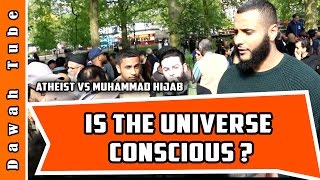 Allah is not in the
 Quran confirms Higgs Boson, how the World and
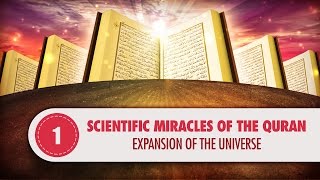 In Quran 51:47, the
 Atoms, Stars &
 God is as provable as Gravity. Observe Law & Order in the
 God is as provable as Gravity. Observe Law & Order in the
 If there was more than one Interdependent God (Trinity), the Dependent
 Evidence for Christians that Jesus is not God, the Creator of the
 Creation of the
 In Islam, God created the