RESURRECTION
In a number of ancient religions, a dying-and-rising god is a deity which dies and resurrects. The death and resurrection of Jesus, an example of resurrection, is the central focus of Christianity. As a religious concept, it is used in two distinct respects: a belief in the resurrection of individual souls that is current and ongoing (Christian idealism, realized eschatology), or else a belief in a singular resurrection of the dead at the end of the world. The resurrection of the dead is a standard eschatological belief in the Abrahamic religions.
Search Result on 'Resurrection' (96 total)
Youtube Videos on Resurrection (44)
 Was the
 Myth of Jesus'
 The case against Jesus'
 Why do we have 4 different Jesus'
 Jesus'
 Jesus'
 Jewish view of the Jesus'
 Why is Jesus'
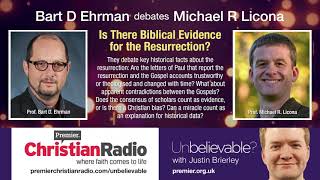 Jesus'
 Risen! Debating the Crucifixion &
 Sun, Moon and Easter to mark Jesus'
 Easter is not about Jesus'
 Existence of Christians before Jesus' Crucifixion and
 The Case Against Jesus'
 Apostle Paul never mentions Jesus' empty tomb. For Paul, Jesus'
 After his
 For Apostle Paul, Jesus' death &
 Early Christians differed on Jesus'
 Apostle Paul preached Jesus' death &
 Jesus'
 Bible differs when Jesus became God's Son: Birth, Baptism,
 Jesus'
 Jesus'
 Christians believed in Jesus'
 In Romans 10:9, Apostle Paul claimed Salvation was through faith in Jesus'
 Belief in Jesus' Crucifixion &
 Christianity needs Jesus'
 In Matthew 27:52, thousands of dead rose from their graves. Is Jesus'
 In Matthew 27:52, thousands of dead rose from their graves. Is Jesus'
 Jesus'
 Was the 'fake' Jesus'
 Jesus'
 Jesus'
 Jesus crucifixion, burial tomb,
 Jesus
 Exact location of Jesus Crucifixion, Death and
 Crucifixion &
 Bart Ehrman Says NO ONE Can Prove The
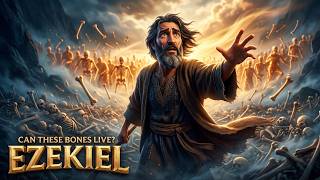 Ezekiel - Visions Of God's Glory And
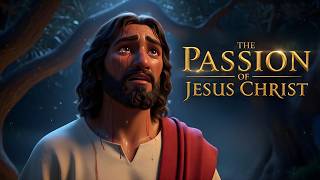 The Passion of Jesus - The Last Supper, Trial, Crucifixion, Death &
FAQ on Resurrection (24)
1.What was the core message of Apostle Paul's teachings?
The core of Paul's theology rested entirely on the absolute necessity of the crucifixion and resurrection of Jesus Christ, arguing in his letters that if righteousness could be achieved through the Mosaic Torah, then Christ died for absolutely nothing. He insisted to his followers that if Christ was not raised from the dead, then all Christian preaching and faith were completely vain and empty.
2.Does the resurrection of Jesus prove he is God?
No. Jesus himself raised people after their death:
1. Jairus' daughter (Mark 5:35-43)
2. Son of a widow at Nain (Luke 11:11-17)
3. Lazarus, who was dead for four days (John 11-1-44)
4. Women received their dead by resurrection (Hebrews 11:35)
5. Elijah raised a widows son from death (I Kings 17:17-24)
Therefore, the resurrection itself would not make Jesus unique or divine even.
3.How did the early Jewish-Christians view Jesus' resurrection?
The earliest Jewish-Christians did not believe that the resurrection meant Jesus was God, but rather that he was a righteous man approved by God through miracles, wonders, and signs. Based on texts like Acts 2:22-24, they maintained the theological view that Jesus had been raised by God, not that he was the Creator himself.
4.Who was Mithras, the Sun-God?
Long before Jesus arrived, the Sun-God Mithras was worshipped.
* Mithras was said to have been a great mediator between God and
humanity
* Mithras was born of a virgin in a cave on December 25th
* Mithras travelled far and wide with 12 disciples
* Mithras died in the service of humanity.
* Mithras rose again from the tomb, and his resurrection was
celebrated with great rejoicing.
* His great festivals were the Winter Solstice and the Vernal
Equinox.
* Mithras was called Saviour and sometimes figures as a lamb.
People were initiated into the cult through the baptism of blood
5.Who was the Attis God?
* Attis was born of a virgin named Nana
* Attis bled to death on a pine tree and his blood renewed the
fertility of the earth; bringing life to humanity
* He rose from the dead and this event is celebrated on 24th
March when Attis' image is attached to a pine-tree
* Attis' image was placed in a tomb, but the tomb was later
found to be empty and so the festival of resurrection was
celebrated
6.What is the Codex Sinaiticus?
The Codex Sinaiticus is one of the most important books in the world. Handwritten well over 1600 years ago, the manuscript contains the Christian Bible in Greek, including the oldest complete copy of the New Testament
It is a fact of Christian history that the earliest Gospels did not record a resurrection of Jesus Christ, and this fact is supported in the Codex Sinaiticus.
Called the Codex Sinaiticus, or Sinai Bible, the oldest known complete Bible available to mankind today, was named after Mt. Sinai, the location of St. Catherines Monastery where it was discovered in 1859 by Dr Constantine Von Tischendorf (1815-1874).
The discovery of the Sinai Bible provided biblical scholars with irrefutable evidence of wilful falsifications in all modern-day Gospels, and a comparison identified a staggering 14,800 later editorial alterations in modern Bibles.
7.What was the message preached by Apostle Paul?
Paul's theology centered on the message that salvation is a gift from God obtained through faith in the death and resurrection of Jesus Christ, rather than through performing the works of the Mosaic law. He argued that Christ's sacrifice fulfilled the ultimate requirements of the law, opening the path to redemption and righteousness for both Jews and Gentiles globally.
8.I am a Christian and I know my sins are forgiven and I am going to Heaven. Is this correct?
Mainstream Christian theology teaches that a believer can have absolute assurance of salvation and the forgiveness of sins through personal faith in the sacrificial death and resurrection of Jesus Christ.
In contrast, Islamic theology emphasizes that definitive assurance of entering Heaven remains unknown during worldly life, as final judgment belongs entirely to God, who balances infinite mercy with a strict accountability of an individual's faith and actions.
9.How important was Jesus' crucifixion to Apostle Paul?
In his surviving epistles, the Apostle Paul demonstrates almost no interest in the day-to-day earthly life, chronological career, or specific moral parables of Jesus of Nazareth. Instead, his extensive theology is completely fixated on the cosmic, atoning meaning of the crucifixion and subsequent resurrection of the figure he addresses as 'the Lord'. Secular historians analyze this focus to illustrate how early Christian theology transformed from an inward-looking Jewish prophetic movement into a universal savior faith.
10.What is the significance of Jesus' resurrection?
The resurrection of Jesus is of crucial importance to Christian doctrine. The Christian religion was founded many years after the death of Jesus based on the beliefs in his resurrection. Put simply, if there was no resurrection story, their would be no Christianity.
The reported resurrection of Jesus serves as the absolute foundational cornerstone of orthodox Christian theology and identity. Historical scholars note that institutional Christianity was organized years after Jesus' death primarily upon the early community's collective belief that he had triumphed over death. Academic consensus agrees that without the preservation and widespread propagation of this resurrection narrative, Christianity as an independent world religion would not exist.
11.Did Jesus' disciple question his resurrection?
Yes, the New Testament canonical records openly document that even members of Jesus' inner circle of chosen followers struggled to accept his physical resurrection. In the Gospel of Matthew (Matthew 28:17), the text captures his final appearance on a mountain in Galilee, explicitly stating that when the disciples saw him, they worshipped him, 'but some doubted'. Modern historians view this candid admission as highly credible, showing that belief in the resurrection was complex even for early eyewitnesses.
12.What happened to Christians who questioned their creed?
Once Catholicism became the official state religion of the Roman Empire in the 4th century, it became highly dangerous to question or deviate from imperial doctrinal definitions. Imperial authorities enforced a strict monopoly on thought by carrying out systematic book burnings, completely destroying the philosophical refutations written by early critics like Celsus and Porphyry. As a result, modern academic knowledge of these ancient counter-arguments is limited to surviving snippets quoted inside the church's own refutation books.
- Porphyry (3rd century philosopher) wrote a 15-volume refutation of Christianity, the gospels and resurrection
- Celsus (2nd century philosopher) rejected the impossible concept of the resurrection
Once Christianity was established as the state religion, it became dangerous, as a subject of Rome, to question the doctrinal version of events.
13.How did Apostle Paul view Jesus' teachings?
According to the source text, Paul's theology effectively relegated Jesus' specific earthly, Jewish ethical teachings to a position of secondary importance, prioritizing instead a cosmic message centered entirely on the crucifixion and resurrection for salvation. Textual analysis demonstrates that Paul's letters rarely quote Jesus' parables or earthly sermons, focusing almost exclusively on his identity as a divine savior figure.
14.What was the main difference between Apostle Paul's religion and the message of Jesus?
The core difference lies in the theological meaning of Jesus' life, with Paul's creed fundamentally focusing on the crucifixion as a necessary cosmic sacrifice to save mankind from sin. While Jesus preached repentance and the ethical arrival of the Kingdom of God, Paul's Damascus vision shifted the entire framework to a savior faith centered on the mechanical necessity of Jesus' violent death and resurrection for salvation.
15.What is the credibility of the Jesus' resurrection?
The resurrection is the most controversial creed issue facing Christianity today. There are numerous explanations for the resurrection, all of which are contested. There is no concensus if Jesus' tomb was found empty or not; whether disciples saw anything or not; even if anything happened or not.
16.What is Ezekiel's vision of the Valley of Dry Bones?
In a famous prophetic vision, God carried Ezekiel to a valley filled with dried human bones and commanded him to prophesy to them. As he spoke, the bones miraculously assembled, flesh covered them, and life was breathed back into them, symbolizing the future spiritual and national resurrection of Israel.
17.How is Prophet Jonah viewed across different faith traditions?
Judaism: His story is read annually on Yom Kippur during the Mincha (afternoon) service to emphasize the power of sincere repentance and divine forgiveness.
Christianity: Jesus references the 'Sign of Jonah' in the New Testament Gospels, comparing Jonah's three days in the whale's belly to His own three days in the tomb before resurrection.
Islam: Revered as Yunus (and Dhu'n-Nun, 'Companion of the Fish') in the Quran, where an entire chapter (Surah Yunus) is named after him, celebrating his heartfelt prayer of repentance.
18.How has Zoroastrianism influenced major world religions?
Historians and theologians note that Zoroastrianism deeply influenced Judaism, Christianity, and Islam. Key concepts such as an ultimate good versus evil (God vs. Satan), heaven and hell, a messianic figure, a final judgment, and bodily resurrection originated or were heavily shaped within Zoroastrian thought.
19.Do Christian Science followers celebrate holidays like Christmas and Easter?
Yes, Christian Scientists fully celebrate traditional Christian holidays like Christmas and Easter, but with a distinct spiritual focus. Rather than emphasizing the material aspects or secular traditions, they use these times to deeply contemplate the spiritual meaning of Christ Jesus’ birth, ministry, crucifixion, and resurrection. They do not hold special communion services with physical bread and wine, preferring silent, internal communion with God.
20.Do Deists believe in the Bible or Jesus?
Deists reject the Bible as the infallible, divinely inspired word of God, viewing it instead as a historical human document filled with mythology. Consequently, they do not accept Jesus Christ as the divine Son of God, nor do they believe in his resurrection or miracles. However, historical and modern Deists often express profound respect for Jesus as a brilliant moral teacher and philosopher whose ethical instructions on love and compassion are highly valuable.
21.Do Jehovah Witness believe in a hell?
No, Jehovah Witnesses do not believe in a literal hell of fiery torment. They teach that the soul is not immortal and ceases to exist at death. When the Bible mentions Sheol or Hades, Jehovah's Witnesses interpret these terms as the common grave of mankind where the dead remain in an unconscious, sleep-like state until the future resurrection.
22.What are the core beliefs of Seventh-day Adventists?
Adventists share core Protestant beliefs such as salvation by grace through faith, the Trinity, and the authority of the Bible. Also, they hold unique doctrines:
* The Second Coming: The literal, audible, and visible return of Jesus Christ in the near future.
* The State of the Dead: The belief that the dead are in an unconscious sleep state until the resurrection, rejecting the concept of an immediately immortal soul or an eternally burning hell.
* The Sanctuary Doctrine: The belief that Jesus entered a phase of 'Investigative Judgment' in the heavenly sanctuary in 1844 to review the lives of humanity.
23.How many I AM statements are in the Gospel of John?
There are exactly seven famous metaphorical 'I AM' statements where Jesus uses a predicate (e.g., Bread of Life, Light of the World, Gate, Good Shepherd, Resurrection and the Life, Way/Truth/Life, and True Vine). However, there are also several 'absolute' or unpredicated uses (such as John 8:58) where 'Ego Eimi' stands alone, totaling over 20 deliberate uses.
24.What are the seven metaphorical I AM / Ego Eimi statements of Jesus?
The seven metaphorical statements are: 1) 'I am the bread of life' (John 6:35); 2) 'I am the light of the world' (John 8:12); 3) 'I am the door/gate' (John 10:7); 4) 'I am the good shepherd' (John 10:11); 5) 'I am the resurrection and the life' (John 11:25); 6) 'I am the way, the truth, and the life' (John 14:6); and 7) 'I am the true vine' (John 15:1).
Scripture Themes on Resurrection (20)
News on Resurrection (5)
Articles on Resurrection (2)
5 Major Theories Explaining the Resurrection of Jesus

20,027 views
|
Resurrection Accounts in Matthew, Mark, Luke, and John

21,093 views
|