MANUSCRIPTS
Search Result on 'Manuscripts' (60 total)
Youtube Videos on Manuscripts (34)
 Do we have the Original
 Can we reconstruct the Original
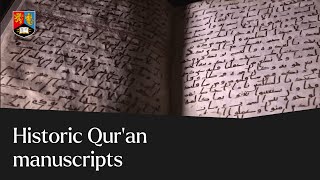 Oldest Quran
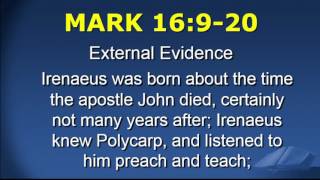 Mark 16:9-20 is missing in the Earliest Bible
 For 300 years, we have worked to restore the original New Testament Bible. With 1,000 un-discovered
 For 300 years, we have worked to restore the original New Testament Bible. With 1,000 un-discovered
 Church Fathers, Historians,
 We do not have the original New Testament
 Bible
 In Revelation 13:18, the oldest
 In Mark 16:9-20, the earliest
 In 1 John 5:7-8, the Trinity verse was added by later scribes. It is missing from the earliest Greek
 In 1707 AD, John Mill reported on 30,000 textual variants in 100 Bible
 Luke Gospel, a 14th century
 5,300 New Testament Greek
 Earliest Bible
 On Luke 17:34, KJV translators added 'Men'. Earliest Greek Bible
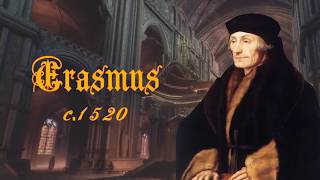 In 1516 AD, Erasmus published first Greek NT Bible using unreliable
 Roman Empire destroyed Christian texts &
 In John 9:38 and John 20:28, the text is different to the early papyrus
 Origen, an Early Church Father, was known to tamper and corrupt Biblical
 Mark's Gospel has longer ending. Depends which
 Jesus' Resurrection (Mark 9-20) is missing in earliest Bible
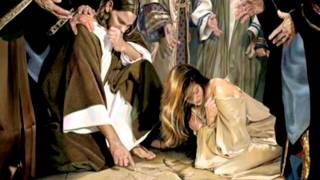 In John 8:1-11, the 'Adulterous Woman' story is missing from earliest Bible
 Ancient Bible
 In Quran 6:110, earliest
 Evolution of Quran (Uthman) in relation to Sanaa
 Early Quran
 Quran - Arabic language,
 'Allah' was added into Early Quran
 'Textual fluidity' in Mashhad Codex (790 AD), Early Quran
 THE QURAN - Exploring Authorship, Chronology, Textual Variants, Transmission,
 Early Quran
 Quran: Revealation, Early
Photo Album on Manuscripts (11)
FAQ on Manuscripts (10)
1.Why should we believe the Quran if it comes 600 years after Jesus?
The Quran may have come 600 years after Jesus, but does that make it false? Jesus came 1600 years after Moses, does that make Jesus false? The underlying or main argument here is the time between one person and another, but as we can see, if time is a problem then Christians should reject the other Prophets and Messengers since they have a greater number of years between them.
The complete manuscripts collections of the New Testament and Old Testament date to the 4th and 5th century, within 100 years of the Qur'an, if Christians want to reject the Qur'an because it is 600 years after Jesus then they must be consistent and also reject the New Testament.
It should be noted that the Church itself did not ordain or make it canon (law) that the New Testament should be scripture until 393 and 397 CE in the Carthaginian councils. With all of these evidences, and centuries between Jesus and the New Testament, then they must reject the New Testament first.
2.What is the Codex Sinaiticus?
The Codex Sinaiticus is one of the most important books in the world. Handwritten well over 1600 years ago, the manuscripts contains the Christian Bible in Greek, including the oldest complete copy of the New Testament
It is a fact of Christian history that the earliest Gospels did not record a resurrection of Jesus Christ, and this fact is supported in the Codex Sinaiticus.
Called the Codex Sinaiticus, or Sinai Bible, the oldest known complete Bible available to mankind today, was named after Mt. Sinai, the location of St. Catherines Monastery where it was discovered in 1859 by Dr Constantine Von Tischendorf (1815-1874).
The discovery of the Sinai Bible provided biblical scholars with irrefutable evidence of wilful falsifications in all modern-day Gospels, and a comparison identified a staggering 14,800 later editorial alterations in modern Bibles.
3.What is the King James Version (KJV) of the New Testament?
The King James Version (KJV) of the New Testament was completed in 1611 by 8 members of the Church of England.
There were (and still are) no original texts to translate. The oldest manuscripts we have were written down hundreds of years after the last Apostle died. There are over 8000 of these old manuscripts, with no two alike.
The King James translators chose to use none of the texts. Instead, they edited previous translations to create the New Testament their king and parliament would approve.
So today, 21st century Christians believe the 'Word of God' is a book edited in the 17th century from 16th century translations of 8000 contradictory copies of 4th century scrolls that claim to copies of lost letters written in the 1st century by unknown authors.
4.How authentic is the Quran historically?
Islamic tradition holds that the text of the Quran has been preserved perfectly since its 7th-century revelation, with oral memorisation and scribal dictation acting as dual tracking methods. Mainstream secular historians and academic textual critics confirm that early surviving fragments (such as the Birmingham Quran manuscripts) demonstrate remarkable textual stability, verifying its core compilation dates to within a few decades of the Prophet Muhammad's lifetime.
5.Is the Old Testament historically authentic?
Mainstream biblical scholarship clarifies that the Old Testament is an anthology of ancient texts compiled, edited, and transmission-copied by diverse authors over more than a millennium. While archaeological discoveries like the Dead Sea Scrolls confirm that the texts have been preserved with high fidelity for over 2,000 years, comparative textual analysis reveals localized spelling updates, minor scribal variations, and stylistic expansions common to ancient Near Eastern manuscripts tradition.
6.Is the New Testament historically authentic?
Textual critics note that the original autographs of the New Testament books no longer exist, leaving thousands of handwritten Greek manuscripts that contain thousands of minor variants, mostly consisting of spelling or word order differences. Despite these historical copy changes, scholars emphasize that modern textual reconstruction methods allow historians to confidently identify the original 1st-century text, ensuring no essential historical narrative or Christian doctrine is left in doubt.
7.What is the oldest manuscripts of the Bible New Testament?
It is of enormous importance in establishing the biblical text. There are three earliest manuscripts of the Bible New Testament:
1. Codex Alexandrinus is one of the earliest and most important manuscripts of the entire Bible in Greek
2. Codex Sinaiticus is one of the most important books in the world and is kept in the British Library. Handwritten well over 1600 years ago, the manuscript contains the Christian Bible in Greek, including the oldest complete copy of the New Testament.
3. Codex Vaticanus in Rome
8.There is only one Bible with one Christian doctrine?
No, textual criticism shows the Bible consists of thousands of varying manuscripts rather than a single, uniform text. These textual differences, such as in Jude 1:5, have historically contributed to diverse theological interpretations within Christianity.
Bible versions translate verses with different explanations. For example, in JUDE 1:5, who saves and then destroys the people of Egypt?
17 Bible versions state the 'Lord' did
7 Bibles state 'Jesus'
1 Bible claims 'God' did
These differences give rise to different Christian theological views.
9.In John 9:38, Jesus is worshipped like a God?
While the verse describes a healed blind man worshipping Jesus, the webpage highlights that this verse is absent from the Codex Sinaiticus, the oldest 4th-century New Testament manuscripts. It appears only as a later marginal addition, suggesting a deliberate insertion by a scribe to support the doctrine of Jesus' divinity .
According to verse 38, a blind man is healed by Jesus, and after seeing Jesus he worships him.
In the Codex Sinaticus, the oldest manuscript of John, dated to 330-years after Jesus, verse 38 is not recorded. The entire verse 38 appears as an additional footnote on the side of the Codex Sinaticus.
Verse 38 was inserted into the bible to prove that Jesus was worshipped and that he acknowledged and allowed the people to worship him.
This proves that the early Jewish-Christians did not interpret Johns gospel in the way we do today. At some point a scribe felt so strongly about the divinity of Jesus that he was compelled to include a footnote into the main text as an actual verse.
10.What language is the earliest New Testament in?
The earliest New Testament manuscripts are in Koine Greek. But there are Aramaic phrases in the Gospels. Therefore, Scholars believe an Aramaic layer lies beneath the written Greek of the New Testament, one which may never have been written down.
If true, the Greek text is itself a translation, and English text would be a translation of a translation, which raises textual inerrancy and corruption issue.
Since every translation is a personal judgement of which word to best use, made at the translators discretion.
Articles on Manuscripts (2)
8 Earliest Quran Manuscripts

517 views
|
Greek New Testament Manuscripts: Fragment & Text Analysis

21,800 views
|