HEAVEN
Heaven is often described as a 'highest place', the holiest place, a paradise, in contrast to Hell or the Underworld or the 'low places' and universally or conditionally accessible by earthly beings according to various standards of divinity, goodness, piety, faith, or other virtues or right beliefs or simply divine will.
FAQ on Heaven (30)
1.Jesus claimed he was a man or son of man
In the New Testament gospels, Jesus frequently refers to himself as the 'Son of Man,' a term with deep messianic significance derived from the Old Testament Book of Daniel. While he explicitly describes his human nature and vulnerabilities as a man, Christian theology maintains that his dual identity encompasses both full humanity and full divinity.
60 Then the high priest stood up before them and asked Jesus, 'Are you not going to answer? What is this testimony that these men are bringing against you?'
61 But Jesus remained silent and gave no answer. Again the high priest asked him, 'Are you the Messiah, the Son of the Blessed One?'
62. 'I am,' said Jesus. 'And you will see the Son of Man sitting at the right hand of the Mighty One and coming on the clouds of heaven.'
Mark 14:60-62
39 They answered and said unto him, Abraham is our father. Jesus saith unto them, If ye were Abraham's children, ye would do the works of Abraham.
40 But now ye seek to kill me, a man that hath told you the truth, which I have heard of God: this did not Abraham.
John 8:39
22 Ye men of Israel, hear these words; Jesus of Nazareth, a man approved of God among you by miracles and wonders and signs, which God did by him in the midst of you, as ye yourselves also know
Acts 2.22
31 because he has set a day when he is going to judge the world with justice[o] through a man whom he has appointed. He has given proof of this to everyone by raising him from the dead.
Act 17.31
For there is one God and one mediator between God and mankind, the man Christ Jesus.
1 Timothy 2:5
2.I am a Christian and I know my sins are forgiven and I am going to Heaven. Is this correct?
Mainstream Christian theology teaches that a believer can have absolute assurance of salvation and the forgiveness of sins through personal faith in the sacrificial death and resurrection of Jesus Christ.
In contrast, Islamic theology emphasizes that definitive assurance of entering Heaven remains unknown during worldly life, as final judgment belongs entirely to God, who balances infinite mercy with a strict accountability of an individual's faith and actions.
3.Was Jesus sent and approved by God?
In both Christian and Islamic traditions, Jesus is explicitly recognized as a messenger sent with direct divine approval and authority. The New Testament documents this through public miracles and voices from heaven (such as at his baptism in Matthew 3:17), while the Quran (Surah Al-Ma'idah 5:110) states that God explicitly strengthened Jesus with the Holy Spirit and authorized his miracles to validate his prophetic mission to Israel.
4.Why do Muslims say non-Muslims will go to Hell?
One of the basic teachings of Islam is that God does not have a favorable opinion of those who knowingly deny His right to be worshiped alone (as He alone is responsible for our creation, our sustenance, and our judgement) and reject any of His messengers.
This is not to say that there will be conveyor belts for each religion, and we just jump on and go to either Heaven or Hell according to what we call ourselves. Each person will be judged based on their understanding of God's message, as well as his or her capability and intentions to follow the path to God as best he or she could.
Muslims are not allowed to say that someone will go to hell just because they call themselves a Christian, Jew, or Polytheist. Muslims are not allowed to speak without knowledge. And each person's destination in the Hereafter is known only to God.
It is interesting to note that some people of different faiths insist on telling everyone who does not go to their specific place of worship that they will certainly be going to Hell (knowledge they do not have). But when they see this Quran verse, they are upset by it.
5.How is Jesus connected to Mount of Olives?
Jesus regularly taught on the mount, gave the Olivet Discourse predicting future events, and prayed in the Garden of Gethsemane at its base before his arrest.
According to Christian tradition and the New Testament (Acts 1:9-12), Jesus ascended into heaven from the peak of the Mount of Olives, where the Chapel of the Ascension stands today.
6.How is Muhammad connected to Dome of the Rock?
The most prominent connection in Islam. Muslims believe the foundation rock inside the shrine marks the spot where Prophet Muhammad ascended to heaven during his miraculous Night Journey (Al-Isra' wal-Mi'raj). Islamic tradition also holds that he led a congregation of earlier prophets in prayer at this location prior to his ascension
7.What was the duel on Mount Carmel between Elijah and the false prophets?
To prove the existence of the one true God, Elijah challenged 450 prophets of Baal to a divine test on Mount Carmel. While the false prophets failed to evoke a response from Baal, Elijah prayed to God, who instantly sent fire down from heaven to consume his sacrifice, proving God's absolute sovereignty.
8.How did Prophet Elijah ascend to heaven?
According to religious traditions, Elijah did not experience a standard physical death on Earth. Instead, around 852 BC, he was taken up to heaven in a whirlwind accompanied by a chariot of fire, ending his earthly ministry after approximately 62 years.
9.What was the relationship between Prophet Elijah and Prophet Elisha?
Elisha was working as a farmer when Elijah anointed him as his student and assistant. Elisha faithfully served Elijah until his master's miraculous ascension to heaven, at which point Elisha inherited a 'double portion' of Elijah's prophetic spirit and authority.
10.How did Prophet Enoch ascend to heaven?
Like Elijah, Enoch did not experience a traditional physical death on Earth. At the age of 365, God raised him directly to heaven to preserve him from worldly corruption, where Prophet Muhammad later met him in the fourth heaven during the Isra and Mi'raj (Night Journey).
11.What is the Book of Enoch?
The Book of Enoch is an ancient apocryphal religious text attributed to Enoch. It details his visions of heaven, angels, divine judgment, and the fallen watchman, though it is not included in the standard canon of the Hebrew Bible or modern Protestant Bibles.
12.What is the Islamic perspective on the crucifixion and ascension of Jesus?
While Christian tradition holds that Jesus was crucified and resurrected, Islamic tradition teaches that God saved Jesus from execution by raising him alive to heaven around 30 AD at age 33, placing his likeness on another man instead.
13.How has Zoroastrianism influenced major world religions?
Historians and theologians note that Zoroastrianism deeply influenced Judaism, Christianity, and Islam. Key concepts such as an ultimate good versus evil (God vs. Satan), heaven and hell, a messianic figure, a final judgment, and bodily resurrection originated or were heavily shaped within Zoroastrian thought.
14.What do Bahais believe about the afterlife, heaven and hell?
Bahais believe that the soul is immortal and continues to progress spiritually through an infinite series of spiritual realms after physical death. In Bahai theology, heaven and hell are not physical places; rather, heaven is a state of spiritual closeness to God, and hell is a state of spiritual remoteness or distance from God.
15.Do Chinese religions believe in God?
Traditional Chinese religion does not center on a single creator God like Western monotheistic faiths, but it recognizes a supreme cosmic authority. This supreme power is referred to either as Tian (Heaven) - an impersonal, guiding cosmic force - or personified as the Jade Emperor (Yuhuang Dadi), who rules over a vast celestial bureaucracy of gods, immortals, and spirits.
16.What are the main deities in Chinese folk religion?
The Chinese religious pantheon is a vast celestial bureaucracy populated by thousands of localized and universal deities. The most widely worshipped include:
* Mazu: The Goddess of the Sea and patron protector of sailors and fishermen.
* Guan Yin: The Bodhisattva of Compassion, revered by both Buddhists and folk practitioners.
* Guan Yu (Guan Di): The God of War, loyalty, and business prosperity.
* The Kitchen God (Zao Jun): A domestic deity who reports a family's behavior to Heaven each year.
17.Do Christian Science followers believe in heaven and hell?
Christian Scientists do not believe that heaven and hell are literal physical places where souls go after death. Instead, they define heaven and hell as present states of consciousness. Heaven is interpreted as a state of harmony, spiritual understanding, and closeness to God. Hell is viewed as a state of mortal mind dominated by fear, sin, ignorance, and the false belief that life is purely material.
18.Is Confucianism a religion or a philosophy?
Confucianism is primarily classified as an ethical and philosophical system rather than an organized religion. It lacks a centralized creator God, a formal priesthood, and a defined theology regarding the afterlife. However, it contains deep spiritual elements such as ancestor veneration, the honoring of sacred rituals, and a profound reverence for a cosmic order known as Tian (Heaven) leading many scholars to view it as a hybrid socio-political religion.
19.What do Deists believe about the afterlife, heaven, and hell?
Because Deism relies strictly on human reason over dogma, there is no universal Deist doctrine regarding the afterlife. Many historical Deists, including Thomas Jefferson, believed that a benevolent Creator would logically provide a spiritual continuation or an immortal soul where virtue is rewarded and vice is corrected. Conversely, many modern Deists lean toward agnosticism regarding the afterlife, asserting that human reason cannot empirically prove what happens after death.
20.Do Muslims believe in Jesus?
Yes, Muslims deeply love and revere Jesus (known in Arabic as Isa). In Islam, Jesus is recognized as one of God's greatest and most critical prophets. The Quran explicitly affirms his virgin birth and credits him with performing numerous miracles, such as healing the sick and raising the dead. However, Islam rejects the Christian doctrine of the Trinity, teaching that Jesus was a purely human prophet rather than the literal Son of God, and that he was not crucified but raised directly to heaven by God.
21.What does Islam teach about the afterlife (Heaven and Hell)?
Islam teaches that earthly life is a temporary testing ground and that every soul will face the Day of Judgment (Yawm al-Qiyamah). Based on their faith and deeds, individuals will be assigned to their eternal destination:
* Jannah (Paradise): A peaceful garden of physical and spiritual bliss, rivers of milk and honey, and absolute proximity to God, reserved for the righteous.
* Jahannam (Hellfire): A place of intense spiritual and physical torment for those who actively rejected truth and committed injustice.
22.Who goes to heaven according to a Jehovah Witness?
According to Jehovah's Witness theology, heavenly life is restricted to a literal number of 144,000 individuals. This group, referred to as the 'anointed', is chosen by God to rule alongside Christ in heaven. The vast majority of faithful Jehovah's Witnesses (known as the 'other sheep' or 'great crowd') do not expect to go to heaven; instead, they believe they will inherit everlasting life on a cleansed, paradise Earth after Armageddon.
23.What do Mormons believe about the afterlife?
Mormonism/LDS theology features a uniquely optimistic view of the afterlife, teaching that almost all of humanity will inherit a kingdom of heavenly glory. They reject the traditional concept of a binary Heaven and Hell, believing instead in three degrees of glory based on a person's choices and acceptance of Christ:
1. The Celestial Kingdom: The highest realm, where those who accept Christ and keep his covenants live eternally with God and their families.
2. The Terrestrial Kingdom: For honorable people who did not fully accept the gospel of Christ.
3. The Telestial Kingdom: For those who chose a life of sin and rejected the gospel.
24.What do Rastas believe about the afterlife?
Unlike traditional Western religions, Rastafari does not focus on a spiritual heaven or hell after death. Rastas believe in the concept of 'Everliving' - the immortality of the physical and spiritual self through continuous generations. True life is meant to be achieved and perfected here on Earth, specifically through repatriation to Zion, rather than waiting for a reward in a distant spirit world.
25.How do Adventists view the afterlife and hell?
Adventists reject the traditional idea of an immediately separate soul going to heaven or hell at death. Instead, they believe in 'soul sleep'. When a person dies, they remain completely unconscious in the grave until Christ's return. Furthermore, they believe in annihilationism rather than eternal torment. They teach that the wicked will be completely consumed and destroyed by fire at the final judgment, ceasing to exist forever, which they view as a reflection of a loving God.
26.Who or what are the Kami in Shinto?
The Kami are the sacred spirits, deities, or spiritual energies worshipped in Shinto. Rather than omnipotent, perfect gods living in a separate heaven, kami are immanent forces found directly within the physical world. They inhabit natural phenomena like mountains, rivers, lightning, and trees, as well as extraordinary human beings, animals, and abstract concepts like fertility. The kami can be both benevolent protectors and volatile forces of nature that must be treated with reverence.
27.Does Shinto believe in an afterlife or salvation?
Shinto is an intensely 'this-world-centric' faith that focuses on maximizing harmony and purity in the present life. It does not feature a well-defined doctrine of heaven, hell, or spiritual salvation. Traditionally, the spirits of the deceased are believed to travel to a shadowy underworld (Yomi) or remain nearby in the natural world. Over time, through proper ancestral rituals, these spirits are believed to merge with the collective ancestral kami to protect their living descendants.
28.Is Sikhism a branch of Hinduism or Islam?
No, Sikhism is an entirely independent, distinct world religion with its own unique scriptures, traditions and philosophy. While it originated in a geographical region dominated by Hinduism and Islam and shares some terminology (like karma or allah as names for God), it fundamentally rejects core aspects of both, such as Hindu idol worship, asceticism, and the caste system, as well as Islamic concepts of exclusive salvation or a binary heaven and hell.
29.Do Wiccans believe in or worship the Devil?
No, Wiccans, Wicca adherents absolutely do not believe in or worship Satan (the Devil). The concept of the Devil is a strictly Abrahamic theological figure (found in Christianity, Islam, and Judaism) representing absolute evil. Because Wicca is a completely non-Abrahamic faith, it does not feature a binary system of pure heaven and absolute hell, nor does it recognize a personified lord of sin.
30.Did Zoroastrianism influence Christianity and Judaism?
Yes, Zoroastrianism heavily influenced the theological architecture of Judaism, Christianity, and Islam. Following the Babylonian Exile, when Cyrus the Great of Persia liberated the Jewish people, core Zoroastrian concepts integrated into second-temple Jewish thought. These foundational ideas include a linear view of time, a final judgment day, a cosmic savior figure, a strict binary heaven and hell, and a personified adversary of God (Satan). Furthermore, the biblical 'Magi' who visited the infant Jesus were explicitly Zoroastrian astrologer-priests.
 In Luke 10:18, I saw Satan fall like lightning from
 In Quran 2:62, will Jews and Christians go to
 Why can't all good people go to
 Apostle Paul said Jesus came from
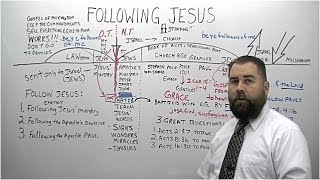 Many follow Jesus, do Works, yet will go to Hellfire. Follow the Risen Jesus, have Faith, obey the Church Age to get
 In Noahide Laws, Jews, Muslims and Christians can get to
 Did Christian Crusaders believe killing Muslims would gain them
 Jesus is Son of the Father in
 In John, Jesus is a God-like diety from
 According to Islam, only Muslims will go to
 Apostle Paul evidences Jesus as a Spiritual, celestial being sent from
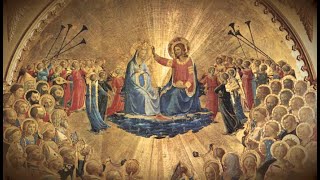 In Council of Ephesus (431 AD), Roman Catholics elevated Mary, to 'Mother of God' aka 'Queen of
 Only Muslims are guaranteed Salvation in
 Dead Heros ascend to
 Only Muslims will go to
 Can Jews & Christians go to
 Only God knows who will go
 Majority of Jews do NOT believe in
 Evolution of
 Hannah - The Prayer That Moved
 Sodom-Gomorrah - When God Rained Fire From
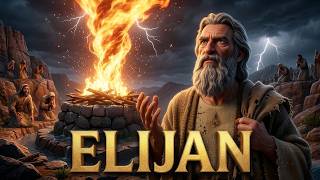 Elijah vs 450 Prophets of Baal - The Day Fire Fell From