EVOLUTION
Evolutionary processes give rise to bio-diversity at every level of biological organisation, including the levels of species, individual organisms, and molecules. In the mid-19th century, Charles Darwin formulated the scientific theory of evolution by natural selection, published in his book On the Origin of Species (1859). Evolution by natural selection is a process first demonstrated by the observation that often, more offspring are produced than can possibly survive.
Youtube Videos on Evolution (46)
 The Islamic Stance on Human
 What does Islam say about the
 Biological
 Theory of
 Is Darwinian
 Theory of
 Islam,
 Are Humans related to Apes? (
 Darwinism is different to

 How are layers of Fossils evidence for
 Do I believe in Darwin
 How Certain is Darwinian
 Is
 In Matthew 28:19, is not a Trinitarian verse. Trinity came through
 Let's discuss
 The Theory of
 Does
 Are Islam and
 Quran confirms
 What do Muslims think of Darwins Theory of
 In Quran 71:17, God makes strong arguments for
 Islamic views on
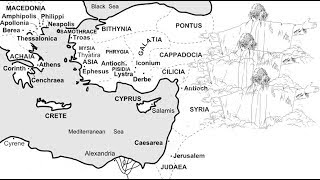
 Do Christians believe in
 In Quran 21:30, God confirms
 Is Religion Compatible With Human
 Historical Origins and
 The
 Human
 Early Man
 The

FAQ on Evolution (8)
1.Do Bahais believe in Jesus, Muhammad, and Buddha?
Yes. Bahais believe in a concept called Progressive Revelation. This teaches that God has sent various divine educators throughout history including Abraham, Krishna, Moses, Zoroaster, Buddha, Jesus, and Muhammad to guide humanity's spiritual evolution. Bahais view these figures as originating from the same divine source, each serving a specific stage in human development.
2.What are the main branches or denominations of Judaism?
The four primary branches of modern Judaism are:
* Orthodox: Observes traditional Jewish law (Halakha) strictly, viewing it as divine and unchanging.
* Conservative: Seeks to conserve Jewish tradition while allowing for historical evolution and adaptation.
* Reform: Views Jewish laws as ethical guidelines rather than binding rules, prioritizing personal choice and autonomy.
* Reconstructionist: Views Judaism as an evolving religious civilization rather than just a religion.
3.Do New Age practitioners believe in an afterlife?
Yes, the New Age view of the afterlife focuses on the continuous evolution of the soul. Most practitioners reject the concept of a final judgment, hell, or eternal damnation. Instead, death is viewed as a peaceful transition where the soul leaves the physical body and returns to a spiritual dimension. There, it reviews its past life before eventually reincarnating into a new body to continue its spiritual growth.
4.How do Wiccans view death and the afterlife?
Wicca teaches that death is a completely natural transition within the eternal cycle of nature, rather than a punishment or a final end. Most Wiccans believe in reincarnation, teaching that the soul journeys after death to a peaceful, temporary spirit realm known as The Summerland. In the Summerland, souls rest, reflect on their past physical lifetime, and rejuvenate before eventually choosing to be reborn into a new physical body to continue their spiritual evolution.
5.What is the theory of the "Seven Rays" for Alice Bailey?
The theory of the Seven Rays is a core metaphysical concept in Bailey's books most notably A Treatise on the Seven Rays. She describes the Seven Rays as seven distinct streams of divine energy or cosmic forces that shape all life, personality types, psychological traits, and nations on Earth. Spiritual evolution involves understanding and balancing these forces within the self.
6.What is "The Plan" in Alice Bailey's teachings?
For Alice Bailey, her cosmology, "The Plan" refers to the divine blueprint directed by the Spiritual Hierarchy of Masters to guide humanity's spiritual evolution and expansion of consciousness. According to her writings, individuals can actively align with this Plan by choosing selfless global service, practicing meditation, and establishing "right human relations".
7.Why are Alice Bailey's writings controversial?
Alice Bailey's work attracts controversy from multiple fronts. Orthodox religious groups frequently label her teachings as heretical or satanic due to her use of occult terminology and her early use of the name "Lucifer". Secular and academic critics have raised concerns regarding passages in her books that touch on racial evolution and the Jewish race, which have been criticized as antisemitic, though her defenders argue these views were symbolic expressions of her era's esoteric frameworks.
8.How does Tareq Alkandari handle sensitive socio-political issues on the channel?
Tareq Alkandari utilizes objective analysis, historical evidence, and critical reasoning to address complex topics, such as the evolution of Arab governance systems (monarchies vs. republics), regional cold wars, and the contemporary challenges facing broken nations in the Middle East.
News on Evolution (4)
Articles on Evolution (2)
God's Covenant: Evolution of Judaism (Old) vs Christianity (New)

2,481 views
|
Jesus: Evolution of His Image in Church Art History

26,250 views
|