DAMASCUS
It is also the country's largest city, following the decline in population of Aleppo due to the battle for the city. In addition to being one of the oldest continuously inhabited cities in the world, Damascus is a major cultural center of the Levant and the Arab world. The city has an estimated population of 1,711,000 as of 2009.
FAQ on Damascus (14)
1.How did Saul become Apostle Paul?
A young man named Saul of Tarsus was bent on murdering all the Christians he could. He was a Jew, a Pharisee (well-versed in the Law of Moses), a man of knowledge, letters and spirit.
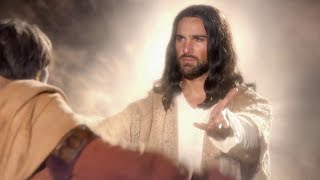
Following a dramatic experience, where according to Saul, Jesus Christ appeared to him on the road to Damascus.
Saul converted to Christianity and now became the beloved apostle, saint, evangelist, theologian, and pastor we call Apostle Paul.
2.How did Apostle Paul become the authority?
Following his dramatic conversion experience on the road to Damascus, Paul claimed direct divine authority to speak on behalf of God and began preaching that salvation depended entirely on believing that Jesus was part of the divine Godhead.
3.What happened after Apostle Paul converted to Christianity?
Following his conversion, Paul did not immediately meet with the original Apostles in Jerusalem; instead, he went to Arabia and returned to Damascus, waiting three years before visiting Peter and James for only fifteen days, avoiding the others.
4.What dramatic experience made Apostle Paul convert to Christianity?
Paul experienced a sudden vision of a blinding light and a voice on the road to Damascus, but the multiple accounts recorded in the Book of Acts contain clear, direct contradictions regarding whether his companions also fell to the ground, and whether they actually heard the voice or saw the light.
5.What did Apostle Paul do after his miraculous conversion to Christianity?
Following his Damascus vision, Paul records in his letters that he did not seek instruction from others, but immediately withdrew into the Arabian desert for a period of reflection. The platform notes that this independence significantly elevated Paul's personal status, allowing him to claim he received his theological mandate directly from a divine revelation rather than from Jesus' twelve original earthly disciples.
6.What was the main difference between Apostle Paul's religion and the message of Jesus?
The core difference lies in the theological meaning of Jesus' life, with Paul's creed fundamentally focusing on the crucifixion as a necessary cosmic sacrifice to save mankind from sin. While Jesus preached repentance and the ethical arrival of the Kingdom of God, Paul's Damascus vision shifted the entire framework to a savior faith centered on the mechanical necessity of Jesus' violent death and resurrection for salvation.
7.What did Apostle Paul do after he converted to Christianity, on the road to Damascus?
Following his conversion 1-3 years after the crucifixion, Paul vanished from the public eye before re-emerging 13 years later (47-60 CE) as a missionary to the Gentiles.
8.How is Muhammad connected to the Damascus Gate in Jerusalem?
In Islamic tradition, during the Isra and Miraj (the Night Journey), Prophet Muhammad traveled from Mecca to the Al-Aqsa Mosque compound in Jerusalem. While the exact gate through which he entered the city walls is not named in the Quran, regional traditions often associate the northern access from the road to Damascus with the historical approaches into the Old City.
9.How is Jesus connected to the Damascus Gate in Jerusalem?
Jesus traveled repeatedly between Galilee (in the north) and Jerusalem. The route from Galilee enters Jerusalem directly through the northern side of the city wall, where the Damascus Gate stands today.
10.How is John connected to the Damascus Gate in Jerusalem?
Coming from the Judean wilderness and the Jordan River region to the north and east, traditional accounts place his movements and preaching in the areas surrounding Jerusalem's northern and eastern entry points.
11.How is Apostle Paul connected to the Damascus Gate in Jerusalem?
Though recognized as an apostle in Christianity rather than a prophet, Paul famously traveled from Jerusalem north toward Damascus to persecute early Christians before his conversion on the road to Damascus. The Damascus Gate gets its modern English name precisely because it marks the starting point of the ancient highway leading out of Jerusalem toward Damascus.
12.How is John connected to the Umayyad Mosque in Damascus, Syria?
The primary tradition holds that his head was recovered after his beheading and interred in Damascus. The Shrine of Saint John the Baptist inside the mosque's main prayer hall is believed to house his head and is venerated by both Muslims and Christians.
13.Where is Prophet Abel believed to be buried?
According to local Levant traditions, Abel's tomb is located at the Nabi Habil Mosque, situated in the Zabadani Valley near Damascus, Syria.
14.Was Prophet Elisha involved in any Battles or Wars?
The Siege of Samaria (approx. 850 BC) - Elisha vs Aram-Damascus - Unknown deaths
Photo Album on Damascus (8)
Youtube Videos on Damascus (4)
 How Saul became Apostle Paul on the Road to
 After Apostle Paul's Jesus' vision in
 Apostle Paul saw a 'White Light' on road to
 Local girl shows me destroyed
Topics with Damascus (2)

News on Damascus (2)
| 1. Aram, of ancient Arameans, a Semitic people from todays Damascus, Syria | Ancient Mesopotamia |
| 2. 3000-year glass head is one Bible mystery. Is this King Hazael of Aram-Damascus? | Washington Post |
Scripture Themes on Damascus (2)
| 1. Jesus confronts and converts Saul on the road to Damascus | Acts 9:1-19 |
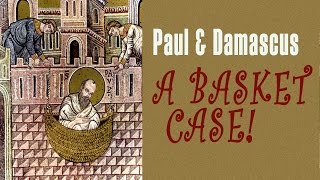
| 2. Saul boldly preaches Jesus in Damascus and escapes in a basket | Acts 9:19-31 |
Photos on Damascus (2)

Articles on Damascus (1)
Apostle Paul Discovered Christianity on the Road to Damascus, Syria

19,583 views
|