RELIGIONS
There is no scholarly consensus over what precisely constitutes a religion. It is an essentially contested concept. Different religions may or may not contain various elements ranging from the divine, sacredness, faith, and a supernatural being or beings. The origin of religious belief is an open question, with possible explanations including awareness of individual death, a sense of community, and dreams. Religions have sacred histories, narratives, and mythologies, preserved in oral traditions, sacred texts, symbols, and holy places, that may attempt to explain the origin of life, the universe, and other phenomena. Religious practice may include rituals, sermons, commemoration or veneration (of deities or saints), sacrifices, festivals, feasts, trances, initiations, matrimonial and funerary services, meditation, prayer, music, art, dance, or public service.
There are an estimated 10,000 distinct religions worldwide, though nearly all of them have regionally based, relatively small followings. Four religions: Christianity, Islam, Hinduism, and Buddhism account for over 77% of the world's population, and 92% of the world either follows one of those four religions or identifies as non-religious, meaning that the vast majority of remaining religions account for only 8% of the population combined.
FAQ on Religions (36)
1.How did Islam come into the world?
The religion of Islam in its present form came to us through the teachings of the Prophet Muhammad, who lived and preached in Arabia some 1400 years ago (born 571 CE, died 632 CE). However, Muhammad taught that he was not bringing a completely new religion into the world, because the basic principles of Islam had also been preached by all the great founders of the various religions before him. Islam, therefore, did not begin with Muhammad, but was also the religion of Abraham, Moses, Jesus and every ancient prophet.
2.Other religions also teach the existence of God. Is there any difference between their teaching and the Islamic concept of God?
The first major difference is that Islam teaches the absolute one-ness of God, with Whom no one can share in Divinity. No idol or heavenly object, nor any religious or spiritual teacher, can possess some Divine power or attribute.
Secondly, Islam teaches the highest conception of God, and does not accept any limitation to His power and knowledge, while other religions set limits to Him. For instance, Islam rejects the Hindu belief that God is not the Creator of matter and souls but exists alongside them. It also rejects the Christian doctrine that God is unable to forgive sins unless He punishes someone, and so He sent His 'son' to suffer the punishment for the sins of all humanity. Moreover, a son is needed to take the place of the father when the father dies, and clearly this cannot apply if God is perfect.
Thirdly, Islam refutes the idea that any human being, however great, was a 'manifestation' of God on earth, or a Divine incarnate.
3.What is a Scripture?
To the various Prophets that God sent for people's guidance, He revealed His teachings. The Prophets made this revelation public, and their followers wrote it down, and passed it to subsequent generations. This is how we come to have the 'scriptures' or 'holy books' of various religions today.
4.Who was Prophet Job across major world religions?
Job (Ayyub) is universally recognized across Judaism, Christianity, and Islam as a righteous, wealthy patriarch and prophet renowned for his unwavering faith, righteousness, and legendary patience (Sabr) during extreme suffering.
5.Who was Prophet Joseph across major world religions?
Joseph (Yusuf) was a major patriarch, prophet, and Chief Minister of Egypt. Celebrated for his exceptional integrity, beauty, and gift of dream interpretation, he survived extreme betrayal by his brothers to become a powerful ruler who saved the Near East from a devastating famine.
6.Who was Mary, the mother of Jesus, across world religions?
Mary (Maryam) is globally revered as one of the most holy, righteous, and prominent women in history. In Christianity, she is honored as the Virgin Mary, Theotokos (Bearer of God), and the mother of Jesus.
In Islam, she is revered as Maryam, the mother of Prophet Isa, and the only woman mentioned by name in the Quran.
7.Who was Prophet Moses across world religions?
Moses (Musa) is one of the most pivotal prophets, lawgivers, and religious leaders in history.
In Judaism, he is the supreme prophet who led the Israelites out of Egyptian slavery and received the Torah on Mount Sinai.
In Christianity, he is a major Old Testament prophet and foreshadower of Christ.
In Islam, he is revered as Musa, an Ulul 'Azm (resolute) messenger and the most frequently mentioned prophet in the Quran.
8.Who was Prophet Noah across major world religions?
Noah (Nuh) is a major prophet and patriarch in Judaism, Christianity, and Islam. Recognized as the 'Second Father of Humanity', he was sent during an era of deep spiritual corruption to call people back to monotheism and righteousness.
9.Who was Prophet Solomon across world religions?
Solomon (known as Sulaiman in Islam) was a legendary king of Israel, prophet, and the son of King David. Celebrated for his unprecedented wisdom, immense wealth, and vast kingdom, he is honored across Judaism, Christianity, and Islam as a uniquely empowered monarch and divine messenger.
10.What is Zoroastrianism and who is its founder?
Zoroastrianism is one of the world's oldest continuously practiced monotheistic religions. It was founded in ancient Iran (Persia) by the prophet Zarathustra (known in Greek as Zoroaster) during the late second or early first millennium BCE.
11.How has Zoroastrianism influenced major world religions?
Historians and theologians note that Zoroastrianism deeply influenced Judaism, Christianity, and Islam. Key concepts such as an ultimate good versus evil (God vs. Satan), heaven and hell, a messianic figure, a final judgment, and bodily resurrection originated or were heavily shaped within Zoroastrian thought.
12.Is Zoroastrianism a dying religion?
Zoroastrianism is one of the smallest major religions, with an estimated global population numbering around 100,000 to 140,000 adherents. Due to low birth rates, emigration, and traditional restrictions on proselytizing or accepting converts, the community faces ongoing concerns regarding cultural preservation and population decline.
13.What is the Bahai Faith?
The Bahai Faith is a independent, monotheistic global religion founded in 19th-century Persia (modern-day Iran). It is centered on the belief in one God who progressively reveals His will to humanity through successive divine messengers. It is recognized as one of the most geographically widespread religions in the world.
14.What are the main principles of the Bahai Faith?
The core principles focus on global unity and social progress. Main tenets include:
* The oneness of God and the fundamental unity of all world religions.
* The oneness of humanity, leading to the elimination of all forms of prejudice (racial, national, religious).
* The equality of men and women.
* The harmony between science and religion.
* The independent investigation of truth.
15.What do Cao Dai followers believe?
Cao Dai followers believe that all religions originate from the same divine truth and have been revealed by God at different times throughout human history. The core theology centers on a single Supreme Being (Cao Dai) who created the universe. Practitioners believe in reincarnation, karma, and the ultimate liberation of the soul, emphasizing virtues like vegetarianism, non-violence, ancestor worship, and self-cultivation to break the cycle of rebirth.
16.What religions are combined in Cao Dai?
Cao Dai is fundamentally a syncretic faith that harmonizes three core Eastern traditions with prominent Western religions. It explicitly integrates the ethics of Confucianism, the occult practices and philosophies of Taoism, and the karma and rebirth doctrines of Buddhism (collectively known as the Tam Giao, or Three Religions). Furthermore, it incorporates elements of Christianity, Islam, and spiritualist mediumship.
17.Do Chinese religions believe in God?
Traditional Chinese religion does not center on a single creator God like Western monotheistic faiths, but it recognizes a supreme cosmic authority. This supreme power is referred to either as Tian (Heaven) - an impersonal, guiding cosmic force - or personified as the Jade Emperor (Yuhuang Dadi), who rules over a vast celestial bureaucracy of gods, immortals, and spirits.
18.What are Ancient Greek religions called?
The ancient Greek religion does not have a formal historical name because it was deeply woven into daily civic life rather than treated as a separate organization. Today, historians and modern practitioners refer to it as Hellenic Polytheism, Hellenism, or Ancient Greek Religion. It was a decentralized, polytheistic system focused on the worship of a vast pantheon of deities who controlled natural forces and human destiny.
19.Did the ancient Greek religions have a holy book like the Bible?
No, ancient Greek religion had no single holy book, sacred scripture, or centralized religious dogma. Instead of relying on a strict text like the Bible or Quran, their religious beliefs, cosmologies and moral frameworks were preserved through oral traditions, epic poetry - most notably Homer's Iliad and Odyssey and Hesiod's Theogony and local civic rituals.
20.Who are the 12 Olympian gods in the Ancient Greek religions?
The 12 Olympians were the principal deities of the Greek pantheon who were believed to reside in a palace atop Mount Olympus. They include:
1. Zeus: King of the gods and ruler of the sky.
2. Hera: Queen of the gods and goddess of marriage.
3. Poseidon: God of the sea, earthquakes, and horses.
4. Demeter: Goddess of agriculture and the harvest.
5. Athena: Goddess of wisdom, crafts, and strategic warfare.
6. Apollo: God of music, poetry, prophecy, and healing.
7. Artemis: Goddess of the hunt and wild animals.
8. Ares: God of war.
9. Aphrodite: Goddess of love and beauty.
10. Hephaestus: God of fire, metalworking, and sculpture.
11. Hermes: The messenger god and protector of travelers.
12. Dionysus (or Hestia): God of wine, theater, and ritual ecstasy.
21.What do ancient Greek religions believe happens after death?
The Greeks believed that upon death, a person's disembodied soul was guided by Hermes and ferried by Charon across the River Styx into the Underworld (ruled by the god Hades). Based on a soul's mortal deeds, they were assigned to one of three realms:
* Tartarus: A deep abyss used as a dungeon of torment for the wicked.
* The Asphodel Meadows: A gray, neutral realm where ordinary souls drifted without pain or joy.
* Elysium (Elysian Fields): A paradise reserved for heroes, demigods and the exceptionally virtuous.
22.How did ancient Greek religions worship their gods?
Greek worship was deeply ritualistic and took place outdoors at open altars situated directly outside their stone temples. The primary acts of devotion included animal sacrifices (such as cattle, sheep, or goats), libations (pouring out wine, milk, or honey), offering agricultural goods, dedicating votive statues, and hosting massive civic festivals and athletic competitions like the Olympic Games.
23.Who was the Oracle of Delphi in Ancient Greek Religions?
The Oracle of Delphi (located at the Sanctuary of Apollo) was the most prestigious religious site in the ancient world. It was home to a high priestess known as the Pythia, who went into a trance to channel prophetic answers directly from the god Apollo. Kings, generals, and citizens traveled from across the Mediterranean to consult the Oracle on major political decisions, colonial expeditions, and personal dilemmas.
24.What were the Mystery Greek Religions?
Mystery Religions were secret, optional cults that ran parallel to public civic worship, requiring an explicit initiation ritual. Unlike the bleak public view of the underworld, mystery cults such as the Eleusinian Mysteries or the Dionysian Mysteries offered initiates secret spiritual knowledge, a personal relationship with a deity, and the promise of a blessed, joyful afterlife.
25.Did the ancient Greek religions have priests and churches?
The Greeks had temples, but they did not function like modern churches; they were strictly viewed as the physical homes of the god's cult statue, with the public prohibited from entering the inner sanctuary. Furthermore, Greece lacked a centralized, powerful priestly caste. Priests and priestesses were local civic officials chosen by the city-state or inherited by lineage; their primary job was simply to maintain the temple and correctly execute ritual sacrifices.
26.Do the Ancient Greek religions exist today?
Yes, the ancient religion has experienced a modern revival known as Hellenic Polytheism or Hellenic Neopaganism. Contemporary practitioners work to reconstruct the ancient ethics, values, and ritual structures of the classical era. In 2017, the Greek Government officially recognized Hellenism as a known, legal religion in modern Greece, allowing practitioners to establish formal places of worship and legally perform religious weddings.
27.Who is the founder of Hinduism?
Unlike most other major world religions, Hinduism has no single founder, specific prophet, or definitive historical starting point. Instead, it evolved organically over millennia on the Indian subcontinent through the convergence of diverse cultures, indigenous belief systems, and the ancient spiritual insights of seers (rishis) whose teachings were compiled in the sacred Vedic texts.
28.Who is the founder of Jainism?
Unlike many world religions, Jainism does not have a single historical founder. Instead, Jains believe their eternal truth is periodically revived by a lineage of 24 enlightened spiritual teachers known as Tirthankaras (Ford-makers). The 24th and final Tirthankara of the current cosmic era was Vardhamana Mahavira (599-527 BCE), a contemporary of Gautama Buddha who formalized and revitalized the philosophy into the organized practice known today.
29.What do Jews believe about the afterlife?
Judaism is primarily focused on this world and actions taken in the present life (Olam Ha-Zeh). While there is a firm belief in an afterlife where the soul returns to God (Olam Ha-Ba), the Hebrew Bible contains very few specific descriptions of it. There is no definitive concept of a permanent physical hell like in other Western religions.
30.What is the difference between New Age and traditional religions?
The primary difference lies in the source of spiritual authority and the concept of God:
* Traditional Religions: Typically rely on external authority, such as sacred texts (the Bible, Quran, Torah), historic dogmas, and a distinct, external Creator God.
* New Age Spirituality: Rejects external dogma and emphasizes personal, subjective experience. 'God' is not viewed as a separate being judging humanity, but as an immanent cosmic energy or higher consciousness found within oneself.
31.Why is the New Age movement criticized?
The movement faces criticism from both secular and religious perspectives:
* From mainstream religions: It is often criticized for being overly self-centered ('me-centered spirituality') and for watering down sacred, centuries-old traditions.
* From the scientific community: Many New Age healing practices, such as crystal therapy or quantum manifestation, are labeled as pseudoscience because they lack empirical evidence.
* Cultural appropriation: Indigenous and Eastern communities frequently critique the commercialization and distortion of their traditional practices (like shamanism or yoga) by Western New Age markets.
32.What do Rastas believe about the afterlife?
Unlike traditional Western religions, Rastafari does not focus on a spiritual heaven or hell after death. Rastas believe in the concept of 'Everliving' - the immortality of the physical and spiritual self through continuous generations. True life is meant to be achieved and perfected here on Earth, specifically through repatriation to Zion, rather than waiting for a reward in a distant spirit world.
33.What is Shinto and how did it start?
Shinto is the indigenous spirituality and folk religion of Japan. Unlike many major world religions, Shinto has no single founder, no official sacred scriptures, and no rigid dogmatic creed. It originated in prehistoric Japan as a decentralized mix of nature worship, animism, and ancestral veneration. Over centuries, these localized traditions gradually coalesced into a unified cultural and spiritual system that remains deeply woven into the fabric of Japanese identity.
34.What are the Principles and Sources of Unitarian Universalism?
Rather than a fixed doctrine, UU congregations are guided by Shared Values (formerly framed as the Seven Principles) and draw wisdom from Six Sources. The values emphasize the inherent worth and dignity of every person, justice, equity, and a commitment to dismantling racism and systemic oppression. The Sources include:
1. Direct experiences of transcending mystery and wonder.
2. Words and deeds of prophetic people throughout history.
3. Wisdom from the world's major religions (including Judaism, Christianity, Islam, and Eastern faiths).
4. Humanist teachings that counsel us to heed the guidance of reason and science.
5. Earth-centered traditions that celebrate the sacred circle of life.
35.Is Wicca a recognized religion?
Yes, Wicca is officially recognized as a legitimate religion in many countries, including the United States, Canada, and the United Kingdom. In the U.S the military officially recognizes Wicca as a faith, allowing the Wiccan emblem (the pentacle) on government headstones. It is protected under religious freedom laws, giving practitioners the same legal rights, tax exemptions, and protections as mainstream world religions.
36.What is Zoroastrianism and how did it start?
Zoroastrianism is one of the world's oldest continuously practiced monotheistic religions, originating in ancient Persia (modern-day Iran) roughly 3,500 years ago. It was founded by the prophet Zoroaster (Zarathustra), who rejected the existing polytheistic Iranian religions after receiving a series of divine visions. He taught that there is only one supreme, benevolent creator god, radically shaping the development of future Abrahamic religions like Judaism, Christianity, and Islam.
Youtube Videos on Religions (16)
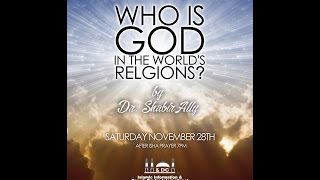 Who is God in the World
 Bridging World
 Reverend Moon, of the Unification Movement tried to bring all
 Reverend Moon, of the Unification Movement tried to bring all
 The Quran in Abrahamic
 Mithraism, like other Ancient Near East pagan
 Muslims must respect other
 All
 Belief in One God is what sets Islam apart from other
 Palestine-Israel War - The solution is all
 'The World is full of Opinions. So I'm retired from ALL
 All
 Why
 Did Governments Create the World's Major
 Astrotheology Connection to
News on Religions (6)
Topics with Religions (2)
Articles on Religions (2)
7 Noahide Laws: For Gentiles, Non-Jews & People of Other Religions

23,425 views
|
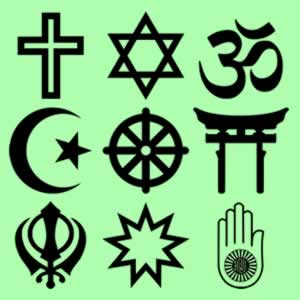
40 Major World Religions: Beliefs, Practices & History
174 views
|