Search Result on 'Christian' (619 total)
Youtube Videos on Christian (375)
 Many Christians Converted To Islam After Ex-
 Can You Be Gay (Homosexual) and
 Can You Be Gay (Homosexual) and
 Orthodox Christianity vs
 How the Bible Led Me to Islam: The Story of a Former
 Former
 Story of Moses - Animated
 What is the
 Was America founded as a
 From Youth
 From Youth
 From Youth
 Allah in the Bible - Moon God myth crushed by Arab
 Why
 Who do you follow: Apostle Paul or Jesus and the Disciples? -
 What is the Jewish view on the
 In 1 Corinthians 15:45, God speaks about the
 Early Christians were Unitarian, not Trinitarians? - Adnan vs
 Epic Muslim
 Is the
 How contradictions in the
 Is belief in the
 How Apostle Paul invented
 Mystery of the
 How the Jewish Yeshua became the
 Jesus: Jew,
 How the Early
 Jesus came to the Israelites, not Gentiles - Gary vs
 Is the
 Panilla, a
 If Apostle Paul's lost letters are ever found, the
 In 1 John 5:8, the Church corrupted the New Testament to support the
 In Mark 13:32, did Jesus know everything? - Hashim vs
 Can the Bible be trusted? - Hamza Myatt vs
 Do Christians understand God's Mercy? - Hassan vs
 History of the
 What makes Jesus God? - Rizwan vs
 In Genesis 3:8, Jesus and the Father walk in the Garden - Hashim vs
 Islam makes sense to me - Rizwan vs
 Did Jesus have an Umbilical cord? - Shabir Yusuf vs Ex-Hindu
 Was Jesus Crucified and killed? - Shabir Yusuf vs
 Judaism acknowledges the
 The Quran on the
 Jesus the Jew -
 Rome and Constantine -
 The devil gave the Quran to Muhammad - Hamza Myatt vs
 5 Reasons why the
 How Apostle Paul Invented
 God should love the Rapist for their Rape - Mansur Ahmad vs
 Militant Agnostic, but you don't know? - Hamza Myatt vs
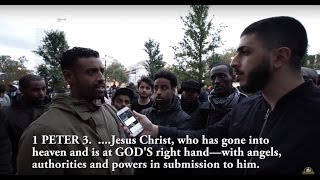 Is Christianity a Polytheist religion? - Ali Dawah vs
 You're not a Monotheist! - Muhammad Tawheed vs
 No Compulsion in Religion. Yet Islam spread by the Sword? - Mansur Ahmad vs
 New Testament: Early
 Pagan Origins of Jesus and
 Is the
 How the
 Can You Be Gay (Homosexual) and
 In
 Tell Me! Jesus was a
 Srebrenica 1995 - What happened to the 8,000 Muslim men taken prisoner by
 Who Are The
 The Bible should not be read by every
 False Church doctrine and False
 Jesus is not the biological Son of Jesus! - Mansur Ahmad vs
 Jesus is not the biological Son of Jesus! - Mansur Ahmad vs
 How to Read the Bible and Still Be a
 Is the Father in the Trinity, One Fully God? - Mansur Ahmad vs
 In Mark 10:17, Jesus speaks about Salvation - Paul William vs
 Jesus' mission was Incomplete, Imperfect and Corrupted - Mansur Ahmad vs
 Ricardo, a Catholic
 What does 'Word' mean in the Oxford Dictionary? - Mansur Ahmad vs
 Ask the right question. Why is Jesus God? - Muhammad Tawheed vs
 Slavery in the
 Jesus Created Adam. So who make Manz them dead? - Younis vs Elderly
 Can God have a Higher God? - Hashim vs African
 In Isaiah 9:6, Messiah worshiped as Almighty God - Hashim vs
 In Mark 1:5, John the Baptist baptized in the River Jordan. Were Sins forgiven? - Paul William vs
 In Psalm 137:9, it is injustice to kill the Baby and innocent Donkey - Muslim vs
 Paganism in Today's
 Codex Sinaiticus is an invaluable pillar of
 A
 Can God become the Devil? - Rizwan vs
 Can God become the Devil? - Rizwan vs
 Date your Earliest Bible fragment? - Hashim vs
 In John 14:16, Jesus said no Prophet would come after him - Sadat Anwar vs
 The different 'Textual Variants' in the Quran - Mansur Ahmad vs
 The
 The End of the
 The Torah or Moses' writings did not exist for 1000 years - Mansur Ahmad vs
 In John 10:30, Jesus clearly claims to be God - Shabir Yusuf vs
 In John 10:30, Jesus clearly claims to be God - Shabir Yusuf vs
 Apostle Paul said Jesus came from Heaven to redeem Man. Paul said so! - Muhammad Lamin vs
 Grooming Gangs of America: Human trafficking by White
 Grooming Gangs of America: Human trafficking by White
 The Jewish God is Angry and the
 Josephus' Writings (37-100 AD) on Jesus Christ were a
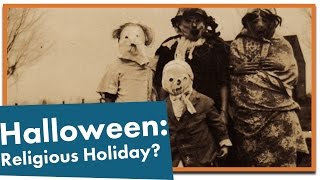 Halloween: Pagan or
 In 2 Timothy 3:16, Apostle Paul refers to the Old Testament as Word of God - Hamza Myatt vs
 In John 10:30, Jesus clearly said he was God - Mansur Ahmad vs European
 In Isaiah 7:14, Jesus was called Immanuel. Who called Jesus by this name in the New Testament? - Hashim vs
 Jesus is part of One Godhead which has One God - Mansur Ahmad vs
 Jesus is part of One Godhead which has One God - Mansur Ahmad vs
 Jesus is part of One Godhead which has One God - Mansur Ahmad vs
 Can you insult a Sikh Guru? Force your Wife to lift her Leg and bark like a Dog, in a
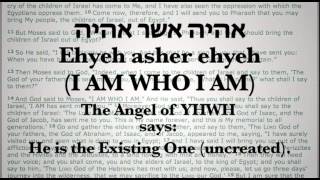
 In Exodus 3:14 and Exodus 3:15, I Am is a name of Yahweh - Hashim vs
 Can you eat McDonalds when Jesus forbid eating non-Kosher meat? - Hamza Myatt, Abbas London, Imran London vs
 Orthodox
 Rome:
 In John 5:30, what God can do nothing by himself? - Hashim vs Indian
 Did Jesus have a Composite God? - Hashim vs
 Can a 100% God have a God? - Hashim vs
 Early Heresies and
 George Bush and Tony Blair prayed to Jesus, before the Iraq Invasion (Mansfield) - Abbas London vs
 In Quran 3:140, Allah seems unsure of His Judgement. How is He All-Knowing? - Mansur vs
 I am a Sinner. Logically, if I was a Martyr and donated my body to Science, God would still hate me - Hamza Myatt & Mansur Ahmad vs
 The Crucifixion of Truth by Tony Bushby (Reading) -
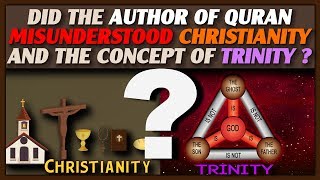 In Quran 5:116, the
 In 117 AD, Basilides of Basilidian preached Simon of Cyrene was Crucified, not Jesus - Paul William vs
 In 117 AD, Basilides of Basilidian preached Simon of Cyrene was Crucified, not Jesus - Paul William vs
 Jesus was Sinless. Muhammad the Sinner prayed for Forgiveness. - Hashim vs
 Jesus was Sinless. Muhammad the Sinner prayed for Forgiveness. - Hashim vs
 In Psalm 110:1, the LORD sat with Lord, and this supports the
 Not a single
 In 1 Timothy 2:5, Apostle Paul wrote Jesus was a Mediator between Man and God - Paul William vs Irish
 Muslims are commanded to believe in Jesus in corrupt Scripture - Paul William vs
 In Mark 6:52 and Matthew 14:33, Jesus walked on water. Did the disciples turn away or turn towards Jesus - Paul William vs
 The
 History of the Bible and Judeo-

 You cannot be a Gay
 In Matthew 24:36, No one knows the Hour, except the Father - Shamsi vs
 In John 20:17, I am going to my Father and Your Father. So, the Father is my Biological Father - Mansur Ahmad vs
 In John 20:17, I am going to my Father and Your Father. So, the Father is my Biological Father - Mansur Ahmad vs
 In Jonah 1:12, Jonah was not forced to jump into the Sea. But, Muhammad was forced to read - Ali Dawah vs
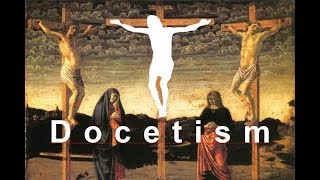 Docetism, an early
 Roots of
 In Psalm 2:12, 'kiss the son' is a forgery in the
 For 10th time, why do you believe Bible is word of God? - Hamza Myatt vs
 God can create a God like Himself. I'm a Super
 Donald Trump is an Intuitive Genius - Hamza Myatt vs Chinese
 Acts 8:37 is not in NIV Bible - Hamza Myatt vs
 Trinity is not in the Bible. So, did Jesus have a God? - Hashim vs
 I believe Jesus is immortal and God. Do not ask me about Trinity - Hashim vs
 Echad and Yachid mean Singular 'One', not Compound 'One'.
 At the Crucifixion, all disciples forsake Jesus. Which eyewitness accounts is the Bible based on? - Hashim vs
 At the Crucifixion, all disciples forsake Jesus. Which eyewitness accounts is the Bible based on? - Hashim vs
 Jesus asked, Why do you call me a Good God? - Paul William vs
 Did

 Matthew copied Mark. Therefore, Matthew believed Mark's Gospel was imperfect and not God's word - Zakir Hussain vs
 I am not a Slave. I am an Atheist,
 Authorship of the Bible is a Mystery - Anwar London vs
 Church Fathers, Historians, Manuscripts and blind Faith prove Jesus spoke in John 1:1 - Anwar London vs
 UK is a
 The Pre-
 Why did Jesus God pray to Father God? - Mansur Ahmad vs
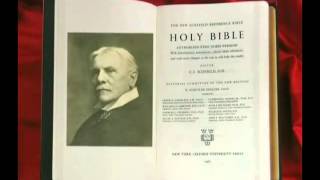

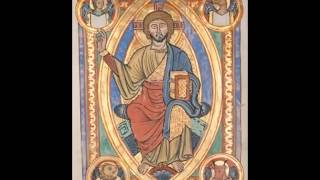 Christmas, 25th December was Ancient Pagan festival. Church absorbed it into
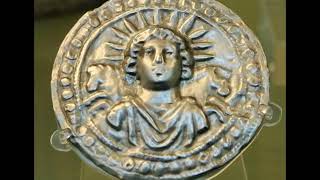 The
 In 601 AD, Pope Gregory I adopted Pagan customs and festivals into
 In the
 After Jesus' Crucifixion, 50 years of
 Most Early

 Rise of the
 Early Christians held conflicting and opposing beliefs on
 Early Christians freely disagreed on
 Can Monkey God, Banana God or Palestinian God keep a secret from Father God? - Mansur Ahmad vs
 Can Monkey God, Banana God or Palestinian God keep a secret from Father God? - Mansur Ahmad vs
 Can Monkey God, Banana God or Palestinian God keep a secret from Father God? - Mansur Ahmad vs
 Father, Jesus, Holy Spirit. They are all Yahweh - Hashim vs
 Early
 Apostle Paul's Letters (Epistles) have had an explosive effect on the
 In Ezekiel 18:21, the bible says God will forgive the Sinner if he repents - Shamsi vs
 In Ezekiel 18:21, the bible says God will forgive the Sinner if he repents - Shamsi vs
 Pagans gave up their Gods, and turned to the one
 Church was slow to translate the
 Since 1952, 26 different English translations of the
 I am Educated. Hold your Bible and read my verse - Chacha Usman vs
 Father is a greater God than Jesus. Surely, that's two Gods? - Mansur Ahmad vs
 Jesus died and raised on 3rd day. Yet, Jonah was alive in the Whale? - Paul William vs
 Jesus died and raised on 3rd day. Yet, Jonah was alive in the Whale? - Paul William vs
 Early
 Before the
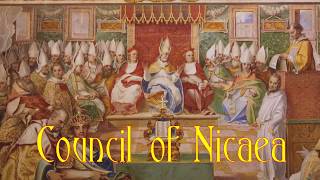 In 325 AD, Council of Nicaea decided the final
 6 of 13 Apostle Paul's Letters were forgeries, written for 'Greater
 In 367 AD, Athanasius decided the 27 books to include in the
 Roman Empire destroyed
 John did not write John. Who wrote John's Gospel? - Anwar London vs
 Greek: Iesous is not a translation of Hebrew: Yeshua, claimed Josephus, Eusebius, Clement & Cyril. We simply do NOT know Jesus' real name - Mansur Ahmad vs
 In Genesis 18, a Jewish version of the '
 The Injeel is not the
 The
 In Isaiah 53, Jesus the 'Suffering Servant' is God? Check the Oxford dictionary - Hamza Myatt vs
 Prove the Church Fathers believed in Trinity - Hamza Saudi vs
 John 1:1 proves Jesus' divinity, and John 1:14 shows Jesus' humanity - Muslim vs
 God told Moses His name was YahaWaha, YahaWahoo or Eehau? - Mansur Ahmad vs
 In John 17:21, Jesus is One with God. Jesus is One with disciples. Are they all Gods? - Mansur Ahmad vs
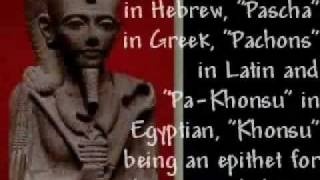 Easter: A
 In John 20:28, doubting Thomas called Jesus God and worshiped him - Shamsi vs
 Pope Francis is a Catholic Prophet. Was he a Bouncer who beat up people? - Chacha Usman vs
 The
 Jesus is 100% God and 100% Man. This is 100%
 In 1 Corinthians 11:3, the head of Jesus Christ is God. I met him yesterday - Hashim vs
 In 1 Corinthians 11:3, the head of Jesus Christ is God. I met him yesterday - Hashim vs
 In 1 Corinthians 11:3, the head of Jesus Christ is God. I met him yesterday - Hashim vs
 For Jews, God cannot take on Human form (i.e.
 In 1 Corinthians 11, the
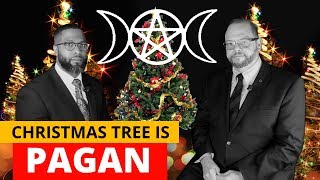 In Jeremiah 10:3, the Christmas Tree is symbolic of the
 The
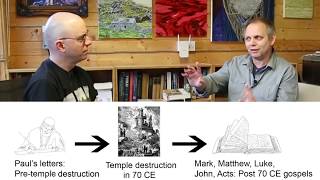 Conflicting ancient
 Quran quotes from Bible? - John Fontain vs
 In 1807, 'The Slave Bible' published by
 In John 20:17, Jesus spoke of 'My God'. So, Jesus had a God? - Hashim vs
 In Matthew 4:8, Satan took Jesus (God) willingly up the high mountain; contrary to James 1:13 - Adnan Rashid vs
 Share the
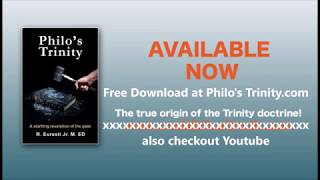 Philo's Trinity: Evidence how Philo of Alexandria designed the
 Opus Dei: The Influential Ultra-Conservative
 In Quran 65:4, Ibn Kathir and Ibn Abbas allow for Child Marriage in Islam - Esa vs
 The Homosexual/LGBT agenda in
 In Isaiah 9:6, did Jesus' mother call him Immanuel? - Mansur Ahmad vs
 Church of England abandoned me by adopting Secular, Anti-
 I believe in Muhammad. Am I still a Catholic
 In Quran 5:47, God tells Christians to judge by 'corrupted' Gospels? - Mohammed Hijab vs
 In Quran 5:47, God tells Christians to judge by 'corrupted' Gospels? - Mohammed Hijab vs
 God 'spoke' to me in the Quran and confirmed my
 King James bible (KJV) translators 'twisted' the Jewish Hebrew verse to make it more '
 Codex Sinaiticus: Oldest Surviving
 In Numbers 31:18, Child Marriage was encouraged. Today, Christianity is conditioned by liberal, secular values - Adnan Rashid vs
 Mark's Gospel has longer ending. Depends which manuscripts you use? - Mansur Ahmad vs
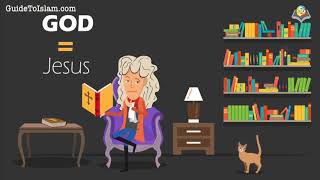 Newton's Law: Isaac Newton, a follower of Arius was a
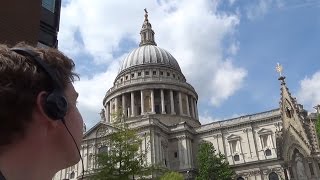 Historically, St Paul's Cathedral was not a
 In Mark 1:5, John The Baptist preached forgiveness of Sins through Repentence alone, not Human sacrifice. Muslims Agree - Paul William vs
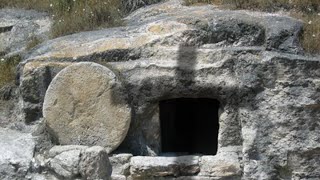
 In John 21:24, the anonymous Author writes in the 'third person' and fails to identify himself - Anwar London vs
 Peter Abelard (1142 AD) tried and failed to explain the
 The
 In Matthew 2:23 and Zechariah 3:8, the branch (Nazar) translates to Jesus the Nazarene? - Sadat Anwar vs
 In Matthew 2:23 and Zechariah 3:8, the branch (Nazar) translates to Jesus the Nazarene? - Sadat Anwar vs
 Many
 Did Jesus speak of His Own or in name of Yahweh? - Mansur Ahmad vs
 Why are Muslims obsessed with Killing Cabbages? - Hashim vs
 In 1646, the Church canonized 66 books of the
 Did God tell Abraham He had a Son? - Mansur Ahmad vs
 Did Jesus know the Hour? - Mansur Ahmad vs
 In Quran 4:171, Jesus is 'Word from Allah', not the Son of God - Hashim vs
 In Quran 39:4, if God wanted a Son... yet He chose not to? - Mohammed Hijab vs
 Islam raises all Prophets to Jesus' status AND lowers the
 Only God forgives Sin. But I forgive you for your silly Question - Paul William vs
 Catholic Church challanges Transgender ideology as attack on
 In John 12:49, Jesus the Servant was sent by Allaha, the Master - Hashim vs
 Jesus Died because Paul said so in his 'Hebrews' Letter 100 times. It must be true! - Shamsi vs
 Does the
 In Matthew 27:52, thousands of dead rose from their graves. Is Jesus' resurrection a greater miracle? - Mansur Ahmad vs
 In Matthew 27:52, thousands of dead rose from their graves. Is Jesus' resurrection a greater miracle? - Mansur Ahmad vs
 Does Salvation depend on belief in Trinity? -
 Do Christians believe in an historical Adam and Eve? -
 33,000
 Which
 Can both Catholics and Protestants be True? -
 Did Man inherit Original Sin from Adam or God? -
 Do Christians believe in Evolution? -
 Catholic tradition decided the New Testament Bible, not Protestants -
 Role of Israel in the
 Role of Israel in the
 Homosexuality cause of conflict in
 Homosexuality cause of conflict in
 LGBT/Transgender In UK Schools: 97 children refered to Gender-Identity Clinics in 2009. By 2018, 2,519 refered - Roger Kiska (
 Why I left the Church of England - Peter Sanlon (
 Emperor Constantine merged Pagan and
 Gnostic 'secret knowledge' of God features in Pagan,
 The
 Polycarp, Justin Martyr or Irenaeus never believed in the
 In John 17:3, Jesus claims The Father as only true God. Was he lying? - Hashim vs
 Philo of Alexandria (20 BC-50 AD) wrote of 'Two Powers' with One God; creating
 On Jewish Law, Jesus was Liberal, but Apostle Paul was a Heretic who abandoned the Law - Nazam44 vs
 Valentinus (100-160 AD, Gnostic
 Jesus, the
 Secular
 Lucian, wrote in 165 AD, 130-years after Jesus repeating established
 Dead Sea Scrolls oppose modern 'Love Your Enemy'
 Christianity fails to accept Jewish-
 Apostle Paul said Women should cover their Hair - Uthman Ibn Farooq vs
 In Acts 21:21, Apostle Paul accused of Apostasy, follows Jewish Law. But encourages others to abandon the same Law - Hamza Saudi vs

 Jesus overcame Death to Free us from Sin. Why do people still Sin? - Shamsi vs
 Jesus prayed to Al (The) + Elaha (God/Elohim) in the Aramaic language - Adnan Rashid vs
 Do Mosaic, Judeo-
 Every
 Early Christians believed Jesus was a Man. Rome destroyed this History - Hamza Saudi vs
 Early Christians believed Jesus was a Man. Rome destroyed this History - Hamza Saudi vs
 Early Christians believed Jesus was a Man. Rome destroyed this History - Hamza Saudi vs
 Muhammad bathed with 6-year old Aisha? Show the evidence! - Adnan Rashid vs
 Gospel authors shifted their Stories to fit their
 In Acts 15:29, the first Ecumenical Council ever set early
 Kedar, Paran, Ishmael, Arabia. What's your problem with Muhammad? - Adnan Rashid vs
 Kedar, Paran, Ishmael, Arabia. What's your problem with Muhammad? - Adnan Rashid vs
 Kedar, Paran, Ishmael, Arabia. What's your problem with Muhammad? - Adnan Rashid vs
 Former 40-Year
 English Man realizes he is a Muslim, not a
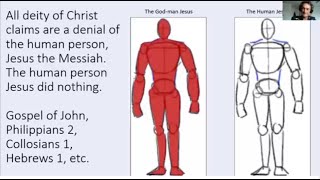 Historical development of
 Can you be a Transgender
 Church threatened by Gay Pride and LGBT community for their unwavering
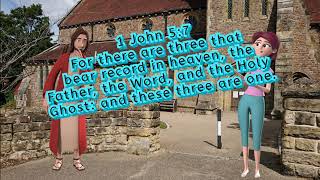 In 1 John 5:7, the
 Why
 Children Of Winter in a Post-
 Equality Act HR5 2021, the KJV

 Where was Jesus when we were Slaves?, asks ex-
 Christianity, a collection of Pre-
 Why did the Kabah store
 Why
 Jews, God's Chosen People are better than Christians? | Jew vs
 UK de-criminalises Abortion up until Birth |
 Historical Origins and Evolution of Rabbinic Judaism |
 A.I will control the text in Islamic,
 Israel killed
 Gaza,

 Apostle Paul rejected Jesus Jewish Teachings | Hamza Saudi vs
 Israel uses their Islam 'broom' against the
 Israel recruits
 1,000 U.S Pastors recruited by Israel to preach
 Standing Where David beat Goliath | DLM
 American
 Are Muslims or Christians taking over? | Smile2Jannah vs
 Israel targets
 Is This Where Jesus Walked? | DLM
 The Judeo-
 Israel attacks
 Islamic Challenge to
 Conversion Therapy ban denies help to vulnerable |
 Growing Influence of Islam in our Churches and Prisons |
 The Evolution of God from Yahweh to
 Where did Islam come from? Why are we here? | Muslim Lantern vs
 'God made me GAY on purpose',
 Where did Jesus claim to be GOD in The Bible? | Muslim Lantern vs
 Why do
 Can

 Was Samuel just a Prophet? |
 Micaiah - The Prophet who destroyed King Ahab |
 Who is Jesus The Messiah in Islam? How this differs from Jewish and
 Jesus would not recognize The
 Father-Son-Holy Spirit: Can GOD be identified in The Bible and
 Are
 'From Love For Israel to Hate', journey of Ex-Zionist
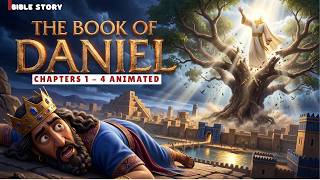 Book Of Daniel Animated (2026) |
 Qana Village, Lebanon - Israeli Massacre caused Muslim &
FAQ on Christian (111)
1.Do Muslims believe in The Bible?
Muslims believe that God originally revealed the Gospel to Jesus as a source of guidance, light, and instruction.
2.What is the Bible?
The Bible is the holy book of the Christian faith.
3.Other religions also teach the existence of God. Is there any difference between their teaching and the Islamic concept of God?
The first major difference is that Islam teaches the absolute one-ness of God, with Whom no one can share in Divinity. No idol or heavenly object, nor any religious or spiritual teacher, can possess some Divine power or attribute.
Secondly, Islam teaches the highest conception of God, and does not accept any limitation to His power and knowledge, while other religions set limits to Him. For instance, Islam rejects the Hindu belief that God is not the Creator of matter and souls but exists alongside them. It also rejects the Christian doctrine that God is unable to forgive sins unless He punishes someone, and so He sent His 'son' to suffer the punishment for the sins of all humanity. Moreover, a son is needed to take the place of the father when the father dies, and clearly this cannot apply if God is perfect.
Thirdly, Islam refutes the idea that any human being, however great, was a 'manifestation' of God on earth, or a Divine incarnate.
4.Is Allah the Moon-God?
No, this is a entirely false claim that originally originated from a Christian pastor named Robert Morey; Islam explicitly refutes this idea, maintaining that Allah is the all-powerful, unique Creator of the entire universe and not a pagan entity or a creation like the moon.
5.Can Muslims eat swine and pork?
No, the consumption of pork, bacon, and ham is strictly prohibited by divine law, matching historical restrictions found in the Old Testament followed by Jews and certain Christian groups.
6.What happened at the Council of Nicaea in 325 AD?
During this historic imperial gathering, the various conflicting Christian factions were officially ordered by Roman authority to accept the unified Athanasian Creed. This political and religious decree formally established the doctrine affirming that Jesus Christ, as the Son of God, was simultaneously 100% human Man and 100% divine God.
7.What did early Jewish-Christians think of Apostle Paul?
Between 55 and 66 CE, early Jewish-Christian leaders in Jerusalem rejected Paul's teachings and challenged his authority, leading to a significant decline in his popularity.
8.When was Christianity born?
After 70 CE, Christianity became a new movement. Western Christian
writings after 70 CE are a product of that transformation. Christianity became a Mithras-type saviour cult whose hero was not a myth but a real man.
Anyone who questioned Jesus' divinity were viewed as ignorant and inferior, including early Jewish-Christians, Jews, Jesus' closest friends and even family.
9.Did Saul kill the early Jewish-Christians?
Before his conversion, Saul actively sought to imprison and execute early Jewish-Christians. Saul believed that he was serving God by finding Christians, throwing them into prison, and even executing them.
2 And devout men carried Stephen to his burial, and made great lamentation over him.
3 As for Saul, he made havock of the church, entering into every house, and haling men and women committed them to prison.
[Acts 8:1-3]
10.What was the core message of Apostle Paul's teachings?
The core of Paul's theology rested entirely on the absolute necessity of the crucifixion and resurrection of Jesus Christ, arguing in his letters that if righteousness could be achieved through the Mosaic Torah, then Christ died for absolutely nothing. He insisted to his followers that if Christ was not raised from the dead, then all Christian preaching and faith were completely vain and empty.
11.What did Apostle Paul think of his fellow Gospel writers?
Paul was deeply unyielding toward alternative views of the faith, explicitly writing in Galatians 1:9 that if any person preached a gospel different from the one his followers had received, that individual should be completely accursed. This indicates he aggressively dismissed the legalistic, Jewish-Christian perspectives held by original disciples like James and Peter.
12.How did Matthew (Gospel) support Apostle Pauline Christian doctrine?
The Gospel of Matthew, aimed at law-abiding Jewish-Christians, did not support Pauline doctrine and actually stood in direct opposition to it.
13.Why was Apostle Paul superior to other Apostles?
Paul insisted that his gospel possessed a superior divine authority because he claimed it was delivered directly by the risen Lord Jesus, rather than the earthly, historical Jesus whom the twelve disciples had trained under in-person; this supposed heavenly origin entitled him to act entirely independently of the original Jewish-Christian beliefs and modify their doctrine.
14.Where is Pauline Christianity today?
Pauline Christianity constitutes the majority of modern Christianity, though some scholars question if the early, law-observant Jewish-Christian church was more accurate than Paul's later, Trinitarian-focused theology.
15.How was Christianity made appealing to pagan idol worshippers?
Pope Gregory I (540-604 CE), a famous Christian leader encouraged accomodating pagan customs and beliefs. So if pagans worshipped a Tree or Spirit abiding in it, rather than shun the pagan worship, he urged priests to somehow link the worship to Jesus Christ, and allow them to continue their Tree or pagan idol worship.
16.Should Christians celebrate Jesus on 25th December?
Any believing Christian who is aware of the historical, pagan 'Sun-Baal' connections of this date should entirely avoid celebrating Christmas. It points to certain denominations, such as Jehovah Witnesses, who explicitly refuse to participate in the celebration for this very reason.
17.Does the Christian Trinity come from pagan Triadic dieties?
Yes, the core teachings of modern Trinitarian Christian churches do not come from Jesus, but were pagan three-in-one concepts that existed long before his arrival and were later adopted by Christians to make their doctrine highly appealing to idol-worshipping masses.
18.Where did Easter come from?
The name and traditions of Easter, including the bunny and eggs, are rooted in ancient, pre-Christian spring festivals honoring the goddess Oeastra (Astarte/Ishtar), with eggs representing new life in various ancient cultures.
19.Why are their so many similarities between Jesus Christ and all the pagan Gods?
It is probable the reason why the Church priests burned and destroyed the earlier records of pagan Gods was to hide the evidence for the real origins of their own Christian mythology.
20.What is the Codex Sinaiticus?
The Codex Sinaiticus is one of the most important books in the world. Handwritten well over 1600 years ago, the manuscripts contains the Christian Bible in Greek, including the oldest complete copy of the New Testament
It is a fact of Christian history that the earliest Gospels did not record a resurrection of Jesus Christ, and this fact is supported in the Codex Sinaiticus.
Called the Codex Sinaiticus, or Sinai Bible, the oldest known complete Bible available to mankind today, was named after Mt. Sinai, the location of St. Catherines Monastery where it was discovered in 1859 by Dr Constantine Von Tischendorf (1815-1874).
The discovery of the Sinai Bible provided biblical scholars with irrefutable evidence of wilful falsifications in all modern-day Gospels, and a comparison identified a staggering 14,800 later editorial alterations in modern Bibles.
21.In Islam, can God become a Man?
No, God is perfect and He is all powerful. Both Muslims and Christians accept that this is true. The ontological term for this is that God is 'immutable' or absolute in His perfect nature. In the Christian faith, God's incarnation is seen as a manifestation of His power, whereas in Islam it is seen as the changing of God's nature. If God is perfect, and God's nature changes, how can He be perfect?
It would have to mean that He was not perfect before and is now perfect, which would not make Him God or that He was perfect before and is now not perfect, which would also not
make Him God.
If God is perfect, then there is no need for Him to become anything, so that He can grant us salvation. Since He's already perfect, loving and merciful, why would He need to change His nature to a weaker, human nature to grant us salvation? That's a contradiction. Therefore, when the Christian argues that God changing His nature makes Him perfect, this is not the case. They need to think before they speak.
If God is perfect and you add something to His nature, does that mean He was not perfect before? Which means He was not a God before this addition?
If God is perfect and you add something to His nature, that would mean He lacked something before and thus could not be a God.
22.How did Christianity start?
The road from Jesus to the Christian religion that finally emerged in the fourth century, with its myth of Jesus as the son of God solidly in place, is a very long and twisty path.
Christianity was not born of an immaculate conception. It was the product of myriad moments of intellectual labor and negotiated social agreements by the people investing in the experiment.
This discovery has been difficult for many Christians to accept. That is because the traditional picture of Christian beginnings starts with a Jesus who knows in advance what is required of him and his disciples in order to establish the Christian religion.
23.Jesus is the son of God as he had no Father?
In orthodox Christian theology, the title 'Son of God' refers to Jesus' unique, eternal divine nature within the Trinity rather than a biological process. While his birth without a human father is considered a miracle, his divinity is rooted in being the pre-existent Word of God.
24.In John 1:1. Jesus claims to be God?
The Gospel of John opens with the phrase, 'In the beginning was the Word, and the Word was with God, and the Word was God,' which mainstream Christian theology interprets as an explicit declaration of Jesus' pre-existent divinity. Historical and linguistic scholars note that the 'Word' (Logos) represents the divine reason and creative power of God becoming flesh in the person of Jesus.
In the beginning was the Word, and the Word was with God, and the Word was God.
In actual fact, the 'Word' is God's wisdom and action and not as a separate deity, as is presented in the Old Testament:
And the word of the Lord was Joseph's helper (Gen.39:2)
And Moses brought the people to meet the word of the Lord (Ex. 19:17)
And the word of the Lord accepted the face of Job (Job 42:9)
And the word of the Lord shall laugh them to scorn (Ps. 2:4)
They believed in the name of His word (Ps. 106:12)
25.What does the Quran say about Jews and Christians?
The Quran recognizes Jews and Christians as 'People of the Book' (Ahl al-Kitab), acknowledging that they were given previous divine revelations through prophets like Moses and Jesus. While it praises the righteous among them, it also critiques their theological developments, specifically rejecting the Christian doctrine of the Trinity and the divine sonship of Jesus.
26.Do Christians worship Mary?
Mainstream Christian denominations, including Catholics and Eastern Orthodox, explicitly state that they do not worship Mary as a goddess, as worship (latria) belongs strictly to God alone. Instead, they give her a high level of honor and veneration (hyperdulia) as the Mother of God (Theotokos), asking her to intercede and pray to God on their behalf.
Some Christians do worship Mary. Even today, the abstract of that is found in churches where she is called upon as THEOTOKOS in Greek which means 'Mother of God', God bearer, one who give birth to God.
There was an idea that Mary was not the mother of God and counsels tried to change her name from THEOTOKOS to CHRISTOTOKOS, or from 'Mother of God' to 'Mother of Christ' - but this change was rejected.
27.Who were the authors of the books in the Bible?
Mainstream biblical scholarship notes that the four New Testament gospels were originally written anonymously and did not carry their authors' signatures inside the early texts. Christian tradition later attributed them to Matthew, Mark, Luke, and John based on early church history and theological consensus.
28.Jesus claimed he was a man or son of man
In the New Testament gospels, Jesus frequently refers to himself as the 'Son of Man,' a term with deep messianic significance derived from the Old Testament Book of Daniel. While he explicitly describes his human nature and vulnerabilities as a man, Christian theology maintains that his dual identity encompasses both full humanity and full divinity.
60 Then the high priest stood up before them and asked Jesus, 'Are you not going to answer? What is this testimony that these men are bringing against you?'
61 But Jesus remained silent and gave no answer. Again the high priest asked him, 'Are you the Messiah, the Son of the Blessed One?'
62. 'I am,' said Jesus. 'And you will see the Son of Man sitting at the right hand of the Mighty One and coming on the clouds of heaven.'
Mark 14:60-62
39 They answered and said unto him, Abraham is our father. Jesus saith unto them, If ye were Abraham's children, ye would do the works of Abraham.
40 But now ye seek to kill me, a man that hath told you the truth, which I have heard of God: this did not Abraham.
John 8:39
22 Ye men of Israel, hear these words; Jesus of Nazareth, a man approved of God among you by miracles and wonders and signs, which God did by him in the midst of you, as ye yourselves also know
Acts 2.22
31 because he has set a day when he is going to judge the world with justice[o] through a man whom he has appointed. He has given proof of this to everyone by raising him from the dead.
Act 17.31
For there is one God and one mediator between God and mankind, the man Christ Jesus.
1 Timothy 2:5
29.Why did Apostle Paul choose to preach to the Gentiles?
Historically, Paul's mission shifted toward non-Jewish Gentiles because the majority of mainstream Jewish communities rejected his messianic doctrines regarding Jesus. In orthodox Christian history, this decision is also framed as a direct divine calling following his conversion, leading him to systematically establish multi-ethnic churches across the Roman Empire.
Paul was a Pharisee and would have been familiar with the knowledge, teachings, methodologies and mistakes of his Pharasaic brothers. Thus, he would have been the best person to preach to them his interpretation of soteriology. Yet he chose not to; leaving this task to James, Peter and the rest, dubbing them as the 'super apostles'.
The real reason why Paul preached to the gentiles is because they were ignorant. They did not know the Torah. They did not possess intimate knowledge of Judaism, its scripture or its doctrine.
Therefore Paul was not presenting his new religion to his own brethren because they would be able to debunk him. Due to this, logically speaking, he preached to those who would find his new faith appealing.
The gentiles would not argue about Christ's deity, or about the new doctrine of salvation, but the Jews would and vehemently so. Thus the path of least resistance is among the gentiles who would eventually see him as an authoritative figure, as opposed to the Jews who would see him as a heretic and shame him.
Yet with the gentiles, he is able to avoid these problems and ascend to power and authority very quickly.
30.And this spake he not of himself: but being high priest that year, he prophesied that Jesus should die for that nation;
John 11:51
In John 11:49-51, the high priest Caiaphas states that it is expedient for 'one man should die for the people,' a political calculation meant to prevent Roman intervention from destroying the nation. Christian theology views this statement as an ironic, divinely guided prophecy that accurately predicted Jesus' execution as a substitutionary sacrifice for the salvation of the world.
31.What did Apostle Paul achieve by his Christian conversion?
By adopting faith in Jesus, Paul effectively expanded a localized, strictly observant Jewish movement into a highly adaptable, universal religion accessible to all cultures. He utilized his unique background as both a learned Pharisee and a Roman citizen to systematically build an expansive network of legal-exempt Christian communities across multiple Roman provinces.
32.Did Jesus actually want to die on the Cross?
The New Testament gospels depict Jesus as fully aware of his impending execution, yet experiencing intense human agony and praying to avoid it during his night in the Garden of Gethsemane. However, mainstream Christian theology emphasizes that he willingly surrendered to the crucifixion out of absolute obedience to the divine plan for humanity's redemption.
33.Jesus saith unto him, I am the way, the truth, and the life: no man cometh unto the Father, but by me [John 14:6] - An Explanation
In mainstream Christian theology, this declaration is interpreted as an absolute statement of Jesus’ unique and exclusive role as the divine mediator through whom humanity achieves spiritual reconciliation with God the Father. Non-Christian perspectives and comparative religion commentators frequently analyze the passage to understand how early church doctrines gradually distinguished the Christian faith from traditional, law-observant Judaism.
34.Is the New Testament historically authentic?
Textual critics note that the original autographs of the New Testament books no longer exist, leaving thousands of handwritten Greek manuscripts that contain thousands of minor variants, mostly consisting of spelling or word order differences. Despite these historical copy changes, scholars emphasize that modern textual reconstruction methods allow historians to confidently identify the original 1st-century text, ensuring no essential historical narrative or Christian doctrine is left in doubt.
35.I am a Christian and I know my sins are forgiven and I am going to Heaven. Is this correct?
Mainstream Christian theology teaches that a believer can have absolute assurance of salvation and the forgiveness of sins through personal faith in the sacrificial death and resurrection of Jesus Christ.
In contrast, Islamic theology emphasizes that definitive assurance of entering Heaven remains unknown during worldly life, as final judgment belongs entirely to God, who balances infinite mercy with a strict accountability of an individual's faith and actions.
36.Did people worship Jesus?
In mainstream Christian theology, these instances such as in Matthew 14:33 or John 9:38 are highlighted as evidence of Jesus' divine status, whereas Islamic theology views Jesus as a human prophet and interprets similar ancient historical passages as acts of deep respect rather than divine adoration.
37.Did Jesus wipe away our sins?
In mainstream Christian theology, Jesus' death on the cross serves as the ultimate, substitutionary atonement that completely forgives and wipes away the sins of all who believe. Conversely, Islamic theology states that no individual can bear the spiritual burden or sins of another, maintaining that forgiveness is granted directly by God through personal, sincere repentance.
38.How did the Christian Trinity come about?
The New Testament gospels show Jesus selecting twelve apostles to lead his immediate followers, but he did not lay down a detailed blueprint for a complex institutional priesthood or administrative hierarchy. The elaborate structures, clerical offices, and distinct liturgical traditions seen in modern churches developed gradually over centuries as the movement adapted to Roman institutional frameworks.
The concept of a dual human and divine nature in the person of Jesus is known as the Hypostatic Union, an essential component of modern Trinitarianism.
Yet it was not until the Council of Chalcedon that we see the emergence of an official doctrine of the Trinity in a form that is recognisable with what Christian Trinitarians believe in today. This took place in the fifth century, over 400 years after Jesus!
The evangelical theologian and Professor Wayne A. Grudem sums this up as follows:
'A precise understanding of how full deity and full humanity' argues Grudem, 'could be combined together in one person was formulated only gradually in the church and did not reach the final form until the Chalcedonian Definition in 451 AD.
39.Is Muhammad mentioned in the Bible?
Mainstream Christian and Jewish biblical scholars state that Muhammad is not mentioned anywhere in the Hebrew Bible or New Testament, as these texts predate Islam by centuries. However, Islamic theology interprets specific biblical passages as prophecies of his coming, most notably Deuteronomy 18:18 (a prophet 'from among their brothers') and the promised 'Comforter' (Paracletos) in John 14-16, which Muslims believe refers to Muhammad rather than the Holy Spirit.
40.Did Jesus claim to be equal to God?
This is the central point of departure between mainstream Christianity and Islam. Mainstream Christian theology states that Jesus affirmed his equality with God through declarations of essential unity (such as 'I and the Father are one' in John 10:30) and by accepting divine worship. Conversely, secular scholars and Islamic theologians highlight passages showing functional subordination, such as John 14:28 ('the Father is greater than I'), arguing that the historical Jesus viewed himself as an exalted messenger entirely dependent on God's authority.
41.Whose words did Jesus speak?
In the New Testament gospels, Jesus is portrayed as a faithful messenger who consistently states that his teachings are not his own invention but are delivered directly from God the Father. Mainstream Christian theology interprets this as a reflection of the perfect relational unity within the Trinity, where the Son acts in absolute harmony with the Father. From an Islamic perspective, this text is viewed as clear scriptural evidence that Jesus functioned as a human prophet and messenger (Rasul), receiving and delivering verbal divine revelation (Injeel).
42.Are Jesus and God the same?
Mainstream Christian orthodoxy, solidified at the Council of Nicaea, dictates that Jesus and God are the same in essence (homoousios), defining Jesus as the pre-existent Word of God who took on human flesh. However, secular historians and Unitarian theologians point out that the Synoptic Gospels make explicit distinctions between Jesus and God, such as when Jesus prays to the Father or denies knowing the timing of the Final Hour. Islamic theology strictly rejects any identification of Jesus with God, viewing the claim as a violation of absolute monotheism (Tawhid).
43.Was Jesus sent and approved by God?
In both Christian and Islamic traditions, Jesus is explicitly recognized as a messenger sent with direct divine approval and authority. The New Testament documents this through public miracles and voices from heaven (such as at his baptism in Matthew 3:17), while the Quran (Surah Al-Ma'idah 5:110) states that God explicitly strengthened Jesus with the Holy Spirit and authorized his miracles to validate his prophetic mission to Israel.
44.Was Jesus a servant of God?
Yes, both early Christian writings, which use the Greek term pais (Acts 3:13), and the Quran (Surah Maryam 19:30) explicitly describe Jesus as the servant of God, reinforcing his prophetic role.
45.Was Jesus and God one?
In mainstream Christian theology, Jesus and God the Father are understood to be 'one' in divine essence, nature, and purpose, a concept rooted in John 10:30 ('I and my Father are one'). This does not mean they are the same person, but rather two distinct Persons co-existing within the single unified triune Godhead. From a historical-critical and Islamic perspective, this statement is interpreted differently; it is viewed as a functional unity of mission and divine authority meaning Jesus acted in perfect alignment with God's will as His prophet, rather than an assertion of shared divine identity.
46.Does the Bible support the Trinity (3-in-1) God concept?
Mainstream biblical scholars and historians state that the doctrine of the Trinity is never explicitly laid out as a formal dogma anywhere in the text of the Old or New Testaments. While the New Testament contains early triadic formulas (such as the baptismal command in Matthew 28:19 and apostolic blessings in 2 Corinthians 13:14), the actual systemic theology of a three-in-one God was developed later by early church fathers over centuries. Christian theologians argue that the doctrine is implicitly woven throughout the scriptures, while critics and Islamic scholars point to the lack of clear, direct scriptural definitions to argue it was a later modification of strict biblical monotheism.
47.If God is so powerful, can he become a man?
This question highlights a core philosophical divide between Christian and Islamic theology. In mainstream Christianity, God's omnipotence means He has the power to manifest Himself in the material world, and the Incarnation: God taking on human flesh in the person of Jesus is viewed as the ultimate expression of His love and willingness to humble Himself for human salvation. In Islamic theology, this concept is rejected as an absolute logical contradiction; Islam teaches that God's nature is completely perfect, unchangeable (immutable), and transcendent, meaning the infinite, eternal Creator cannot simultaneously possess the weak, limited, and mortal attributes of a human being.
48.What is the difference between Uniterian, Binaterian and Triniterian?
These terms define distinct theological frameworks regarding the nature of the Godhead.
Unitarianism is the strict monotheistic belief that God exists as only one single divine Person (the position held by Judaism, Islam, and certain non-mainstream Christian groups).
Binitarianism is the belief that the Godhead is comprised of exactly two divine Persons, typically the Father and the Son, acting in complete unity.
Trinitarianism is the orthodox, mainstream Christian doctrine defining God as one absolute divine Being who exists eternally and simultaneously as three co-equal, co-eternal Persons: the Father, the Son, and the Holy Spirit.
49.Did Jesus abolish the Old Testament Law?
In the Synoptic Gospels, Jesus explicitly states in Matthew 5:17 that he did not come to abolish the Law or the Prophets, but to fulfill them. Mainstream Christian theology interprets this 'fulfillment' as Jesus perfectly satisfying the legal and sacrificial requirements of the Mosaic covenant, thereby inaugurating a New Covenant where specific ritual laws are no longer binding on believers. Secular historians and Islamic scholars emphasize that during his life, Jesus operated firmly within first-century Judaism, actively practicing and teaching obedience to the commandments of the Torah.
50.Did God sent Jesus with the task of guiding people?
Yes, both Christian scripture and Islamic theology completely agree that Jesus was explicitly sent by God as a divinely appointed guide, teacher, and messenger to humanity. In the New Testament gospels, his mission is framed as bringing spiritual salvation, healing the sick, and declaring the immediate arrival of the Kingdom of God. Similarly, the Quran defines his core task as delivering the Gospel (Injeel) and serving as a miraculous sign to guide the Children of Israel back to pure monotheistic worship.
51.Why do Muslims say non-Muslims will go to Hell?
One of the basic teachings of Islam is that God does not have a favorable opinion of those who knowingly deny His right to be worshiped alone (as He alone is responsible for our creation, our sustenance, and our judgement) and reject any of His messengers.
This is not to say that there will be conveyor belts for each religion, and we just jump on and go to either Heaven or Hell according to what we call ourselves. Each person will be judged based on their understanding of God's message, as well as his or her capability and intentions to follow the path to God as best he or she could.
Muslims are not allowed to say that someone will go to hell just because they call themselves a Christian, Jew, or Polytheist. Muslims are not allowed to speak without knowledge. And each person's destination in the Hereafter is known only to God.
It is interesting to note that some people of different faiths insist on telling everyone who does not go to their specific place of worship that they will certainly be going to Hell (knowledge they do not have). But when they see this Quran verse, they are upset by it.
52.Why did early Christians have church synods and councils?
Early Christian bishops organized regional synods and ecumenical councils to systematically define orthodox Christian doctrines and combat widespread heresies. These massive assemblies were essential for creating a unified creed, standardizing the New Testament canon, and establishing clear administrative laws for a rapidly growing global church. Prominent gatherings, like the Council of Nicaea, were often financed and politically mandated by Roman emperors to secure empire-wide religious stability.
53.Did Bible tells us that the Father became flesh
No, mainstream Christian theology explicitly rejects the idea that God the Father became flesh, a concept historically condemned as the heresy of Patripassianism or Sabellianism. The New Testament specifies that it was exclusively the Logos, the pre-existent Word or Son of God who took on human flesh in the person of Jesus Christ, as stated in John 1:14 ('And the Word was made flesh, and dwelt among us').
54.What is the oldest manuscripts of the Bible New Testament?
It is of enormous importance in establishing the biblical text. There are three earliest manuscripts of the Bible New Testament:
1. Codex Alexandrinus is one of the earliest and most important manuscripts of the entire Bible in Greek
2. Codex Sinaiticus is one of the most important books in the world and is kept in the British Library. Handwritten well over 1600 years ago, the manuscript contains the Christian Bible in Greek, including the oldest complete copy of the New Testament.
3. Codex Vaticanus in Rome
55.There is only one Bible with one Christian doctrine?
No, textual criticism shows the Bible consists of thousands of varying manuscripts rather than a single, uniform text. These textual differences, such as in Jude 1:5, have historically contributed to diverse theological interpretations within Christianity.
Bible versions translate verses with different explanations. For example, in JUDE 1:5, who saves and then destroys the people of Egypt?
17 Bible versions state the 'Lord' did
7 Bibles state 'Jesus'
1 Bible claims 'God' did
These differences give rise to different Christian theological views.
56.Does the Old Testament teach the Christian Trinity?
Mainstream biblical scholars and historians agree that the Old Testament does not explicitly teach the doctrine of the Trinity, nor did ancient Jewish communities possess a concept of a triune Godhead. There is no historical evidence in pre-Christian Jewish literature including the Hebrew text, the Dead Sea Scrolls, or ancient commentaries of a belief in a plurality of divine Persons. While Christian theologians retrospectively interpret certain plural expressions (such as 'Let us make man' in Genesis 1:26) as hints of the Trinity, ancient Judaism strictly maintained a unitarian monotheistic understanding of God.
57.What is the Christian Trinity?
Orthodox Christian theologians define the doctrine of the Trinity as the belief that the Father is God, the Son is God, and the Holy Spirit is God, existing eternally as three distinct Persons within one single, undivided divine Being. These three Persons are considered entirely co-equal in power and co-eternal in time, with the Son being understood as 'eternally begotten' of the Father and existing simultaneously as 100% God and 100% man. The platform notes that many modern Christians mistakenly believe they are practicing Trinitarianism simply by acknowledging the Father, Son, and Holy Spirit, without understanding the complex historical and philosophical mechanics required by the formal church dogma.
58.What do Christian 'Trinity' scholars say about the Old Testament?
Many theologians, including this analysis of Trinity dogma, note that the Old Testament does not explicitly contain the Trinity, which they believe was only fully revealed later.
The distinguished Trinitarian scholar Bertrand de Margerie in his book The Christian Trinity in History writes:
'Contemporary exegetes [Bible teachers] affirm unanimously that the Old Testament did not bring to the Jewish people a clear and distinct Revelation of the existence of a plurality of persons in God. In this they agree with the clear and frequent affirmation of Fathers such as Irenaeus, Hilary, and Gregory of Nazianzus: that the doctrine of the Trinity is revealed only in the New Testament.'
So any person who lived before Jesus' ministry did not have to believe in the Trinity to be saved because the Trinity is not mentioned in the Old Testament.
59.What do Christian scholars say about the Trinity?
Mainstream scholars acknowledge that the Trinity is not explicitly defined in the New Testament but was formulated later by combining various verses and theological concepts.
Scholars freely admit that the Trinity is never presented as a complete doctrine in the New Testament, but rather is built from scattered Bible verses.
In the New Testament there is no explicit statement of the doctrine
Evangelical Dictionary of Theology (p. 1112)
It is not a Biblical doctrine in the sense that any formulation of it can be found in the Bible
New Bible Dictionary (p.1221)
The New Testament does not present a systematic presentation of the Trinity. The scattered segments from various writers that appear throughout the New Testament reflect a seemingly accepted understanding that exists without a full-length discussion.
Holman Bible Dictionary (p.1372)
Theologians admit the New Testament does not define the Trinity. Furthermore, there is no clear teaching that salvation depends on the belief in the Trinity.
60.Did Jesus actually exist?
Virtually all serious modern historians and biblical scholars agree that Jesus of Nazareth was a real historical figure who lived and died in first-century Judea. This consensus is supported not only by Christian writings but by independent non-Christian sources from Roman and Jewish antiquities, including mentions by the historians Tacitus, Suetonius, and Josephus, as well as early Rabbinic traditions.
- Tacitus (Annals I5.44.3) wrote early Christians were blamed by Nero fir the fire in Rome in 64 AD
- Suetonius (Claudius 25.4) wrote debates about how Jesus led to Emperor Claudius expelling Jews from Rome in 49 AD
- Pliny (Letters I0.96) wrote to Emperor Trajan around 111 AD for advice on the people who worship 'Christ as a God' in the Asia Minor region
- Rabbinic Traditions (bSanhedrin 43.a) state Jesus of Nazareth was executed before he practised sorcery
61.Did Jesus have brothers, sisters and wife?
Jesus may have married because first-century Jews viewed procreation as a sacred duty, and point to non-canonical writings like the Gospel of Philip which allege a romantic connection with Mary Magdalene. However, mainstream historical-critical scholarship and Christian tradition emphasize that there is no verified historical or biblical evidence to support the claim that Jesus married, concluding he practiced lifelong celibacy. The New Testament does explicitly verify that Jesus had brothers and sisters, though theologians debate whether they were biological siblings, step-siblings, or cousins.
Jesus' brothers were married. It is likely that Jesus had a wife for the following reasons:
- Pious 1st century Jews took God's commandment to Adam and Eve to 'multiply' seriously
- No evidence to suggest Jesus was celibate
- As a future king of Israel, Jesus would never have been celibate
- He was close to his companion Mary Magdalene - Gospel of Philip has Jesus kissing Mary on the lips
62.How important was Jesus' crucifixion to Apostle Paul?
In his surviving epistles, the Apostle Paul demonstrates almost no interest in the day-to-day earthly life, chronological career, or specific moral parables of Jesus of Nazareth. Instead, his extensive theology is completely fixated on the cosmic, atoning meaning of the crucifixion and subsequent resurrection of the figure he addresses as 'the Lord'. Secular historians analyze this focus to illustrate how early Christian theology transformed from an inward-looking Jewish prophetic movement into a universal savior faith.
63.What is the significance of Jesus' resurrection?
The resurrection of Jesus is of crucial importance to Christian doctrine. The Christian religion was founded many years after the death of Jesus based on the beliefs in his resurrection. Put simply, if there was no resurrection story, their would be no Christianity.
The reported resurrection of Jesus serves as the absolute foundational cornerstone of orthodox Christian theology and identity. Historical scholars note that institutional Christianity was organized years after Jesus' death primarily upon the early community's collective belief that he had triumphed over death. Academic consensus agrees that without the preservation and widespread propagation of this resurrection narrative, Christianity as an independent world religion would not exist.
64.Can Christians eat swine and pork?
While modern Christian practice permits eating pork, the text notes that God explicitly prohibited the consumption of pig and swine meat in the Old Testament laws. The source argues that the New Testament passage often used to defend eating pork was originally a specific debate regarding whether unwashed hands made clean food unclean, rather than a lifting of the pork ban.
65.Many Christians believe that Jesus abolished the Old Testament dietary laws
Many Christians believe that Jesus abolished the Old Testament dietary laws. The dietary interpretation of Jesus' words (i.e. swine pig consumption) does not exist in the Textus Receptus Bible, the authoritative Greek New Testament text that was accepted by the Christian Church until about 100 years ago.
This parenthetic interpretation of Jesus words was obviously a comment that some Bible scribe wrote in the margin of the text. Later scribes accidentally or deliberately incorporated the marginal comment into the text itself, so the statement appears only in corrupted texts.
But the statement does not appear in the Textus Receptus, so the KJV says nothing about Jesus 'declaring all foods clean.'
God had clearly prohibited pig, swine and pork in the Old Testament. This verse was over whether or not 'unwashed hands' caused clean food to become unclean.
'Thus he declared all foods clean' is completely missing from the Textus Receptus, the authoritative Greek New Testament line used for centuries. It claims this widespread dietary interpretation was likely a later scribal note added to the margins of the text, which was subsequently mistaken for Jesus' actual words in corrupted versions.
66.Why did James allow Apostle Paul to preach a new religion?
It is suggested James tolerated Paul's expansive missionary activities because the financial collections Paul raised from wealthy Gentile communities directly supported the impoverished Jerusalem mother church. Critical historians clarify that this financial collection, detailed across Paul's letters, was an official diplomatic agreement meant to preserve a fragile unity between Paul's Gentile converts and James' law-abiding Jewish-Christian community.
67.What is the significance of the Gospel of Thomas?
Thomas is the most important non-canonical Gospel recently discovered in the last century. It positively features in current studies of Christian origins and the historical Jesus.
Gospel of Thomas with sayings of Jesus is thought to be earliest written record of his life produced within ten years of his death.
68.What are the origins of Christian church music?
Saint Ambrose (334-397), a keen advocate of church music is credited with introducing it into Christian worship.
69.How did early Catholics learn about Christianity?
Early Catholics were taught Christianity by the priests, nuns and at Catholic schools - and not through Bible study. The priests role was to pass on Christian beliefs and practise to his congregation. The priest acted as an intermediary between God and the people; as mankind was regarded as inherently sinful.
Catholics were discouraged from individual Bible study and pushed towards conforming with traditional Church teachings.
70.When was the word 'Christian' first ever used?
When Paul was joined in his missionary by Peter, Antioch became the first outreach centre for the Gentiles; it was here the term 'Christian' was first used.
The author of Acts (Luke, the companion of Paul) is assigning the term Christian to the disciples, all of whom were observant and respectful of Jewish Law.
71.Was Jesus a Catholic Christian?
Historically, Jesus was a practicing Jew, and the original Jesus movement was a reform movement within Judaism . Conversely, the Catholic Church views Jesus' mission as universal, intended for the entire world, not just the Jewish people .
72.Is Aladura the same as Pentecostalism?
73.How is Jesus connected to Mount of Olives?
Jesus regularly taught on the mount, gave the Olivet Discourse predicting future events, and prayed in the Garden of Gethsemane at its base before his arrest.
According to Christian tradition and the New Testament (Acts 1:9-12), Jesus ascended into heaven from the peak of the Mount of Olives, where the Chapel of the Ascension stands today.
74.How is Abraham connected to Dome of the Rock?
Judaic, Christian, and Islamic traditions connect the rock underneath the dome to Mount Moriah, where God tested Abraham by asking him to sacrifice his son (Isaac in Jewish/Christian tradition; Ishmael in Islamic tradition) before intervening.
75.How is Solomon connected to Dome of the Rock?
David's son, King Solomon, built the First Temple over this location. In medieval Christian tradition, the Dome of the Rock was often referred to as Templum Domini (the Temple of the Lord) and thought to stand directly on Solomon's Temple.
76.How is Solomon connected to the Zedekiah Cave?
The site is widely known as Solomon's Quarries. Jewish, Christian, and Masonic traditions attribute the origin of the cave to King Solomon, holding that stone was quarried from this underground site to construct the First Temple in Jerusalem.
77.Where is Haggai, the Old Testament prophet buried?
At the Tomb of the Prophets (Qubur al-Anbiyya). This is a burial site located on Mount of Olives. By Jewish and Christian tradition, it is believed to hold the remains of the Old Testament prophets Haggai, Zechariah, and Malachi.
78.Where is Zechariah, the Old Testament prophet buried?
At the Tomb of the Prophets (Qubur al-Anbiyya). This is a burial site located on Mount of Olives. By Jewish and Christian tradition, it is believed to hold the remains of the Old Testament prophets Haggai, Zechariah, and Malachi.
79.Where is Malachi, the Old Testament prophet buried?
At the Tomb of the Prophets (Qubur al-Anbiyya). This is a burial site located on Mount of Olives. By Jewish and Christian tradition, it is believed to hold the remains of the Old Testament prophets Haggai, Zechariah, and Malachi.
80.Is Aram considered a prophet?
Strictly speaking, Aram is not recognized as a formal prophet in major Jewish, Christian, or Islamic traditions. Instead, he is known as a patriarch and a major ancestral figure in sacred genealogy.
81.Is Arphaxad explicitly mentioned in the Quran?
No, Arphaxad is not mentioned by name in the Holy Quran. His lineage and life details are preserved through classical Islamic history, genealogical texts (such as those by Ibn Kathir and Al-Tabari), and Judeo-Christian scriptural traditions.
82.What is the Islamic perspective on the crucifixion and ascension of Jesus?
While Christian tradition holds that Jesus was crucified and resurrected, Islamic tradition teaches that God saved Jesus from execution by raising him alive to heaven around 30 AD at age 33, placing his likeness on another man instead.
83.What is the role of Prophet Jesus in the end of days?
Both Christian and Islamic eschatology anticipate the Second Coming of Jesus. Christianity awaits his return to judge the living and the dead and establish the Kingdom of God, while Islam teaches he will return to usher in a period of universal peace, justice, and truth.
84.What is the Immaculate Conception versus the Virgin Birth?
Virgin Birth: The shared Christian and Islamic doctrine that Mary conceived Jesus miraculously without a human father.
Immaculate Conception: A specific Roman Catholic dogma stating that Mary herself was preserved from the stain of original sin from the moment of her own conception.
85.What was Zechariah's role in the life of Mary, the mother of Jesus?
In Islamic and Christian traditions, Zechariah served as the legal guardian and spiritual mentor of Mary (Maryam). While caring for her in her private sanctuary at the Temple, Zechariah witnessed miracles such as finding out-of-season fresh fruits provided directly by God which inspired his own prayer for a child.
86.Is Asatru an ancient religion?
While Asatru is based on the pre-Christian historical traditions, folklore, and mythologies of Northern and Central Europe, the formal religion practiced today is a modern reconstructionist movement. It was revived and officially recognized as a state religion in Iceland in the early 1970s via organizations like the Islenska Asatruarfelagio. Because there is a historical gap in continuous practice, it is classified as a modern Pagan religion rather than a direct, unbroken line from the Viking Age.
87.Where is the Cao Dai Holy See located?
The Cao Dai Holy See (Toa Thanh Tay Ninh) is the global headquarters and spiritual heart of the religion, located in Tay Ninh Province, Vietnam, approximately 90 kilometers northwest of Ho Chi Minh City. Built between 1933 and 1955, this massive cathedral is famous for its vibrant architectural style, blending the structural layout of a Christian cathedral with the features of a Buddhist temple and Muslim minarets.
88.What is the Christian Science religion?
Christian Science is a nontrinitarian Christian new religious movement founded in New England during the late 19th century. Its official organizational name is the Church of Christ, Scientist. The religion emphasizes the absolute goodness of God and relies on a system of spiritual healing through prayer, viewing the teachings and healings of Jesus Christ as supreme, practical, and scientifically verifiable laws of the universe.
89.Who founded Christian Science?
The Christian Science religion was founded by Mary Baker Eddy in 1879 in Boston, Massachusetts. Eddy established the church following a dramatic personal recovery from a severe spinal injury in 1866, which she attributed to reading a New Testament healing account. In 1875, she published her foundational textbook, Science and Health with Key to the Scriptures, which remains the definitive companion guide to the Bible for all Christian Scientists.
90.What do Christian Science followers believe about medical treatment?
Christian Scientists traditionally choose to rely on systematic prayer rather than modern medical intervention to treat physical and mental illness. They believe that sickness is rooted in a spiritual misunderstanding of reality rather than a purely physical cause. However, the church does not have a formal doctrine of excommunication for seeking doctors; members are free to make their own healthcare decisions, and they routinely obey public health mandates like quarantine laws and vaccinations.
91.What is a Christian Science Practitioner?
A Christian Science Practitioner is a church member who devotes themselves full-time to the ministry of spiritual healing through prayer. They act as professional spiritual healers available to the public, praying specifically for individuals seeking relief from physical disease, emotional distress, or life challenges. Practitioners do not provide medical advice or physical treatments; their work is strictly confined to spiritual, mental treatment based on the teachings of Mary Baker Eddy.
92.Do Christian Science followers believe in medicine or doctors?
While Christian Scientists respect the motives of medical doctors, their religious framework teaches that relying on material medicine can obscure a person's total reliance on spiritual truth. Consequently, they generally abstain from taking drugs, undergoing surgeries, or using standard healthcare services. However, they routinely use non-medical aids that do not introduce drugs into the body, such as eyeglasses, dental work, and orthopedic assistance for broken bones.
93.Is Christian Science the same as Scientology?
No, Christian Science is completely unrelated to Scientology. Despite sharing a similar-sounding name, they have entirely separate origins, scriptures, and core theological beliefs:
* Christian Science: Founded in 1879 by Mary Baker Eddy, it is a Bible-based, non-trinitarian Christian movement focused on the healing ministry of Jesus.
* Scientology: Founded in 1954 by L. Ron Hubbard, it is a secularly derived system of self-improvement and spiritual auditing that does not recognize the Christian Bible or Jesus Christ.
94.Do Christian Science followers celebrate holidays like Christmas and Easter?
Yes, Christian Scientists fully celebrate traditional Christian holidays like Christmas and Easter, but with a distinct spiritual focus. Rather than emphasizing the material aspects or secular traditions, they use these times to deeply contemplate the spiritual meaning of Christ Jesus’ birth, ministry, crucifixion, and resurrection. They do not hold special communion services with physical bread and wine, preferring silent, internal communion with God.
95.What happens during a Christian Science church service?
Christian Science Sunday services are highly unique because they do not have ordained clergy or preaching pastors. Instead, the service is conducted by two elected lay members called Readers. The sermon consists entirely of specific readings from two books: the Holy Bible and Science and Health with Key to the Scriptures. The church also hosts Wednesday evening testimony meetings, where congregants publicly share stories of physical and mental healings they experienced through prayer.
96.Do Christian Science followers believe in heaven and hell?
Christian Scientists do not believe that heaven and hell are literal physical places where souls go after death. Instead, they define heaven and hell as present states of consciousness. Heaven is interpreted as a state of harmony, spiritual understanding, and closeness to God. Hell is viewed as a state of mortal mind dominated by fear, sin, ignorance, and the false belief that life is purely material.
97.What is the difference between Gnosticism and Christianity?
While Christian Gnostics used the same vocabulary as early mainstream Christians, they held fundamentally different views on God, creation, and the material world:
* The Creator: Mainstream Christians worship God as the benevolent creator of the world. Gnostics believe the physical universe was created by an inferior, flawed deity called the Demiurge.
* The Physical World: Christianity views creation as fundamentally good but fallen. Gnosticism views the physical world as a flawed, illusory trap or spiritual prison.
* Salvation: Christians believe salvation comes from faith (pistis) in Jesus Christ and forgiveness of sins. Gnostics believe salvation comes from inner knowledge (gnosis) that wakes the soul from material ignorance.
98.Do Muslims believe in Jesus?
Yes, Muslims deeply love and revere Jesus (known in Arabic as Isa). In Islam, Jesus is recognized as one of God's greatest and most critical prophets. The Quran explicitly affirms his virgin birth and credits him with performing numerous miracles, such as healing the sick and raising the dead. However, Islam rejects the Christian doctrine of the Trinity, teaching that Jesus was a purely human prophet rather than the literal Son of God, and that he was not crucified but raised directly to heaven by God.
99.What is the difference between a Jehovah Witness and other Christians?
The primary theological differences lie in the nature of God, scripture, and the afterlife. Unlike mainstream Christians, Jehovah's Witnesses:
1. Reject the Trinity (believing God the Father and Jesus are separate entities).
2. Reject the cross as a Christian symbol, teaching that Jesus died on a single upright stake.
3. Utilize their own specific biblical translation, the New World Translation of the Holy Scriptures.
4. Abstain from political affairs, voting, and military service to maintain strict neutrality.
100.What is Mormonism and how did it start?
Mormonism is a Christian restorationist movement that began in upstate New York in the 1820s. It was founded by Joseph Smith, who stated that God the Father and Jesus Christ appeared to him in a vision to restore the original Christian Church. Adherents, historically called Mormons, prefer to be known as Latter-day Saints (LDS), reflecting their belief that they belong to Christ's re-established church in the modern era.
101.Is Mormonism a Christian religion?
Yes, Latter-day Saints consider themselves Christians, as Jesus Christ is the central figure of their faith, theology, and salvation. However, traditional mainstream Christianity (Catholic, Orthodox, and Protestant) does not universally recognize Mormonism as orthodox Christian. This is due to distinct theological differences, including the rejection of the traditional Nicene Creed and a unique understanding of the Godhead.
102.What is the difference between New Thought and New Age?
Though often confused due to their similar names and overlap in practices like manifestation, they have distinct origins and focuses:
* New Thought: Developed in the 19th century, heavily rooted in an idealistic, metaphysical interpretation of Christian scriptures, and focuses intensely on mental laws, prosperity and divine mind healing.
* New Age: Emerged later in the 1970s and 1980s, drawing heavily from Eastern mysticism (chakras, reincarnation), occultism, esoteric crystals, astrology, and indigenous shamanism.
103.Is Rastafari a Christian religion?
Rastafari is heavily rooted in Christianity and uses the King James Version of the Bible, but it is a distinct religion and not a Christian denomination. Rastas believe that traditional Western Christianity has been corrupted by white colonial powers (referred to as 'Babylon') to suppress Black people. They interpret the Bible through an Afrocentric lens, identifying Black people as the true chosen people of God.
104.What is the Adventist Church and how did it start?
The Seventh-day Adventist Church is a Protestant Christian denomination that officially organized in 1863 in Battle Creek, Michigan. It grew out of the 'Millerite movement' of the 1840s, a widespread religious awakening led by William Miller, who eagerly anticipated the second coming of Jesus Christ. Following what is historically known as the 'Great Disappointment' when Christ did not visibly return, a core group of believers re-examined biblical prophecy and established the Adventist church.
105.Is the Seventh-day Adventist Church considered a cult?
No, mainstream theologians and Christian organizations do not classify the Seventh-day Adventist Church as a cult. While some evangelical critics historically labeled them as such due to unique doctrines like the Saturday Sabbath and the status of Ellen G. White. Modern consensus recognizes them as a legitimate, orthodox Protestant denomination. They firmly affirm the divinity of Jesus Christ, salvation through His grace, and the supreme authority of the Bible.
106.Is the Unification Church considered a Christian religion?
While the Unification Church utilizes Christian terminology, references the Bible, and centers on the figures of Jesus and God, mainstream Christian denominations do not recognize it as an orthodox Christian church. Catholic, Orthodox, and Protestant theologians reject Unification theology due to its unique beliefs. Most notably, the church teaches that Jesus failed to achieve his complete mission because he was crucified before he could marry and father sinless children.
107.What is Unitarian Universalism and how did it start?
Unitarian Universalism (UU) is a liberal, non-creedal religion formed in 1961 through the consolidation of two historic Christian denominations: the Universalists and the Unitarians. Both movements originated in Europe and grew during the Protestant Reformation and Enlightenment, challenging orthodox Christian dogmas. Today, the religion has evolved beyond its Judeo-Christian roots into a pluralistic faith that welcomes diverse spiritual perspectives.
108.Is Unitarian Universalism a Christian religion?
While Unitarian Universalism has historical roots in liberal Christianity, it is no longer considered a strictly Christian denomination. Early Unitarians rejected the traditional doctrine of the Trinity (believing God is one entity), and early Universalists argued against a literal hell, believing a loving God grants universal salvation to all humanity. Today, UU is an independent, pluralistic faith where Christians, Jews, Buddhists, Agnostics, Atheists and Pagans worship together.
109.Can you be an Atheist or Buddhist and a Unitarian Universalist?
Yes, you can absolutely hold dual religious identities within Unitarian Universalism. Because the faith values the 'free and responsible search for truth', congregations explicitly welcome Religious Humanists, Jewish UUs, Christian UUs, Buddhist UUs, and Earth-centered Pagans. Members are encouraged to draw from whatever spiritual, scientific, or philosophical paths bring them the most profound moral clarity and personal peace.
110.What is Wicca and how did it start?
Wicca is a modern, earth-centered pagan religion that developed in England during the first half of the 20th century. It was popularized in 1954 by Gerald Gardner, a retired British civil servant who claimed to have been initiated into a surviving medieval witch coven. Wicca draws heavily on ancient European pagan traditions, folklore, ceremonial magic, and 19th-century romanticism, framing itself as a revival of pre-Christian nature worship.
111.Did Jesus claim to be God when He said Before Abraham was I AM?
In Trinitarian Christian theology, yes. In John 8:58, Jesus uses 'Ego Eimi' in a timeless present tense contrasted with Abraham's beginning in time ('was born'). By claiming eternal pre-existence, He deliberately invoked the character of the divine name, which is why the Jewish religious leaders immediately picked up stones to execute Him for blasphemy.
News on Christian (87)
Scripture Discord on Christian (24)
Articles on Christian (14)


Topics with Christian (7)

Scripture Themes on Christian (1)
| 1. The disciples discover the empty tomb of Jesus | John 20:1-8 |